

Latest from LCGC International
Latest Content
Dec 19, 2025 | News
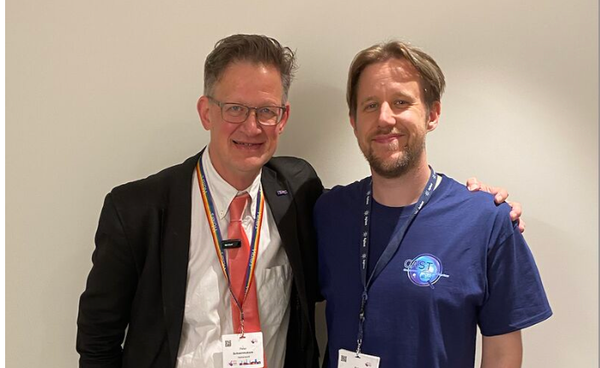
HPLC 2025 Revisited: A Year-End Review of LCGC's Conference Coverage Highlights (Part One)

Chromatography-Driven Metabolomic Insights into Tomato Resistance Against Bacterial Wilt
Dec 19, 2025

Best of the Week: Career Opportunities for PhD Graduates, Human Expertise and Machine Learning
Dec 19, 2025

Driving Change in Science: How Lab Culture Can Support Women and Diversity
Dec 19, 2025
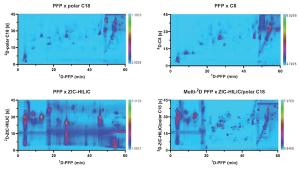
Boosting the Separation Power of LC×LC (LCGC International Nov/Dec 2025)
Dec 19, 2025




Advertisement
Shorts
0:34
3 Biggest Advances in GC and GC-MS
24 days ago
by
Caroline Hroncich
0:22
Essential Skills for Aspiring Lab Leaders
25 days ago
by
Kate Jones

0:38
The Technical Barriers to Peak Identification
a month ago
by
Kate Jones
0:34
How AI is Revolutionizing the DMTA Cycle
a month ago
by
Kate Jones

0:49
How to Tell a Story with Your Research
a month ago
by
Caroline Hroncich

0:30
Finding Your Foothold in Chromatography
3 months ago
by
Kate Jones
0:17
Mastering the Fundamentals
3 months ago
by
Kate Jones
0:51
An Inside Look at Bacterial Discrimination
3 months ago
by
Will Wetzel

0:56
What Were the Changes in Chapter 1251 of the USP?
3 months ago
by
Will Wetzel
0:43
Net Zero Emissions in Chromatography
3 months ago
by
Will Wetzel
The Column December Issue
A Look at the Latest Applications, Articles, and Interviews from the World of Chromatography

Challenges and Solutions in Oligonucleotide Analysis
An Overview of LC Methods and Applications

LCGC International November/December Issue
Read the Latest Cutting-Edge Articles from LCGC

The Present and Future of Automation in Analytical Laboratories
Where Are We Heading?

Chromatography Basics
Mastering Theoretical Plates for Better Separations

Podcasts
Videos






Advertisement
All Content
Advertisement
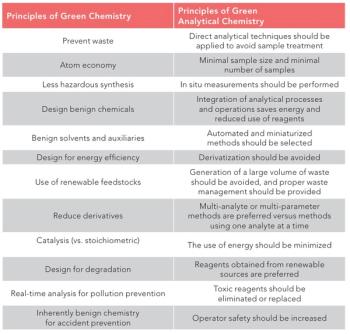
With the increasing interest in green chemistry and sustainability, analytical chemists are developing new methods and reexamining existing methods with a new emphasis on sustainability and environmental impact. Since the publication of the principles of green chemistry in the 1990s and the principles of green analytical chemistry in the 2000s, several scoring systems for evaluating the greenness or sustainability of analytical methods have been developed. In this column, we will examine three widely used scoring methods: Red, green blue (RGB), the analytical greenness metric (AGREE), and the analytical method greenness score (AMGS) with comments on how they all apply to gas chromatography (GC). We will see that classical GC, which has roots in the origins of the environmental movement, has been and remains among the greenest of analytical techniques.
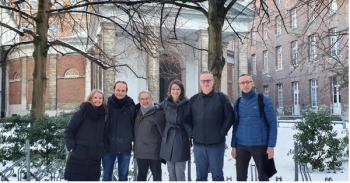
HTC-19 in Leuven will showcase the latest advancements in hyphenated techniques. This preview offers a glimpse of what you can expect.

A study investigating the use of lard-derived diacylglycerol (DG) as a fat replacer on the flavor characteristics of frankfurters detected 50 volatile compounds in the samples analyzed using gas chromatography-mass spectrometry (GC-MS).

After two and a half years at LCGC International, I reflect on my journey of growth, learning, and deep appreciation for the chromatography community and the people who make it thrive.

In the sixth part of this roundtable discussion focused on the experiences, challenges, and contributions of women in chromatography, LCGC International spoke to Susanne Boye, Daniela Held, and Claudia Zielke about the practical skills needed to lead a lab.
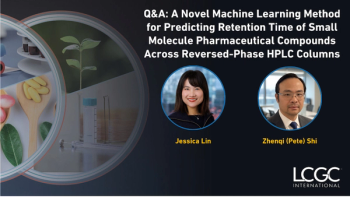
Jessica Lin and Zhenqi (Pete) Shi from Genentech describe a novel machine learning approach to predicting retention times for small molecule pharmaceutical compounds across reversed-phase high performance liquid chromatography (HPLC) columns.
Andrew Anderson shares insights on the factors that may shape the next major advance in pharmaceutical informatics strategy.
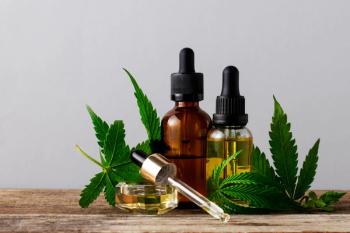
Researchers developed a technique optimizing the extraction process of six cannabinoids in cannabis oil and marijuana samples, as well as an analytical validation of a quantitative and qualitative method for seven cannabinoids, using ultrahigh-performance liquid chromatography coupled with low-resolution mass spectrometry (UHPLC-LTQ-MS).

How might the relationship between human and machine evolve over the coming years?
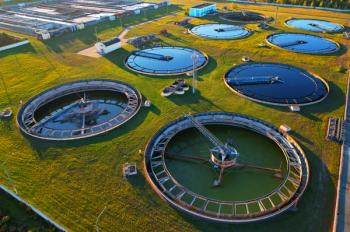
Responding to a lack of sensitive analytical methods for detecting associated medications in complex wastewater matrices, researchers at the University of Louisville developed and validated a liquid chromatography-tandem mass spectrometry (LC-MS/MS) method using multiple reaction monitoring for 10 common respiratory pharmaceuticals.
Advertisement

In the fifth part of this roundtable discussion focused on the experiences, challenges, and contributions of women in chromatography, LCGC International spoke to Susanne Boye, Daniela Held, and Claudia Zielke about the power of networking.

This article explores the diverse career paths where analytical sciences PhDs create impact in fundamentally different ways than traditional research roles, and provides practical guidance on how to pursue them.

Andrew Anderson, VP of innovation and informatics strategy at ACD/Labs, explores the interplay between human expertise and AI capabilities.

A research team comprised of members of the University of Liège and the College of William & Mary developed a robust analytical workflow to profile volatile organic compounds (VOCs) emitted during accelerated thermal aging of smokeless powders formulated with those green stabilizers. Headspace solid-phase microextraction coupled with comprehensive two-dimensional gas chromatography–time-of-flight mass spectrometry (HS-SPME–GC×GC–TOFMS) provided high peak capacity and sensitive VOC detection. LCGC International spoke to Pierre-Hugues Stefanuto of the University of Liège about this workflow and its potential implications for future research.

Discover the latest advancements in supercritical fluid chromatography and extraction at SFC/SFE Japan 2026.
Advertisement
Advertisement
Trending on LCGC International
1
HPLC 2025 Revisited: A Year-End Review of LCGC's Conference Coverage Highlights (Part One)
2
A Novel Machine Learning Method for Predicting Retention Time of Small Molecule Pharmaceutical Compounds Across Reversed-phase HPLC Columns
3
Dr. Rigoberto Advincula on Advancing Polymer Research With Py-GC/MS
4
Best of the Week: Career Opportunities for PhD Graduates, Human Expertise and Machine Learning
5