




LCGC Interviews
Latest News
Advertisement
Latest Videos


Shorts

0:39
Why Pressure Cycling is Key to Life's Origin
a year ago
by
Will Wetzel
Advertisement
More News
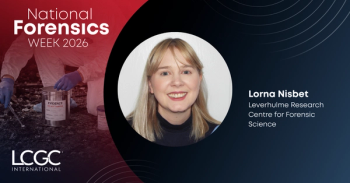
Lorna Nisbet from the Leverhulme Research Centre for Forensic Science, discusses a GC–MS. technique developed to detect anabolic-androgenic steroids in e-cigarettes seized from Scottish prisons.
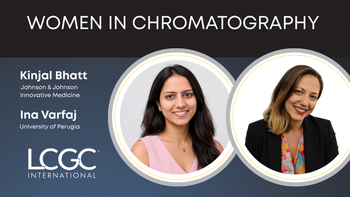
Kinjal Bhatt and Ina Varfaj trace their pull toward analytical science to a saturated chromatography peak and the moment their first chiral peaks separated.
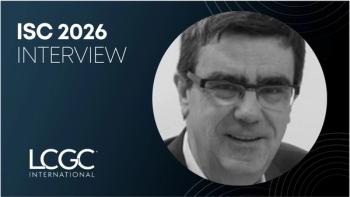
Gérard Hopfgartner explains why pairing SFC with dopant-assisted APPI can match, or even beat, electrospray sensitivity, even at microflow LC rates.
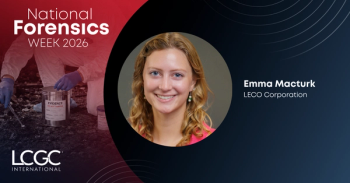
Emma Macturk from LECO Corporation explains which forensic applications benefit from GC×GC’s greater peak capacity, and when the additional separation power may only provide limited benefits.
Gérard Hopfgartner explains how atmospheric pressure photoionization can generate radical cations in LC–MS, unlocking EI-style spectra and NIST's spectral library.

Isabelle Kohler traces her unplanned path from pharmacy to bioanalysis, and why the same career struggles cut across gender lines in her PhD coaching.
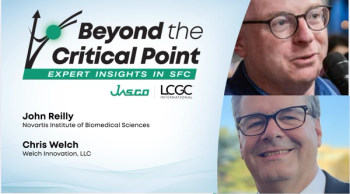
"One-Shot" Solutions for Preparative Chiral Sub/Supercritical Fluid Chromatography Using Chiroptical Detection
Published: | Updated:
A new “one-shot” strategy for preparative chiral supercritical fluid chromatography (SFC) offers fast and effective approach to obtain and characterize individual enantiomers.
SFC delivers measurable cycle-time and solvent-use gains beyond chiral work, spanning biopharma and anti-doping applications, experts say.
Karine Faure discusses how SFC with alternative solvents could offer a more sustainable path forward for liquid chromatography separations.

Daniel W. Armstrong explains how SFC confirmed mirror-image ruthenium photosensitiz-ers perform identically against melanoma cells.
Kevin Schug explains how surrogate optimization streamlines SFE–SFC–MS method development, achieving R² values up to 0.97 while boosting sensitivity by 15%
LCGC International spoke to Cristian Reale about an eco-friendly SFC-PDA method that rapidly measures furocoumarins in Citrus essential oils.
In preparative chiral supercritical fluid chromatography (SFC), adding 2.5–5% water cuts retention times and narrows collection windows, boosting throughput.
Princeton Chromatography's Jeff Caldwell says SFC can now complete separations in 10–15 seconds.

Perception, not technology, remains the biggest barrier to supercritical fluid chromatography (SFC) adoption, says JASCO's Tom DePhillipo.

Erin Chambers reflects on two leadership philosophies and a personal mantra that have shaped her approach to leading teams.
Erin Chambers shares her near-term and long-term view of how artificial intelligence will shape the chromatography community.

UHPLC–MS/MS and GC×GC methods are cutting food-safety testing times while quantifying hundreds of mycotoxins and mineral oil hydrocarbons at once.
Erin Chambers connects trustworthy data to scientific confidence and describes how Waters builds regulatory readiness into development.
A two-dimensional gas chromatography-time-of-flight mass spectrometry method detects legacy pesticides and PCBs below guideline levels.
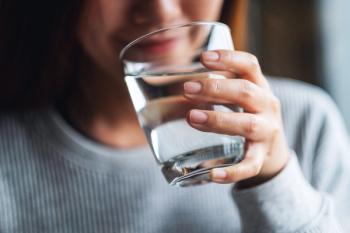
A new study revealed Australian drinking water contained 0.3–0.7 μg/L nanoplastics and 0.5–1.5 μg/L microplastics. Polypropylene nanoplastics were identified, with 10⁶–10⁷ particles/mL in tap water.
Erin Chambers outlines the signals Waters tracks when deciding where to invest R&D across GLP-1s, lipid nanoparticles, mRNA, and ADCs.
Erin Chambers explains why she views column chemistry, not hardware, as chromatography's real differentiator, citing two recent Waters launches.
Marinella Vitulli calls formal cross-laboratory proficiency testing, not better detection technology, the field's biggest gap in NIAS analysis.
Quality Control to Rule Out False-Positive NIAS Findings
Published: | Updated:
Ruling out false-positive NIAS annotations using triplicate testing and matched oven blanks rather than spectral criteria alone.
Advertisement
Advertisement
Trending on LCGC International
1
Conversations with Michael Dong: HPLC Columns for Pharmaceutical Analysis
2
Quantitative Analysis Challenges for GLP-1 Peptides
3
Kagan and Soai Win 2026 Nobel Prize in Chemistry for Solving the Mystery of Life's "Handedness"
4
GC–MS Reveals Sex-Linked Scents in Macaws' Feathers
5