

The Column
I SCM will be held from 27–28 January 2015 in conjunction with SCM-7, which will be held from 28–30 January 2015 at the Rhone Congress Centre, Amsterdam, The Netherlands.
The Column
I SCM will be held from 27–28 January 2015 in conjunction with SCM-7, which will be held from 28–30 January 2015 at the Rhone Congress Centre, Amsterdam, The Netherlands.

The Column
A recent increase in research on the impact of unconventional oil and gas (UOG) extraction is welcomed by Kevin Schug. He explains more in this latest LCGC Blog instalment.

The Column
In this article comprehensive GCxGC–qMS is shown to be a suitable tool for targeted and untargeted analysis in the flavours and fragrances industry.
The Column
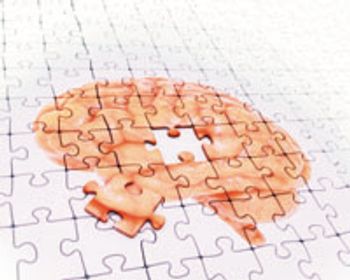
Alzheimer's Disease (AD) is one of the most common neurodenerative disorders worldwide. It is a progressive disorder characterized by gradual loss of mental ability associated with the death of brain cells, and is diagnosed using a combination of physical, neurological, and laboratory tests. Although there are no curative treatments available, early treatment can reduce the rate of the disease progression. Scientists from the University of Huelva and the Neurological Service from the Hospital Juan Ramon Jim?nez in Spain, began collaborating four years ago to develop new strategies to identify biomarkers that could be used to speed up diagnosis of the disease. In a new study published in the journal Electrophoresis, the team present a metabolomics approach based on ultrafiltration followed by capillary electrophoresis coupled with mass spectrometry (CE–ESI–MS) for the fingerprinting of polar metabolites in blood serum.

The Column
Waters Corporation (Massachusetts, USA) has announced the addition of the Colorado State University Fort Collins Proteomics and Metabolomics facility to its Centers of Innovation Programme.

The Column
The production of new drugs continues to increase, placing pressure on analytical scientists to develop new bioanalytical methods to characterize and ensure quality control and safety. Bethany Degg of The Column spoke to Lucie Novakova of Charles University in Prague, Czech Republic, about the development, optimization, and challenges of bioanalytical methods as well as future emerging research areas.

The Column
GC?GC–TOF-MS is used in forensic analysis for the analysis of tear gas lachrymators. In this article the analysis of a lachrymator standard is shown first, followed by the detection of capsaicin and dihydrocapsaicin at trace levels in a complex extract from contaminated clothing.

The Column
Incognito goes back to basics with standard laboratory skills. How do you use your pipette properly?

The Column
Researchers from CSIRO Oceans and Atmosphere Flagship in Hobart, Australia, have published a new approach to monitoring plastic exposure in live birds. Featured in the journal Methods in Ecology and Evolution, the study describes the sampling of preen oil collected from seabirds using a simple swabbing method for gas chromatography coupled to mass spectrometry (GC–MS) analysis.1

The Column
Click the title above to open The Column November 20, 2014 North American issue, Volume 10, Number 21, in an interactive PDF format.
The Column
Click the title above to open The Column November 20, 2014 Europe & Asia issue, Volume 10, Number 21, in an interactive PDF format.