



Biopharmaceuticals and Protein Analysis
Latest News
Advertisement
Latest Videos


Shorts
0:37
Tackling Complex Molecules in the Lab
9 months ago
by
Kate Jones
Advertisement
More News
Wallman argues proteomics is moving from niche tool to high-throughput platform core, with the greatest untapped potential in covalent drug programs and targeted protein degradation.
Wallman explains that PeptDeepKontext is designed to generalize without lab-specific calibration, though highly unusual setups may still benefit from additional fine-tuning in the future.
Wallman unpacks how graph-level fragmentation in fragDETR captures internal fragments and neutral losses, with peak and intensity improvements concentrated in challenging non-standard peptides.
Wallman explains how spectral library accuracy, retention time prediction, and instrument-specific variation make deep learning essential yet difficult in data-independent acquisition proteomics.
Wallman details PeptDeepKontext, a model built to predict peptide properties across diverse instruments and PTMs by embracing rather than eliminating inter-laboratory variability.

Bingchuan Wei describes how to cultivate a culture of innovation and calculated risk-taking while operating within the compliance demands of biopharmaceutical drug development.
Bingchuan Wei shares practical guidance for early-career scientists seeking to transition into industry drug development across diverse therapeutic modalities.
Bingchuan Wei reflects on how to connect high-level patient and medical goals to the highly technical analytical tools required to meaningfully support ADC drug development decisions.
Bingchuan Wei discusses how robust ADC characterization strategies meet regulatory expectations and how stronger methodologies can accelerate candidate selection to clinical approval.
Bingchuan Wei identifies the toughest unresolved analytical challenges in ADC development and highlights the emerging technologies he sees as most capable of closing those gaps.
Bingchuan Wei of Genentech explains how HIC-MS integrates separation and mass detection to resolve and quantify individual DAR species with greater precision than standalone HIC or MS alone.

A review of some of the content highlights from LCGC International in 2025.
As a long-standing member of the chromatography community, I am continually awestruck by the rate of change we consistently experience. Through the collective efforts of an entire community, we realize a fast-paced evolution that serves the world. In this article, we will aim to make the rapidly expanding and dynamic field of biopharmaceuticals approachable by taking a high-level look into its most recent success: peptide-based therapeutics.
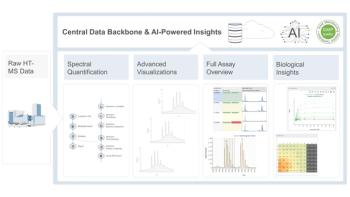
High-throughput mass spectrometry (HT-MS) is becoming a driving force in modern drug discovery. This article explains how a purpose-built digital ecosystem—featuring structured data, automation, artificial intelligence (AI)-driven analytics, and cloud scalability—is essential to translate massive HT-MS data sets into reproducible, actionable decisions.
Explore the complexities of GLP-1 impurity detection using HPLC/UHPLC and innovative strategies to enhance analysis and regulatory compliance.

Giulia Mazzoccanti spoke to LCGC International about the development and application of electrostatic repulsion-reversed phase (ERRP) chromatography for peptide separations.

Torgny Fornstedt, Jörgen Samuelsson, and Martin Enmark discuss a novel machine learning workflow for oligonucleotide analysis that is helping to enhance method development and impurity profiling efficiency.

Analyzing Small RNA-based Therapeutics and Their Process Impurities Using Fast and Sensitive LC–HRMS
Discover innovative LC–HRMS methods for analyzing RNA-based therapeutics, enhancing biopharma development and regulatory compliance in drug characterization.

Static and dynamic electrostatic repulsion-reversed phase (ERRP) has been compared for the separation of peptide impurities.

The advancements in HILIC–MS for oligonucleotide analysis are discussed, highlighting its potential as a viable alternative to traditional methods.

A reversed-phase liquid chromatography–charged aerosol detector (RPLC–CAD) method was developed and validated per ICH Q2(R1) guidelines for simethicone quantification.
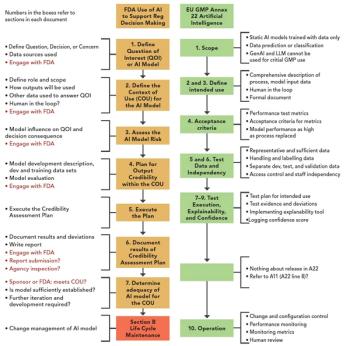
Does AI/ML help to enhance chromatographic peak integration? What do regulators say? Are you being seduced by technology?

SFC Europe 2025—the 19th International Conference on Packed Column Supercritical Fluid Chromatography and Related Techniques—will be held in Basel, Switzerland, on October 5–7, 2025. LCGC International spoke to John Reilly, Maria Kristina Parr, and Larry Miller about the important role that SFC now plays in life science analysis
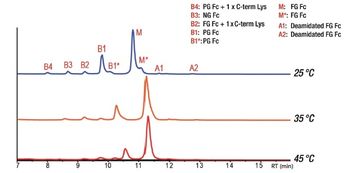
This article discusses the advantages of a native anion exchange method coupled to mass spectrometry (MS) for charge heterogeneity analysis of immunoglobulin G4 (IgG4)-based mAbs, which are currently being studied more intensively.

LCGC International spoke to Bo Zhang from Xiamen University in China about the advantages of stereolithographically printed 3D-printed columns that offer scope for negligible scaling-up costs, and the future opportunities and challenges for this novel technology
Advertisement
Advertisement
Trending on LCGC International
1
AI ML Now: Gert Desmet on the State of Artificial Intelligence and Machine Learning in Separation Science
2
Conversations with Michael Dong: Buffers for Mobile Phase A in Pharmaceutical Analysis
3
The Future of GLP-1 Peptide Analysis: AI, Automation, and the Scientist's Role
4
Jan Christensen on Quantitative Non-Targeted Screening
5