




Food and Beverage Analysis
Latest News
Advertisement
Latest Videos


Shorts

Advertisement
More News
Webcasts
Webinar Date/Time: Tue, Sep 22, 2026 11:00 AM EDT

Andrea Hochegger from Graz University of Technology, Austria describes the benefits that comprehensive two-dimensional GC (GC×GC–MS) offers over conventional GC–MS to resolve complex mixtures from recycled packaging materials.

Giorgia Purcaro from the University of Liege (Belgium) discusses a laboratory technique for more accurately detecting harmful oil contaminants in edible oils than the current official method.
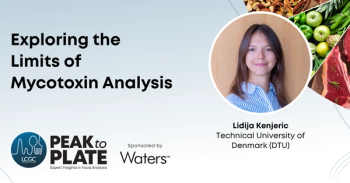
During her PhD at BOKU University Vienna, Lidija Kenjerić developed a multi-class UHPLC–MS/MS quantitative method covering 931 mycotoxins and secondary metabolites within an 11-min runtime, providing a scalable solution for routine testing, regulatory, and emergency response.

Gas chromatography-mass spectrometry (GC–MS) and liquid chromatography-mass spectrometry (LC–MS) identify volatile and nonvolatile flavor drivers shaping lager liking among high-flavor-preference consumers.
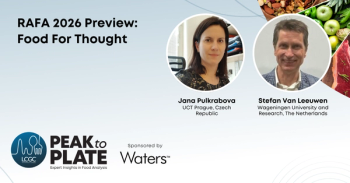
Stefan Van Leuwen and Jana Pulkrabova—co-chairs of RAFA 2026—elaborate on why separation scientists involved in food analysis should attend RAFA 2026, which takes place at the Clarion Congress Hotel Prague, Prague, Czech Republic, from November 3–6, 2026.
MOH contaminants in food pose safety risks, making reliable chromatographic detection essential.
LCGC International spoke to Maria Halabalaki, an associate professor at the National and Kapodistrian University of Athens, about how dried spot microsampling could transform food testing.

Ana Rodríguez-Bernaldo de Quirós of the University of Santiago de Compostela discusses how non-targeted gas chromatography–mass spectrometry (GC–MS) can reveal complex chemical mixtures in bioplastic food packaging, raising important safety questions and concerns for consumers.
A non-targeted high-resolution mass spectrometry strategy was developed to detect PFAS in food beyond the limits of conventional targeted methods. A non-targeted high-resolution mass spectrometry strategy was developed to detect PFAS in food beyond the limits of conventional targeted methods. Using a single extract for both approaches, data prioritization and ion mobility mass spectrometry helped identify previously unsuspected PFAS, expanding analytical coverage for food safety monitoring.

Deborah McKenzie, Chris Elliott, Michele Suman, and Nicholas Birse summarize their thoughts on food adulteration and fraud and provide a personal “call‑to‑action" to share with analytical scientists working to protect the integrity of food in the supply chain.

Are chemometrics and artificial intelligence (AI) currently delivering real value in relation to pattern recognition, anomaly detection, and spectral libraries in food fraud and food adulteration applications? The panel explore potential risks when chemical understanding is not strong enough.

Nontargeted high-resolution mass spectrometry (HRMS) workflows are getting a lot of attention. The panel explore where these worklows are genuinely advancing authenticity testing, and if these workflows are meeting expectations.

Peter Tranchida explains how cryogenic band compression and GC×GC boost sensitivity while reducing sample preparation demands in complex food analyses.
Food matrices are notoriously complex. The panel explore how to overcome the biggest challenges to develop validated, reproducible methods that hold up across regions, seasons, and suppliers.

The limitations of current analytical techniques in food adulteration and food fraud are explored and complementary techniques that can enhance results are discussed.
In this interview recorded at analytica 2026 in Munich, Giorgia Purcaro discusses how GC‑based hyphenated techniques are reshaping the analysis of complex food samples.
Food is one of the most challenging matrices to analyze in terms of complexity. The panelists explore the role that chromatography plays in food authenticity and food fraud applications to successfully analyze such complex matrices.
The panelists explore how food authenticity is defined in today’s global supply chain, and how that definition has evolved as fraud has become more sophisticated and difficult to detect.
The panelists introduce themselves and describe their expertise in separation science and experience in food authenticity and food fraud research.
Giorgia Purcaro explains how hyphenated GC and GC×GC deliver rich fingerprints, simplify prep, and enable targeted and untargeted food analysis.
A review of some of the content highlights from LCGC International in 2025.

Technology Spotlight: Natural Deep Eutectic Solvents (NADES) — A Sustainable Sample Preparation Tool for Food Analysis
Published: | Updated:
Laura Carbonell-Rozas, a post-doctoral researcher at the University of Granada (Granada, Spain), discusses the potential of natural deep eutectic solvents (NADES) in food analysis as sustainable solvents in sample preparation.

A look at recent advances in pesticide residue analysis across diverse food matrices.

The development of a high-throughput LC–MS/MS method for quantifying 135 pesticides with improved accuracy and robustness is discussed.
Advertisement
Advertisement
Trending on LCGC International
1
Green Chemistry Meets Affinity Chromatography
2
HILIC and the Shift Beyond TFA in GLP-1 Analysis
3
Conversations with Michael Dong: Reversed-Phase Chromatography: Retention Mechanism of Hydrophobic Interaction
4
AI ML Now: Gert Desmet on the State of Artificial Intelligence and Machine Learning in Separation Science
5