



Solid-Phase Extraction (SPE)
Latest News
Advertisement
Latest Videos

Advertisement
More News
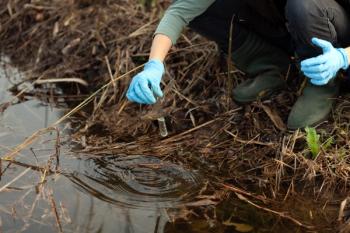
In a new study, researchers explored a new approach for detecting pesticide residues in water samples, based around ionic liquid-based dispersive liquid–liquid microextraction (IL-DLLME).

A new analysis method for detecting bisphenols in environmental sources was tested using loofah sponges and solid-phase extraction.

Environmental polycyclic aromatic hydrocarbons can prove dangerous if metabolites enter human systems. A new gas chromatography-based approach was developed to analyze the hydroxy derivatives in wastewater samples.

Water pollution management is an important process that faces difficulty with handling microplastics. University of Porto (Portugal) researchers aimed to optimize existing methods to help rectify this issue.
Oxygen heterocyclic compounds are notable components in citrus-scented creams, though quality control is important when using these compounds. Researchers recently created a workflow for extracting these substances using a deep eutectic solvent (DES) for microwave-assisted extraction (MAE).

Best of the Week: Future of Green Chromatography, BASF and Mingyang Collaboration, Cannabis Analysis
Here is some of the most popular content posted on LCGC International this week.

Shimadzu researchers aimed to develop a more efficient supercritical fluid chromatography method for solid-state injection and streamlining sample pretreatment.

A new study, published by a researcher from Chemical Characterization Solutions in Minnesota, explored a new approach for sample preparation for the chemical characterization of medical devices.

University of Caldas and University of Chile researchers extracted estrogenic hormones from wastewater samples using rotating disk sorption extraction. After extraction, the concentrated analytes were measured using liquid chromatography coupled with photodiode array detection (HPLC-PDA).
Scientists from Ferdowsi University tested a new type of sorbent for effectively extracting remdesivir from samples.

U.S. Department of Agriculture researchers used QuEChERSER-based methods to analyze chemical contaminants in foodstuffs in a new study published in the Journal of Chromatography A.

A new solid-phase microextraction-based technique has been developed for extracting triazole residues from environmental samples including water and juice.

Aflatoxins are a family of toxins made by certain fungi that are found on agricultural crops, such as maize (corn), peanuts, and cottonseed.

Guangdong University of Technology researchers used a gas chromatography-based method to detect nonylphenol isomers in sewage and wastewater sludge.

Scientists from Nanjing University recently developed a new solid-phase microextraction (SPME)-based system for detecting nitrated polycyclic aromatic hydrocarbons (nitro-PAHs) in aquatic environments.

Using ultra-performance liquid chromatography-tandem mass spectrometry (UHPLC-MS/MS), China Pharmaceutical University scientists developed a new method for analyzing compounds found in wastewater.

Scientists from the China University of Sciences combined magnetic solid-phase extraction (MSPE) with gas chromatography–mass spectrometry (GC–MS) to analyze perfluoro carboxylic acids (PFCAs) in different water environments.

Scientists from the Shandong Academy of Sciences recently created a new approach for performing magnetic solid-phase extraction on trace triazine herbicides.

University of Valencia scientists recently developed a method using solid-phase extraction (SPE) followed by high-performance liquid chromatography coupled to high-resolution mass spectrometry (HPLC–HRMS/MS) for detecting microplastics and other harmful substances in textiles.

A European Union reference laboratory recently created a new method for analyzing gas chromatography (GC)-amenable pesticides in foods of animal origin.

Harbin University of Commerce and Northeast Forestry University scientists led efforts to create new means of analyzing components in traditional Chinese medicine.

Jiangsu Police Institute scientists recently created a solid-phase microextraction (SPME)-based method for determining amphetamine-type stimulants.

This article highlights a curated selection of the most popular GC-related content, with a focus on the diverse applications of the technique, as featured in LCGC.

LCGC International sat down with Giorgia Purcaro of the University of Liege to discuss the impact that solid-phase microextraction (SPME) and comprehensive multidimensional gas chromatography (GC×GC) is having on food analysis.
Advertisement
Advertisement
Trending on LCGC International
1
Prioritizing Unknowns in Nontarget Screening of Food Samples
2
Conversations with Michael Dong: Overcoming Challenges with Reversed-Phase Chromatography in Drug Analysis
3
Jan Christensen on Quantitative Non-Targeted Screening
4
The Future of GLP-1 Peptide Analysis: AI, Automation, and the Scientist's Role
5