



Liquid Chromatography (LC/HPLC)
Latest News
Advertisement
Latest Videos


Shorts
0:35
The Future is 3D
8 months ago
by
Bo Zhang

0:54
The History of Slalom Chromatography
8 months ago
by
Fabrice Gritti
0:40
Addressing Persistent, Mobile, and Toxic Compounds
9 months ago
by
Kate Jones
0:37
Tackling Complex Molecules in the Lab
9 months ago
by
Kate Jones

0:45
Future Trends in the Laboratory
9 months ago
by
Kate Jones
0:33
Key Application Areas for 2026
9 months ago
by
Kate Jones
0:34
The Future of Column Technology
9 months ago
by
Kate Jones
Advertisement
More News

At ISC 2026, a tailored C4 stationary phase resolved over 30 of 64 possible siRNA diastereomers, aiding characterization of oligonucleotide conjugates.

At ISC 2026, a 20-minute IP-RPLC–UV assay distinguished mRNA capping variants without mass spectrometry, matching a UHPLC–MS reference method.

At ISC 2026, separation science advances included a MEMS gas chromatography column for space missions that raised measured efficiency by up to 74%

Webcasts
Webinar Date/Time: Thu, Aug 27, 2026 2:00 PM EDT
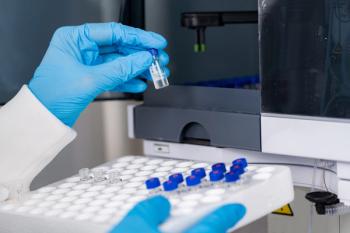
Challenges and Solutions in Oligonucleotide Analysis, Part IV – Solvent Mismatch, Denaturing vs. Non-Denaturing Conditions, and Non-Specific Adsorption
Published: | Updated:
Liquid chromatography LC troubleshooting for oligonucleotides: fix peak splitting, denaturation smearing, and metal-surface adsorption to boost recovery.

Capillary liquid chromatography (CapLC) offers compelling advantages in sensitivity, solvent reduction, and compatibility with modern mass spectrometry, yet remains underutilized in routine analytical workflows. This article synthesizes expert discussions from a Pittcon 2026 networking session to examine why CapLC adoption has lagged despite decades of development. Key themes include educational gaps, instrumentation limitations, robustness concerns, detection challenges, and supply‑chain constraints. The discussion highlights areas where CapLC already delivers clear value—such as proteomics, oligonucleotide analysis, and high‑throughput screening—and outlines practical pathways for broader adoption through targeted applications, improved instrumentation, and redefined expectations of “routine” chromatography.

Fernando Lanças discusses miniaturized liquid sample preparation for greener LC–MS/MS workflows in environmental analysis, favoring SUPRAS and DES solvents.
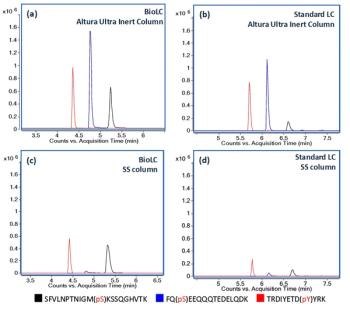
Advances in liquid chromatography (LC) address the growing need to analyze complex analytes with higher sensitivity and efficiency. Application-specific column chemistries, optimized system configurations, and improved consumables help mitigate PFAS contamination, metal-sensitive analytes, and solvent-related artifacts. Emerging injection strategies and smart instrumentation aim to enhance data quality and laboratory productivity, demonstrating that optimizing LC methods goes beyond column selection alone.
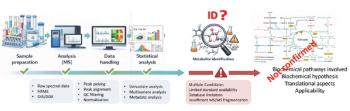
Μetabolomics enables the comprehensive profiling of small molecules in medicine, plant science, and systems biology. Its true value depends not on the number of detected features but on the reliability of metabolite identification and pathway analysis. Despite well-established guidelines, annotation and definitive identification are often conflated in practice. Simple matches in mass databases are frequently reported as identities, without comparison to standards or chromatographic evidence. This overstatement of confidence compromises validity and risks propagating errors into databases, pathway analyses, and AI-driven workflows. Mass spectrometry (MS) alone is rarely sufficient for identification and orthogonal evidence is essential. Chromatographic retention time is an underused but powerful descriptor reflecting molecular properties. When combined with MS it can provide plausibility checks and form the basis of Level 1 identification. Regulatory frameworks already require such combined criteria in targeted analysis. Systematic use of retention order, retention indices, and prediction models can filter implausible candidates and strengthen identification.
With the global surge in plastic consumption, sustainable recycling has emerged as a cornerstone of environmental stewardship. Polyethylene terephthalate (PET) is a leading player in the recycling revolution, yet ensuring the quality and authenticity of recycled PET (rPET) remains a critical challenge. This article presents a rapid, robust, and quantitative high performance liquid chromatography (HPLC) method for analyzing cyclic oligomers in rPET. This approach aligns with the Japanese Ministry of the Environment guidelines, enabling precise evaluation of rPET quality. The method leverages gradient elution and a practical calibration approach to deliver high throughput and accuracy, supporting the circular economy and the future of sustainable materials.

Top articles published this week highlight the analytical challenges of metal speciation in biological systems, a new machine-learning framework called assisted active learning (AAL), and the value of in-person conferences.

A liquid chromatography–tandem mass spectrometry (LC–MS/MS) method for the determination of 39 emerging contaminants in water at ultra trace concentrations has been developed and validated.
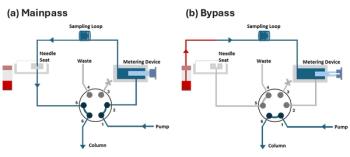
In this installment of “LC Troubleshooting,” we take a close look at how the commonly used “flow-through needle” sampler works, discuss how and where leaks can develop, and solutions to the problems when they do occur.

LCGC Blog: How Industry–Academia Collaboration Shapes the Future of Separation Science
Published: | Updated:
Collaboration between academia and industry can reap rewards that cannot be achieved separately.
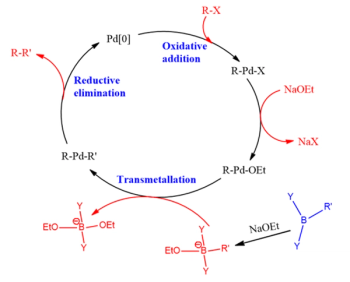
A quality attribute of Suzuki-Miyura coupling reactions is to measure residual levels of phosphine ligands in the reaction product. Residual phosphine ligands can be present in non-oxidized and oxidized forms. The non-oxidized and oxidized forms have different UV chromophores and can have differing solubility. These differences can preclude accurate and precise quantification. The extent of oxidation is difficult to prevent and control for calibration standards and test materials. This paper describes a method for derivatizing residual phosphines to the oxidized form. The oxidized form is stable and provides a basis for accurate quantification of residual phosphines. This overcomes the challenges for quantifying the non-oxidized and oxidized forms.

Combining silicon micro-nanofabrication technology to create perfectly ordered separation beds on a silicon chip, such as micro-pillar array columns (µPACs), is a powerful innovation in liquid chromatography. This article discusses the numerous possibilities of micro-nanofabrication in the future of analytical chemistry in life science, covering sample preparation, separation science, and detection technologies.
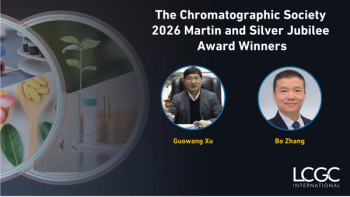
The Chromatographic Society has announced the winners of the Martin Medal and the Silver Jubilee Medal for 2026. Professor Guowang Xu of the Dalian Institute of Chemical Physics in China, has been awarded the Martin Medal, and the Silver Jubilee Medal has been awarded to Professor Bo Zhang of Xiamen University in China.

In its 2025 industry survey, LCGC International looked beyond the numbers to uncover the challenges, priorities, and outlook shaping the chromatography community, and what lies ahead in 2026.
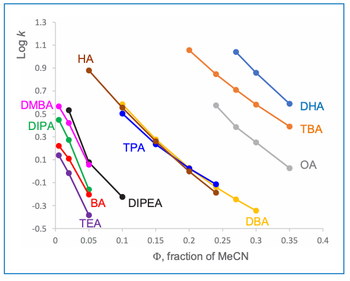
In this second installment of a multi-part series, we describe the principles of ion-pair reversed-phase high-performance liquid chromatography, discuss strategies for method development, and provide practical tips for robust liquid chromatography analyses of oligonucleotide mixtures.

The second part of the end-of-the-year review of LCGC International’s editorial coverage of HPLC 2025, which took place in Bruges June 19–23, 2025.

The first part of an end-of-the-year review of LCGC International’s editorial coverage of HPLC 2025, which took place in Bruges from 19–23 June 2025 .
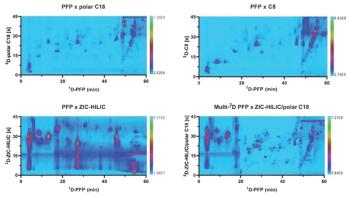
The article discusses advancements in two-dimensional liquid and gas chromatography (LC×LC and GC×GC) to address the challenges of analyzing complex samples in non-target analysis.
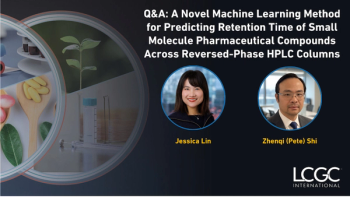
Jessica Lin and Zhenqi (Pete) Shi from Genentech describe a novel machine learning approach to predicting retention times for small molecule pharmaceutical compounds across reversed-phase high performance liquid chromatography (HPLC) columns.

This article explores the diverse career paths where analytical sciences PhDs create impact in fundamentally different ways than traditional research roles, and provides practical guidance on how to pursue them.

What steps should be taken when reactivating your gel permeation chromatography/size-exclusion chromatography (GPC/SEC) instrument after an extended shutdown period?
Advertisement
Advertisement
Trending on LCGC International
1
AI ML Now: Gert Desmet on the State of Artificial Intelligence and Machine Learning in Separation Science
2
Conversations with Michael Dong: Buffers for Mobile Phase A in Pharmaceutical Analysis
3
Jan Christensen on Quantitative Non-Targeted Screening
4
The Future of GLP-1 Peptide Analysis: AI, Automation, and the Scientist's Role
5