



Latest from LCGC International
19 days ago
Gulf Coast Conference 2026 PreviewLatest Content








Advertisement
Shorts

1:28
Is AI Eroding Students’ Critical Thinking?
5 days ago
by
Isabelle Kohler
0:34
The Evolution of a Career Trajectory
7 days ago
by
Isabelle Kohler
1:45
Are PhD Struggles Gender-Specific?
11 days ago
by
Isabelle Kohler

2:57
AI/ML Now: How Will AI/ML Change Chromatography Within Five Years?
12 days ago
by
Gert Desmet
0:53
The #1 Fear Every PhD Student Has
13 days ago
by
Isabelle Kohler

1:06
NTS Method Development
14 days ago
by
Jan H. Christensen

1:38
Taking mRNA-LNP Analysis from R&D to QC
19 days ago
by
Megane Aebischer

2:12
Routine Analysis for siRNAs
20 days ago
by
Martina Lioi

1:08
Is SPE Transferable to Routine Pharma Labs?
20 days ago
by
Tony Edge
0:35
The Role of Perfusion Chromatography
21 days ago
by
Daniel Meston
LCGC International September/October Issue
Read the Latest Cutting-Edge Articles from LCGC

Separation Science in 2025–2026: The Products Shaping Analytical Workflows
Read More About the Latest Cutting-Edge Technology on the Market
The Column September Issue
A Look at the Latest Applications, Articles, and Interviews from the World of Chromatography

Peaks & Pioneers: Isabelle Kohler
Isabelle Kohler on Life Beyond the Traditional Academic Track

Advancing Miniaturized Column and Instrument Technologies for Capillary Liquid Chromatography
A Look at Recent Updates
Podcasts


Videos






Advertisement
All Content
Advertisement

Gas chromatography (GC) tests show spoilage yeasts alter flavor and raise alcohol in NoLo beer.
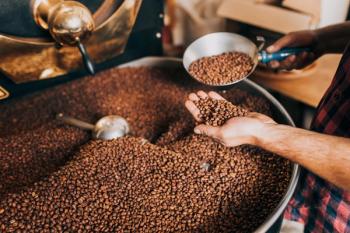
Liquid chromatography–tandem mass spectrometry (LC–MS/MS) finds low glyphosate residues of the weedkiller glyphosate in coffee beans.

This week, Chromatography Online explored how the technique is advancing wastewater drug monitoring, siRNA method development, and food safety testing, with previews of RAFA 2026 and a return to HPLC fundamentals with Michael Dong.

Keeping Pace With PFAS Regulation: Analytical Strategies for Food Testing Laboratories
Published: | Updated:
Recent EU legislation on PFAS shifts from monitoring individual compounds toward managing them as a chemical class.
In this seventh part of " Conversations with Michael Dong," a series on fundamentals of HPLC in pharmaceutical analysis, LCGC International’s "Perspectives in HPLC" column editor explains why 2.1-mm i.d. columns are less preferred for pharmaceutical quality control.
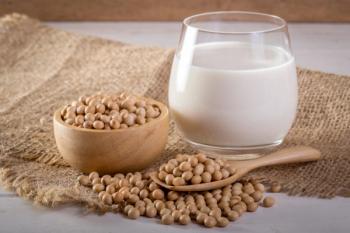
Ultrahigh-performance liquid chromatography–quadrupole time-of-flight mass spectrometry (UHPLC–QTOF-MS) shows how soaking and cooking break down soybean fats.

Liquid chromatography–tandem mass spectrometry (LC–MS/MS) links altered metabolism to lingering symptoms in Ebola survivors.

Nicolai Zederkopff explores chromatography’s role to help implement the maximum tolerable level (MTL) framework for food adulteration to translate analytical results into compliance decisions.

Franz Berthiller (BOKU University, Austria) discusses a multilaboratory study that used retention index markers to align mycotoxin liquid chromatography–mass spectrometry (LC–MS) data.

A QuEChERS/ultrahigh-performance liquid chromatography and high-resolution mass spectrometry (UHPLC-HRMS) method tracks 23 plant toxins in cereals and spices. Michele Suman discusses the method with LCGC International.
Advertisement
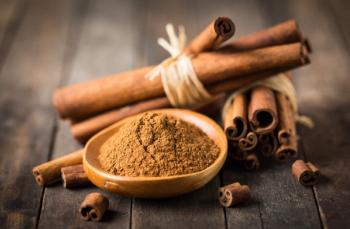
Gas chromatography-mass spectrometry (GC-MS) study links 110 scent compounds to cinnamon variety and origin.

Affinity chromatography-purified viral protein powers a new FAdV-8b test for chickens.

AI/ML Now: Bayesian Optimization and Automation for siRNA Method Development (Part Two)
Published: | Updated:
Ed Ahearne highlights the benefits of ML-driven chromatography for the development of biopharmaceutical products

In this sixth part of " Conversations with Michael Dong," a series on fundamentals of HPLC in pharmaceutical analysis, LCGC International’s "Perspectives in HPLC" column editor compares the chromatographic properties of acetonitrile and methanol.

A three-year study of medical students and doctors in training tracked burnout symptoms alongside inflammation markers and morning cortisol and cortisone levels in saliva, measured by liquid chromatography–tandem mass spectrometry (LC–MS/MS), to better understand the biology of burnout.
Advertisement
Advertisement