



Mass Spectrometry
Latest News
Advertisement
Latest Videos


Advertisement
More News
Webcasts
Webinar Date/Time: Thu, Aug 6, 2026 11:00 AM EDT

Webcasts
Webinar Date/Time: Tue, Jul 7, 2026 11:00 AM EDT

ASMS 2026 highlighted AI-driven MS software, faster/deeper proteomics, spatial biology imaging, biopharma characterization tools, PFAS monitoring, and greener instrumentation.
2026 ASMS awards honor advances in native MS, single-cell proteomics, metabolomics, and instrumentation, spotlighting mass spectrometry's scientific impact.

ASMS 2026 highlights a potential paradigm shift in metabolomics, as new evidence suggests many unknown signals are ESI artifacts.
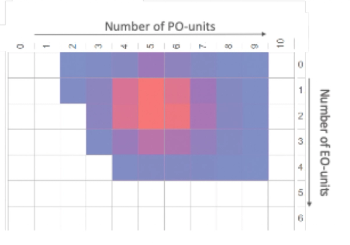
New R tool auto-decodes polyol structures from mass spec data—great for screening complex formulas.New R tool auto-decodes polyol structures from mass spec data—great for screening complex formulas.
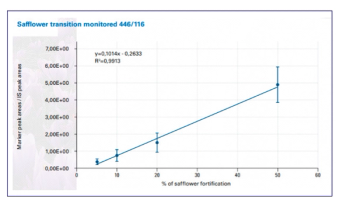
Rapid chromatography-free method enables untargeted detection of food adulterants for quality control.
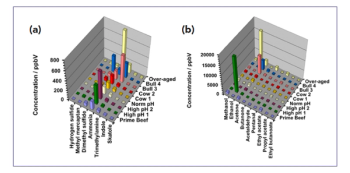
Vaughan Langford discusses the application of automated selected ion flow tube mass spectrometry (SIFT-MS) analysis to diverse high-throughput food analysis applications, including sensory-correlated analysis, authentication, and ingredient screening.
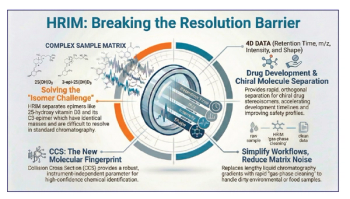
High-end mass spectroscopy innovation is driven by proteomics, leaving scientists in other fields like drug development, environmental analysis, and metabolomics underserved.
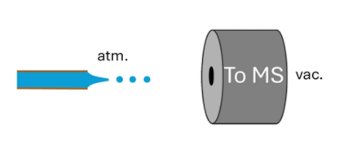
Ionic liquids (ILs) are structurally tunable salts that pose unique analytical challenges.Ionic liquids (ILs) are structurally tunable salts that pose unique analytical challenges. This article reviews how mass spectrometry is used to study IL ion clusters, dissociation pathways, and decomposition products, with a focus on applications in spacecraft propulsion and environmental contamination.

Webcasts
Webinar Date/Time: Wednesday, May 27 and Thursday, May 28, 2026 Morning Session: 9:00 AM EDT Lunchtime Session: 12:00 PM EDT Afternoon Session: 1:00 PM EDT
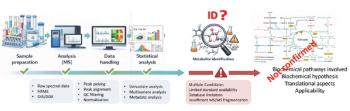
Μetabolomics enables the comprehensive profiling of small molecules in medicine, plant science, and systems biology. Its true value depends not on the number of detected features but on the reliability of metabolite identification and pathway analysis. Despite well-established guidelines, annotation and definitive identification are often conflated in practice. Simple matches in mass databases are frequently reported as identities, without comparison to standards or chromatographic evidence. This overstatement of confidence compromises validity and risks propagating errors into databases, pathway analyses, and AI-driven workflows. Mass spectrometry (MS) alone is rarely sufficient for identification and orthogonal evidence is essential. Chromatographic retention time is an underused but powerful descriptor reflecting molecular properties. When combined with MS it can provide plausibility checks and form the basis of Level 1 identification. Regulatory frameworks already require such combined criteria in targeted analysis. Systematic use of retention order, retention indices, and prediction models can filter implausible candidates and strengthen identification.
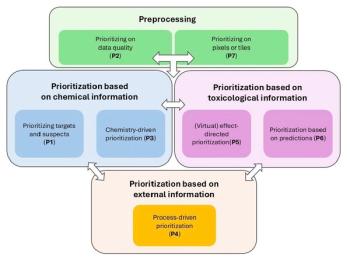
This article discusses how integrating seven prioritization strategies can enhance compound identification, support environmental risk assessment, and accelerate decision-making.

Webcasts
Webinar Date/Time: Tuesday, March 17 and Wednesday, March 18, 2026 Morning Session: 9:30 AM EDT | 1:30 PM GMT | 2:30 PM CET Afternoon Session: 12:00 PM EDT | 4:00 PM GMT | 5:00 PM CET
Webcasts
Webinar Date/Time: Thursday, March 19, 2026 8am PST | 11am EST | 4pm GMT | 5pm CET
Webcasts
Webinar Date/Time: Thu, Feb 26, 2026 12:00 PM EST
Webcasts
Webinar Date/Time: Thursday, February 19, 2025 8am PST | 11am EST | 4pm GMT | 5pm CET

Webcasts
Webinar Date/Time: Tue, Jan 20, 2026 11:00 AM EST
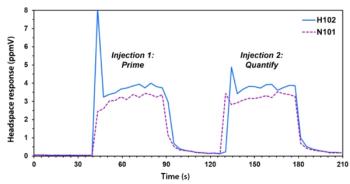
Selected ion flow tube mass spectrometry (SIFT-MS) offers potential for rapid screening of volatile nitrosamines and their amine precursors in a single run.
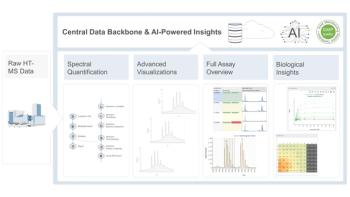
High-throughput mass spectrometry (HT-MS) is becoming a driving force in modern drug discovery. This article explains how a purpose-built digital ecosystem—featuring structured data, automation, artificial intelligence (AI)-driven analytics, and cloud scalability—is essential to translate massive HT-MS data sets into reproducible, actionable decisions.
Webcasts
Webinar Date/Time: Monday, December 8, 2025 8am PST | 11am EST | 4pm GMT | 5pm CET

Chip Cody discusses his work in mass spectrometry, including DART ion source innovations and insights on chromatography integration.

Webcasts
Webinar Date/Time:Wednesday December 3rd 2025 Morning Session: 9:15am EST | 6:15am PST | 2:15pm GMT | 3:15pm CEST Afternoon Session: 11:45am EST | 8:45am PST | 4:45pm GMT | 5:45pm CEST Thursday December 4th 2025 Morning Session: 9:15am EST | 6:15am PST | 2:15pm GMT | 3:15pm CEST Afternoon Session: 11:15am EST | 8:15am PST | 4:15pm GMT | 5:15pm CEST

Webcasts
Webinar Date/Time: Tue, Nov 18, 2025 11:00 AM EST
Webcasts
Webinar Date/Time: Thursday, November 20, 2025 8am PDT | 11am EDT | 4pm GMT | 5pm CET Thusrsday December 4th 2025: The State of The Art in Pharmaceutical Analysis: A Virtual Symposium Time: 9:15 am EDT/2:15 pm GMT/3:15 pm CET
Advertisement
Advertisement
Trending on LCGC International
1
Green Chemistry Meets Affinity Chromatography
2
HILIC and the Shift Beyond TFA in GLP-1 Analysis
3
Conversations with Michael Dong: Reversed-Phase Chromatography: Retention Mechanism of Hydrophobic Interaction
4
AI ML Now: Gert Desmet on the State of Artificial Intelligence and Machine Learning in Separation Science
5