






UHPLC
Latest News
Advertisement
Latest Videos
Advertisement
More News
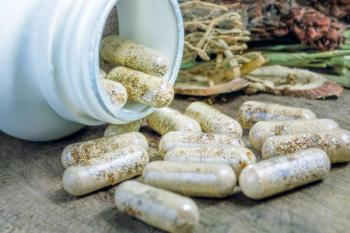
A type of traditional Chinese medicine that is believed to address depression symptoms, scientists recently studied the medicine’s components of the Xiaoyao Pill (XYP) to measure its effectiveness and identify its components.

In a new study, researchers explored quantifying bile acids and tryptophan metabolites in human serum samples was created using ultrahigh-performance liquid chromatography coupled with tandem mass spectrometry (UHPLC–MS/MS).

Detecting tryptophan and other metabolites can be done using various techniques. Researchers created a new UHPLC–MS/MS-based method for quantifying these substances in human plasma.
While venous blood sampling can help gain understanding of patients’ health through phenolic compound analysis, this process can prove discomforting. Volumetric absorptive microsampling has recently been proposed as a more suitable and equally effective alternative.

Chinese researchers created a new approach for identifying and quantifying illegal additives in fruit and vegetable plums, types of often-consumed health-care foods.

Best of the Week: Future of Green Chromatography, BASF and Mingyang Collaboration, Cannabis Analysis
Here is some of the most popular content posted on LCGC International this week.

Ping Wei powder is a type of traditional Chinese medicine used to treat digestive system diseases. Its growth in popularity has led to scientists seeking to properly identify its chemical profile.

Novichok nerve agents are lethal substances when improperly handled. The researchers from the University of Helsinki aimed to find new ways of neutralizing Novichok A-234.

Shimadzu Corporation and Vrije Universiteit Brussel researchers recently investigated how extra-column band broadening (ECBB) can be optimized in micro-flow capillary liquid chromatography.

Nadia Gadi and Allisson Barros de Souza spoke to LCGC International about their investigation into the application of electrochemical advanced oxidation processes (eAOPs) for the efficient removal of pharmaceutical residues in wastewater.

In this month's edition of the LCGC Blog, Emanuela Gionfriddo discusses chromatography resources that can help make the field more accessible to newcomers and veterans alike.

University of Turin scientists developed a UHPLC–PDA-MS/MS-based method for quantifying plant-specialized metabolites for determining the quality of medicinal and aromatic plants.

In this edition of The LCGC Blog, Jonathan Shackman discusses what factors to consider when choosing a mobile phase for liquid chromatography (LC) procedures.

Scientists from the National Institutes for Food and Drug Control have characterized antibody-drug conjugates (ADCs) using various mass spectrometry (MS)-based techniques.

Using ultra-performance liquid chromatography-tandem mass spectrometry (UHPLC-MS/MS), China Pharmaceutical University scientists developed a new method for analyzing compounds found in wastewater.
Here is some of the most popular content posted on LCGC International this week.

Here is some of the most popular content posted on LCGC International this week.

As part of our RAFA 2024 coverage, we interviewed Rudolf Krska of BOKU University about his research on food safety, specifically regarding using analytical methods to mycotoxins and other secondary metabolites in plants and foods.
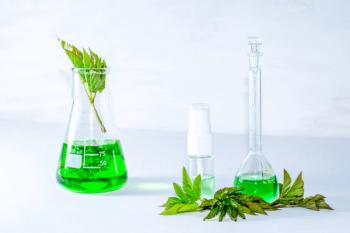
Everyone is talking about sustainability, and organizations are creating sustainability programs. But what does green chemistry really mean, and how does it apply to gas chromatography?
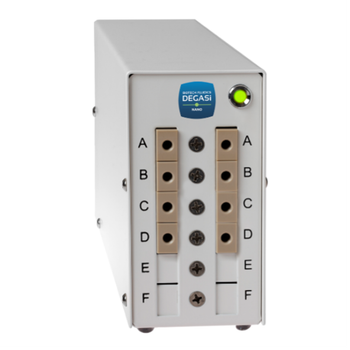
Biotech Fluidics recently released the Biotech Micro Flow Meter, a tool for continuously monitoring the consistency of nanoscale dispensing systems as well as UHPLC and LC/MS solvent/reagent delivery systems.
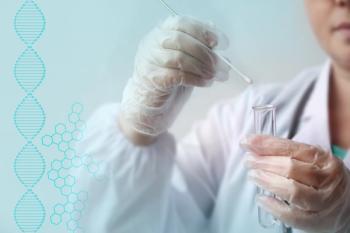
Scientists from the Institute of Analytical Chemistry of the Czech Academy of Sciences and Masaryk University recently tested various saliva sampling methods to optimize bile acid analysis.

This review aims to provide a summary of the most current analytical techniques and their applications in per- and polyfluoroalkyl substances (PFAS) research, contributing to the ongoing efforts to monitor and mitigate PFAS contamination.

Waters Corporation and Princeton University scientists recently investigated how using elastic flow instability can improve the kinetic performance of chromatographic columns.

In a new study, scientists reflected on different advancements made in extracting, purifying, and quantifying kaempferol, a natural product present in various sources.
Here is some of the most popular content posted on LCGC International this week.
Advertisement
Advertisement
Trending on LCGC International
1
Green Chemistry Meets Affinity Chromatography
2
HILIC and the Shift Beyond TFA in GLP-1 Analysis
3
Conversations with Michael Dong: Reversed-Phase Chromatography: Retention Mechanism of Hydrophobic Interaction
4
AI ML Now: Gert Desmet on the State of Artificial Intelligence and Machine Learning in Separation Science
5