



The 10 bad habits to avoid when producing HPLC mobile phases.
The 10 bad habits to avoid when producing HPLC mobile phases.

If there’s one mantra that’s essential for an LC (or GC)-MS operator it’s “contamination, contamination, contamination”. Keep contamination to a minimum and you’ll enjoy a reliable instrument; don’t take the necessary precautions and instead you’ll enjoy reaching for the vent switch and purchasing lots of spares.
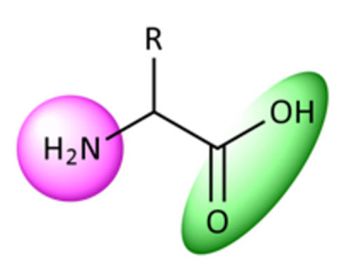
Biopharmaceuticals offer great hope in treating medical conditions which are currently poorly served, at best, by traditional pharmaceuticals. It is estimated that there are over 400 biopharmaceuticals in clinical trials for in excess of 200 disease areas. The enhanced complexity and variability that comes from the size of biopharmaceuticals, allied with the intricacy of the production process, mean chromatography is employed to a much greater extent during production and release testing. The following article will introduce the fundamentals of biopharmaceutical analysis and cover the use of reversed phase HPLC in the analysis of biomolecules. A subsequent article will detail the application of HILIC, IEX, and SEC chromatography for the analysis if biomolecules.
Whether your GC instrument has only been shut down for a couple of days or has been gathering dust in a corner for a year, follow CHROMacademy's quick checklist to increase performance and reliability.
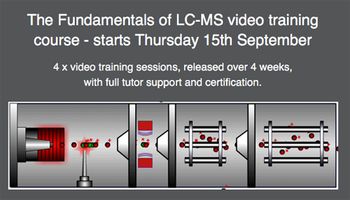
This course has been designed for anyone who is either new to LC–MS, or who wishes to expand their current knowledge and understanding about the technique as a whole.

CHROMacademy's Tutor: Scott Fletcher discusses whether HPLC method development has become a dying art.
LCGC Europe
Selecting a gas chromatography (GC) column can be a daunting task. It may seem like there are a never-ending number of phase chemistries, or an inordinate number of column geometry options. However, when choosing a column for a new application (or to improve an existing one) there are some simple rules that can be followed.
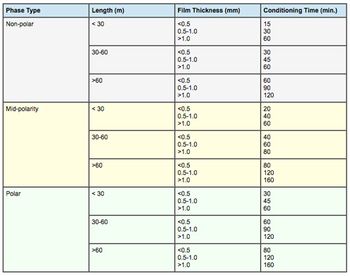
In this article our technical expert, Dr. Dawn Watson, will cover the polarity of the stationary phase, the column length, internal diameter, thickness of the stationary phase film and the required upper operating temperature.
LCGC Europe
An excerpt from LCGC’s e-learning tutorial on GC analysis at CHROMacademy.com
Biopharmaceuticals offer great new possibilities and potential in treating various life threatening diseases such as cancer and autoimmune diseases. However, their complexity, resulting from their heterogeneity, represents a great challenge to the analytical chemist and a suite of techniques is required for their characterization and analysis. Reversed phase chromatography, the mainstay of traditional small molecule analysis, is employed at multiple biopharmaceutical levels due to its versatility, inherent relative efficiency and ease of hyphenation to a mass spectrometer.
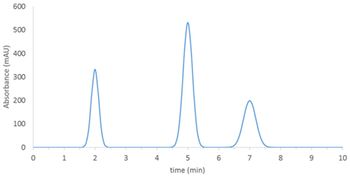
In an ideal chromatographic separation, all sample components would be isolated from each other and detected as fully resolved peaks. However, it is not uncommon to encounter some degree of overlap. In extreme cases, what appears to be a single peak contains in fact two or more coeluting components. This article discusses how to check the purity of such peaks in order to correctly interpret the results of the analysis.
In an ideal chromatographic separation, all sample components would be isolated from each other and detected as fully resolved peaks. However, it is not uncommon to encounter some degree of overlap. In extreme cases, what appears to be a single peak contains in fact two or more coeluting components. This article discusses how to check the purity of such peaks in order to correctly interpret the results of the analysis.
An excerpt from LCGC’s e-learning tutorial on biochromatography at CHROMacademy.com

The first question to ask is, why would headspace GC be a good sampling technique?

If the hold-up volume (time) is the extra-column dead volume expressed in time or volume what is the column dead volume and how can it be calculated?
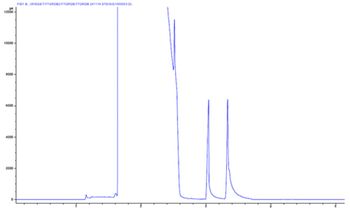
They say a picture paints a thousand words…This month I’ve taken inspiration from a recent webcast, presented at www.chromacademy.com, in which I presented real data from our work that represents some ‘classic’ GC problems.


Understanding how an instrument works is great, but when do you have time to read a textbook, or go to a course? Let CHROMacademy help. Dip in and out of concise modules and take 5 minutes to learn a little about the fundamentals of your analytical technique. Why not delve into GC-MS ionisation techniques right now?
Helium to Hydrogen - A Change Would Do You Good
Reversed-Phase HPLC for the Analysis of Biomolecules
HPLC troubleshooting guide to cycling baselines and pressure fluctuations from LCGC's ChromAcademy.
A question about column dead volume. If the hold-up volume (time) is the extra-column dead volume expressed in time or volume. What is the column dead volume and how can it be calculated?
Instrument manufacturers try to convince us that mass spec is just another detector. Most of us who work with LC-MS know that’s simply not the case – they can be maintenance intensive, unforgiving and generate complex information. When they’re not working it can be difficult to work out exactly where the problem lies. Here’s some advice to point you in the right direction
CHROMacademy delivers key knowledge quickly in bite-size modules, and to prove this here is our seven point guide to understanding atmospheric pressure chemical ionization.
It is of particular importance to reduce extra column volumes when using small volume columns or UHPLC. However, where do these extra column volumes come from, how can they be minimized, and what effect do they have on chromatography?