




HPLC
Latest News

September 1st 2026
A History of The James L. Waters Symposium: Innovators, Instrumentation, and Applications, 1989-2026
A history of the James L. Waters Symposium at Pittcon, from its 1987 origins and its founder, instrument entrepreneur James Logan Waters, through thirty-six installments of speakers spanning gas chromatography to generative AI.
Advertisement
Latest Videos





Shorts

0:49
How to Tell a Story with Your Research
a year ago
by
Caroline Hroncich
Advertisement
More News

The first part of an end-of-the-year review of LCGC International’s editorial coverage of HPLC 2025, which took place in Bruges from 19–23 June 2025 .

The 54th International Symposium on High Performance Liquid Phase Separations and Related Techniques (HPLC 2025), was held from June 15–19, 2025, in Bruges, Belgium. This “Column Watch” installment presents many of the highlighted topics and trends observed at this symposium.

This past week, LCGC International published a variety of articles on hot topics in separation science.

HPLC is indispensable in pharmaceutical analysis and quality control despite some notable shortcomings in laboratory testing and processes to ensure regulatory compliance.
A look at today’s outsourcing scale, examining market dynamics around chromatography, distilling pain points and user requirements, and presenting evidence that digital, standardized method transfer can reduce risk, speed technology transfer, and improve quality, ultimately accelerating time‑to‑market.

A recent study examined a new method to optimize raisin production by demonstrating how pretreating grapes with extra-virgin olive oil (EVOO) before dehydration can significantly improve the retention of beneficial phenolic compounds during raisin production and storage.

High performance liquid chromatography (HPLC) is a widely used and well-established technique, routinely employed by thousands of analytical scientists worldwide. Nonetheless, certain challenges—arising from the complex interplay of multiple factors affecting peak retention and separation—persist. In this context, multidimensional modeling approaches can provide valuable support.

A recent study demonstrated how analytical techniques can be used to differentiate between different types of whiskey.
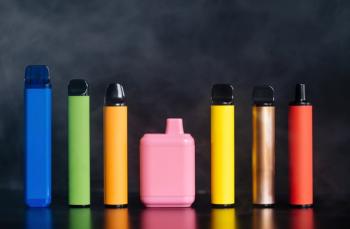
Researchers at the University of Huddersfield analyzed 60 new and used disposable e-cigarettes using HS-GC–MS and HPLC–DAD, finding concerning levels of ethyl maltol and benzoic acid and detailing their chemical composition and changes with use.

In this installment, we explore the key relationships between efficiency and mobile phase flow rate and particle size, as well as secondary determinants of efficiency, including analyte retention, size, and chemistry, and instrumental effects.
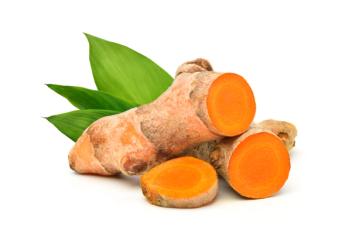
Curcumin is a polyphenol believed to have anticancer effects. To better quantify its existence in plasma, reversed-phase high-performance liquid chromatography (RP-HPLC) was used to create a new analytical approach for quantifying this substance.

To better detect cardiovascular diseases in people, researchers used high-performance liquid chromatography–tandem mass spectrometry (HPLC–MS/MS) to simultaneously quantify metabolites in human plasma.

Johns Hopkins University researchers, in response to many high performance liquid chromatography (HPLC) systems having issues with peak resolution, created their own system for quantifying complex HPLC chromatograms.

In this article, you’ll find some of the top content that was published on LCGC this week, including details on the recent merger between Waters Corporation and BD Biosciences.

Recently, we spoke with Esther Olonimoyo from the University of Maryland, who recently published a study using high-performance liquid chromatography to analyze short chain fatty acids.
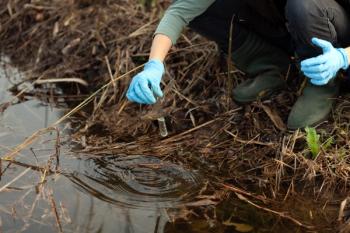
In a new study, researchers explored a new approach for detecting pesticide residues in water samples, based around ionic liquid-based dispersive liquid–liquid microextraction (IL-DLLME).

This review highlights the high performance liquid chromatography (HPLC), mass spectrometry (MS), chromatography data systems (CDS), and related products that were introduced from 2024 to 2025, summarizing the technical specifications of each product and highlighting significant user benefits.

Microplastics can linger in aquatic ecosystems, and there are limited studies that evaluate those substances’ sorption kinetics. Researchers aimed to investigate the sorption behavior of cortisone on MPs.
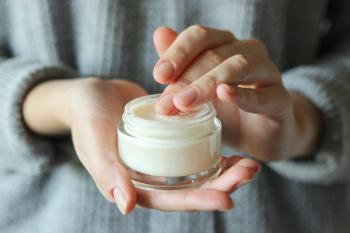
Oxygen heterocyclic compounds are notable components in citrus-scented creams, though quality control is important when using these compounds. Researchers recently created a workflow for extracting these substances using a deep eutectic solvent (DES) for microwave-assisted extraction (MAE).

In this month's edition of the LCGC Blog, discover how weighted least squares regression enhances quantitation accuracy in analytical chemistry, particularly for low-concentration analytes in HPLC.

Isavuconazole, an antimycotic agent used to treat fungal infections, can typically be found during dried blood spot sampling. However, there are obstacles that keep it from being an ideal approach for properly determining the drug’s presence.

HPLC 2025 Preview: On The Road With Your Chromatograph?
Published: | Updated:
Brett Paull from the University of Tasmania, Tasmania and his team describe the latest development in portable LC instruments and their experience of taking portable systems out to the field.

High-performance liquid chromatography (HPLC) was recently used to detect acylated impurities in artificial hormones meant to treat prostate cancer symptoms.

The 54th International Symposium on High Performance Liquid Phase Separations and Related Techniques (HPLC 2025) will be held from Sunday through Thursday, 15–19 June, 2025, in Bruges, Belgium.
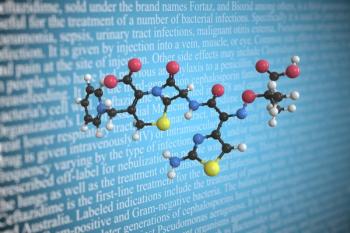
Ceftazidime and avibactam are two anti-infective drugs that can prove difficult to analyze in serum. Determining them can assist in therapeutic drug monitoring or pharmacokinetic studies.
Advertisement
Advertisement
Trending on LCGC International
1
LC–MS/MS Tracks Glyphosate in Coffee Beans
2
Keeping Pace With PFAS Regulation: Analytical Strategies for Food Testing Laboratories
3
GC Reveals How Yeasts Spoil Non-alcoholic Beer
4
GC-MS Reveals Aroma Markers of Three Cinnamons
5