




Multidimensional GC
Latest News
Advertisement
Latest Videos



Advertisement
More News

In new research, two transition substances in myrrh oil were studied during gas chromatography, in order to monitor for any changes in peak shape.
A new gas chromatography-based approach involving skin-contact sampling bands was used to detect potential malaria infections.

Monitoring the quality of essential oils is vital for protecting consumer health. Researchers recently combined gas chromatography and mass spectrometry approaches to gather data on mandarin essential oils.

As a precursor to the Lindau Nobel Laureate Meetings, Texas A&M University held a meeting for future Lindau attendees to highlight the institution’s scientific facilities. One such attendee is Caitlin Cain of the University of Michigan, one of LCGC International’s 2024 Rising Stars of Separation Science.
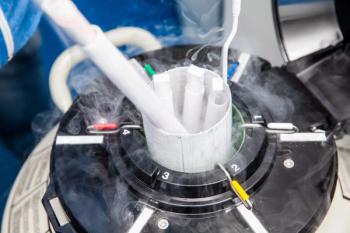
Cryogenic systems were recently tested for their ability to improve gas chromatography’s ability to modulate multi-component mixtures.

Here is some of the most popular content posted on LCGC International this week.

We recently published a three-part interview with Chris Reddy. Here, we provide the full text transcript of the conversation, which includes some additional insights not presented in the video interview.

In the first LCGC Blog of 2025, Caitlin Cain of the University of Michigan highlights the divide between gas and liquid chromatographers, and why both types of techniques should be in the same conversations.

This article highlights a curated selection of the most popular GC-related content, with a focus on the diverse applications of the technique, as featured in LCGC.

In this LCGC International interview with José Fernando Huertas-Pérez who is a specialist in chemical contaminants analytics and mitigation at the Nestlé Institute for Food Safety and Analytical Sciences at Nestlé Research in Switzerland, In this interview we discuss his recent research work published in Food Chemistry on the subject of a method for quantifying multi-residue pesticides in food matrices using gas chromatography–tandem mass spectrometry (GC–MS/MS) (1).

LCGC International sat down with Giorgia Purcaro of the University of Liege to discuss the impact that solid-phase microextraction (SPME) and comprehensive multidimensional gas chromatography (GC×GC) is having on food analysis.

In this LCGC International interview with Philip J. Marriott and Michelle S. S. Amaral from the Australian Centre for Research on Separation Science, School of Chemistry, Monash University, in Clayton, Victoria, Australia, we discuss their recent review published in Analytical Chemistry on the subject of analysis of food contaminants using multidimensional gas chromatography (1).
Here is some of the most popular content posted on LCGC International this week.

Separation scientists frequently encounter critical pairs that are difficult to separate in a complex mixture. To save time and expensive solvents, an effective alternative to conventional screening protocols or mathematical peak width reduction is called iterative curve fitting.
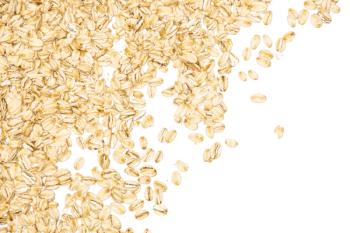
In the testing of six different oat brands, headspace sorptive extraction and comprehensive two-dimensional gas chromatography time-of-flight mass spectrometry (GC×GC–TOF-MS) reveal how various packaging types can affect and alter the oats’ volatile profile, underscoring the potential impact of packaging on food quality.

Giorgia Purcaro from the University of Liège was interviewed at RAFA 2024 by LCGC International on the benefits of modern multidimensional GC methods to analyze mineral oil aromatic hydrocarbons (MOAH) and mineral oil saturated hydrocarbons (MOSH).

In this article, the authors describe a simple workflow to develop a GC×GC method for a specific sample upon initial use, with the aim of decreasing the time to accomplish functional workflows for new users.

In this feature article, we profile three global cities (Cairo, Beijing, and Delhi) and how they are combatting the air pollution crisis to better protect the health of their residents.

Scientists recently used thermal desorption (TD) and gas chromatography– time-of-flight mass spectrometry (GC×GC-TOFMS) to track per- and polyfluoroalkyl substances (PFAS) emissions from materials used in firefighter gear.
Here is some of the most popular content posted on LCGC International this week.

Posters at the 2024 conference will feature research on a variety of topics from PFAS testing to the HPLC analysis of soft drinks.

The 2024 Gulf Coast Conference will include a variety of presentations on chromatography. This article features a sampling of some upcoming sessions.
The introduction of comprehensive two-dimensional gas chromatography (GC×GC) to the sample screening toolbox has substantially increased the ability to comprehensively characterize complex mixtures. However, for many gas chromatography (GC) users, the thought of having to learn to develop methods on a new technology is daunting. Developing a basic GC×GC method for most (nonspecialized) applications can be accomplished in minimal time and effort given parameter suggestions and ranges to target analytes in a sample of interest. In this article, the authors work describe a simple workflow to develop a GC×GC method for a specific sample upon initial use, with the aim of decreasing the time to accomplish functional workflows for new users.

Petroleum contamination from leaking underground storage tanks, for example, is a significant concern for both the environment and human health. Thorough characterization of the contamination is required to form appropriate risk assessments and remediation strategies, but until now, the determination of total petroleum hydrocarbons (TPHs) in soil has typically involved a convoluted and labour-intensive process. In this article, the analysis of TPH in environmental media is simplified using flow-modulated GC×GC–FID with quantitation based on pre-defined compound groupings. This approach overcomes the drawbacks of conventional solvent fractionation approaches, by eliminating the need for sample fractionation and automating data processing workflows.
Here are the top five articles published on LCGC International this week.
Advertisement
Advertisement
Trending on LCGC International
1
Green Chemistry Meets Affinity Chromatography
2
HILIC and the Shift Beyond TFA in GLP-1 Analysis
3
Conversations with Michael Dong: Reversed-Phase Chromatography: Retention Mechanism of Hydrophobic Interaction
4
AI ML Now: Gert Desmet on the State of Artificial Intelligence and Machine Learning in Separation Science
5