This LCGC blog highlights the ACS SCSC’s initiatives, events, and awards that connect and support the global separation science community across academia, industry, and government.

Emanuela Gionfriddo is a professor at the University at Buffalo, in Buffalo, New York. She received her PhD in analytical chemistry in 2013 from the University of Calabria, and carried out postdoctoral studies with Prof. Janusz Pawliszyn at the University of Waterloo in Canada. The focus of her work is creating green extraction methodologies to analyze complex biological and environmental samples. Gionfriddo has also been recognized with a National Science Foundation CAREER Award, and she is the 2023 winner of the LCGC Emerging Leader in Chromatography Award.

This LCGC blog highlights the ACS SCSC’s initiatives, events, and awards that connect and support the global separation science community across academia, industry, and government.

In this month's edition of the LCGC Blog, Emanuela Gionfriddo discusses chromatography resources that can help make the field more accessible to newcomers and veterans alike.

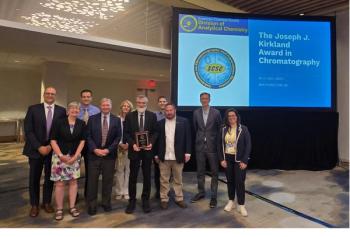
In this edition of The LCGC Blog, Emanuela Gionfriddo discusses the two world-class scientists and trailblazer women in separation chemistry and the awards they received at Pittcon 2024.

Extraction technology is a rapidly growing sect in separation science, and ExTech remains the largest conference dedicated to discussing and sharing research done in this field.

ExTech is the largest conference dedicated to extraction technology, a field within separation chemistry that has seen remarkable growth over the past three decades.

Having to handle mentorship remotely during the pandemic created challenges but also spurred us to think creatively.

An undeniable effect of the COVID-19 pandemic is that we have learned how to adapt (quickly) to sudden changes.

Understanding the fundamentals of extraction methodologies is critical, and can enable chromatographers to find smart solutions to tackle the complex composition of different types of samples.

Understanding the fundamentals of extraction methodologies is critical.

Microextraction is an affordable solution for preventing “garbage in–garbage out” effects in one-dimensional (1D) and two-dimensional (2D) GC separations, by providing analyte preconcentration, interference removal, tuning of extraction coverage, and easy coupling to GC systems.

Separation science is an intriguing and challenging (yes, let’s admit it) interdisciplinary field. Many of our daily rituals depend on effective chemical separations.

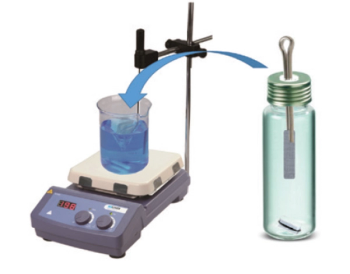
It is important to develop analytical methods to detect crude MCHM components in environmental water samples. This article describes two microextractive methods based on solid-phase microextraction (SPME) in fibre format and thin film microextraction (TFME) that were developed and validated for 4-MCHM and other constituents of crude MCHM.

Crude (4-methylcyclohexyl)methanol (MCHM) is a chemical contaminant that must be monitored in fresh water environments, because of significant health risks to surrounding human populations. A new method for MCHM analysis was developed using solid-phase microextraction (SPME) and thin film microextraction (TFME) combined with GC–MS. Both methods achieved limits of quantitation lower than standard methods using SPE.


Published: May 26th 2021 | Updated:

Published: August 4th 2023 | Updated:

Published: January 25th 2022 | Updated:

Published: June 3rd 2024 | Updated:

Published: October 1st 2021 | Updated:

Published: August 4th 2021 | Updated: