

The Column
This is the second in a series of articles exploring current topics in separation science that will be addressed at the HPLC 2019 conference in Milan, Italy, from 16–20 June.
The Column
This is the second in a series of articles exploring current topics in separation science that will be addressed at the HPLC 2019 conference in Milan, Italy, from 16–20 June.

The Column
The 48th International Symposium on High Performance Liquid Phase Separations and Related Techniques (HPLC 2019) will be held 16–20 June 2019 at the Milano-Bicocca University, in Milan, Italy. This is the first time that this symposium will be held in Italy.
The Column
Per- and polyfluoroalkyl substances (PFAS) are chemicals found in fire‑fighting foams and consumer products requiring water-resistant and stain-repellent properties. As a result of their unique chemical properties and long‑term widespread usage, these chemicals are an emerging human health concern. US Environmental Protection Agency (EPA) released analytical methods for PFAS measurement in 2009 and most recently in November of 2018. In this article, data generated using these methods with allowed analytical modifications is presented and demonstrates robustness and reproducibility while achieving low level detection limits in drinking water.
The Column
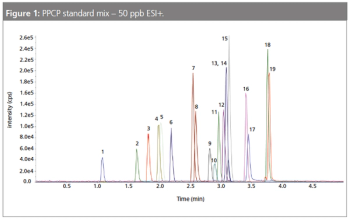
Pharmaceutical and personal care products (PPCPs) are routinely detected in a variety of aquatic environments and these compounds encompass a wide range of chemical and physical properties that contribute to their combined analytical screening challenges. Further examination of their accumulation throughout environmental samples that contain solids, including sediments, adds additional levels of analytical difficulties in their effective extraction and new sample matrix interferences. QuEChERS (Quick, Easy, Cheap, Effective, Rugged, and Safe) has become a very popular extraction and cleanup technique for the analysis of multiresidue pesticides in agricultural and food samples. Applying the same principles to overcome similar challenges in PPCP analysis in solid environmental samples is demonstrated in this article.

The Column
Polycyclic aromatic hydrocarbons (PAHs) and their oxygenated derivatives (oxy-PAHs) are highly toxic carcinogens that present a significant hazard to human health. To fully understand the risks associated with exposure to PAHs, robust analytical methods for their detection are required. Mass spectrometry coupled with ultrahigh-performance liquid chromatography (UHPLC–MS) has proven to be a powerful technique for the analysis of these compounds. This article looks at the benefits of using atmospheric-pressure chemical ionization (APCI) in the place of traditional electrospray ionization (ESI) for the detection of oxy-PAHs.

The Column
This article focuses on ways to accelerate glycan screening data analysis, while keeping high reproducibility.A major focus of the pharmaceutical industry is the production and development of biologics-therapeutics produced via biological means-to provide novel treatments for diseases with unmet clinical needs. A large percentage of biologics under development are proteins, such as monoclonal antibodies (mAbs), fusion proteins, antibody–drug conjugates (ADCs), and enzymes. The structures of these protein drugs are made more complex by post‑translational modifications (PTMs).

The Column
Markes International has been awarded two Queen’s Awards for Enterprise in the categories of “innovation” and “international trade”.

The Column
Following decades of research, evidence of the human microbiome’s importance in maintaining overall health and well-being has become evident, spawning a multimillion-dollar industry. A wide range of products aimed at repairing and maintaining a healthy microbiome are now available, with many focusing on prebiotics.

The Column
Researchers have analyzed sediment core from a lake located in the northern foothills of Alaska’s Brooks Range to investigate the Beringian standstill hypothesis (BSH) of human migration into the Americas.
The Column
Thermo Fisher Scientific has announced the opening of its Customer Solution Center in Delhi, India.
The Column
Click the title above to open The Column May 2019 Europe & Asia issue, Volume 15, Number 5, in an interactive PDF format.
The Column
Click the title above to open The Column May 2019 North American issue, Volume 15, Number 5, in an interactive PDF format.