The Column-09-10-2019

Celia.jpg

The Column

Heatwaves are significantly affecting the consistency and quality of wine production. The Column spoke to Julia C. Gouot from the National Wine and Grape Industry Centre in Australia about the importance of chromatography to understand the effects of temperature change on grape physiology and composition.

Figure 1 L.png

The Column

With the era of new complex drug products there is an increasing demand on multivariate modelling tools to integrate robust analytical method design, facilitate efficient and science-based change management, and improve communication between regulators and industry. Mechanistic models provide several advantages in terms of modelling efficiency, versatility, and high predictive power. The following case study will demonstrate a robust method design for industrial Cannabis sativa.

CBD tea.jpg

The Column

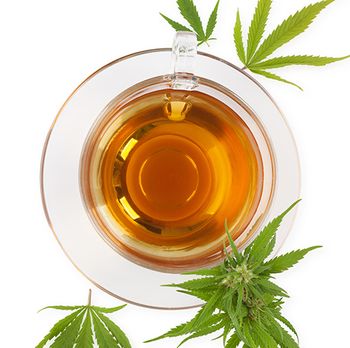
Quantification of cannabinoids is essential for the accurate labelling of hemp products, both for quality control and for establishing legality with regards to d9-tetrahydrocannabinol (THC) content. For this article, the cannabinoid content of several cannabidiol (CBD)-rich hemp tea samples was determined and was found to often deviate from the content stated on the packaging. Just like the cannabis flower, hemp tea can be analyzed easily and effectively for its cannabinoid content using high performance liquid chromatography (HPLC). The HPLC–UV assay of choice provided good linearity, low limits of detection (LODs), and high precision of retention time and peak area for the 11 cannabinoids under investigation.


Carbon Black.jpg

The Column

Researchers from the University of Rome have developed a strategy for the identification of underivatized short peptides in urine using graphitized carbon black (GCB) solid-phase extraction (SPE) and liquid chromatography–mass spectrometry (LC–MS).