LCGC Europe-02-01-2007

i9_t-402245-1408668709242.gif

LCGC Europe

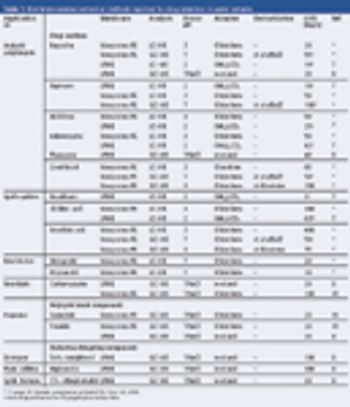
Traditional methods for the sample preparation of insoluble solid materials have represented one of the more time consuming and labour-intensive efforts in analysis. In this instalment of "Sample Prep Perspectives", Ron Majors examines modern sample preparation methods for solids that often involve increased temperature and higher pressure to speed up the extraction process. In addition, modern sample preparation methods have been automated to relieve analysts of the drudgery associated with traditional methods. Here, he reports on automated Soxhlet extraction, supercritical fluid extraction, pressurized fluid extraction–accelerated solvent extraction, and microwave-assisted extraction and updates earlier coverage.
i3_t-402247-1408668699937.jpg

LCGC Europe

The concept of membrane-controlled processes is widespread in nature. Nearly all biological mechanisms concerning mass transport and exchange are regulated by membrane barriers and a variety of technical and biotechnological applications have been devised based on this mechanism. Membrane applications in analytical chemistry are geared towards the enrichment of target substances from an aqueous solution or the separation of compounds from a complex matrix. This article describes membrane-assisted extraction processes to separate traces of polar pharmaceutical substances the so called emerging micropollutants from aqueous samples. Basic prospects and examples of membrane-supported extractions are presented.

i1-402248-1408668697149.jpg

3D mouse

LCGC Europe

A new type of computer peripheral has been introduced designed to make navigating in virtual 3D space both seamless and simple. 3Dconnexion, a subsidiary of Logitech, has developed the SpaceNavigator in conjunction with Google Earth and Google SketchUp. The device offers a more user friendly alternative to the mouse movement and keystroke combinations currently used to navigate 3D environments or to move 3D objects. Other 3D modelling programs, such as AutoCAD, can also use the device.

i17_t-402246-1408668703639.gif

LCGC Europe

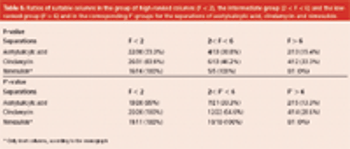
This article gives an overview of the performance of a previously developed system for the ranking of C18 reversed-phase columns applied to different pharmaceutical analyses. The separation of eight different drug substances from their respective impurities was studied. The chromatographic procedure for acetylsalicylic acid, clindamycin hydrochloride, buflomedil hydrochloride, chloramphenicol sodium succinate, phenoxymethylpenicillin and nimesulide was performed according to the corresponding European Pharmacopoeia monograph. The separations of dihydrostreptomycin sulphate and vancomycin were performed according to literature. It was found that that the column ranking system is a helpful tool in the selection of suitable columns in these analyses.

i1-402243-1408668719532.jpg

LCGC Europe

Bruker Daltonics has announced the receipt of a $1.7 million subcontract award from the US army through a lead systems integrator. This award is for the company's RAID-M handheld chemical agent detectors.