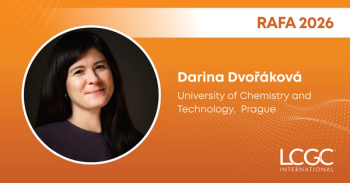
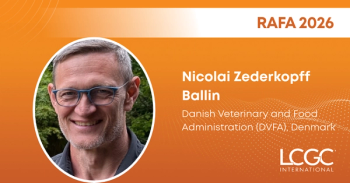
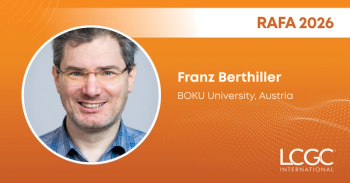
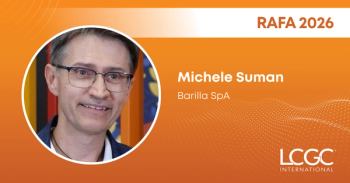
This week, Chromatography Online explored how the technique is advancing wastewater drug monitoring, siRNA method development, and food safety testing, with previews of RAFA 2026 and a return to HPLC fundamentals with Michael Dong.
Stephan Wagner, Professor of Environmental Analysis at Fresenius University of Applied Sciences in Idstein and chair of an analytica conference session on plastics analysis, shares his insights on microplastic particles.
Microplastics can now be found everywhere, but detecting the tiny plastic particles is still a challenge. At analytica2026, scientists, equipment manufacturers, and users will be looking for solutions together. Stephan Wagner, Professor of Environmental Analysis at Fresenius University of Applied Sciences in Idstein, and head of an analytica conference session on plastics analysis, offers his thoughts on the plastic particles.1,2
Professor Wagner, how advanced is the analysis of microplastics?
With the right reference materials, it works quite well in drinking water, although low concentrations are definitely a challenge. It’s more difficult in wastewater because it contains all kinds of particles, not just plastic. It’s even more complicated for soil and air samples. The concentrations in soil are usually lower, while the particles in the air are extremely small. However, air measurements are important, especially if you consider tire wear particles. They can be so small that they are possibly respirable.
What methods are used to detect microplastics?
The number of particles—as well as their shape, size and chemical composition—are easy to determine using optical microscopy in combination with Fourier transform infrared spectroscopy (FTIR) or Raman spectroscopy. It’s then called FTIR or Raman microscopy. Complementary methods like these, which also include the combination of electron microscopy and X-ray spectroscopy, are becoming increasingly popular. There are also mass-based methods, with pyrolysis gas chromatography–mass spectrometry (GC–MS) being the gold standard. The sample is pyrolyzed at high temperatures, the gaseous pyrolysis products are separated by gas chromatography and identified by mass spectrometry. However, there is interference depending on the matrix. This is a common problem with mass-based processes. And with small particles, even if there are many of them, the mass can be so small that the detector does not respond.
Will your analytica conference session highlight the different methods?
Yes, but in the session, we don’t want to just talk about microplastics in environmental samples. Before the material ends up in nature, it may be cheese packaging or a drinks bottle. It’s therefore also about product quality and how microplastics can be controlled and reduced in packaged or industrially processed food in general.
What are your expectations for analytica?
For me, analytica is the leading trade fair par excellence because it brings together people from science, the equipment industry, and application. We discuss certain topics in the sessions at the analytica conference and then go over to the exhibition halls where we see the corresponding analysis systems and application notes. Equipment manufacturers also sometimes take part in the discussion in the sessions. This proximity to application and the exchange are important. It’s a great help to us in the research lab when a manufacturer presents a new method or device that can solve our problems.
The session “Challenges and Solutions for Analyzing Plastics Throughout Their Life Cycle – Detecting Plastics Where They Don’t Belong”, led by Stephan Wagner, will take place on March 25 from 09:30 to 11:30 in the ICM (Room 3).