
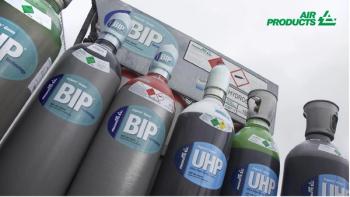
Air Products' BIP Argon delivers point-of-use purification down to single-digit ppb impurity levels, giving GC and ICP labs the baseline stability, sensitivity, and equipment protection of an external purifier, without needing one.
Air Products' BIP Argon delivers point-of-use purification down to single-digit ppb impurity levels, giving GC and ICP labs the baseline stability, sensitivity, and equipment protection of an external purifier, without needing one.

A concise summary of the LCGC Lifetime Achievement in Chromatography and the Emerging Leader in Chromatography Award Winners.
Restek's three certified reference material (CRM) mixes deliver all native and labeled furans needed for AOAC/EU-compliant food safety analysis.
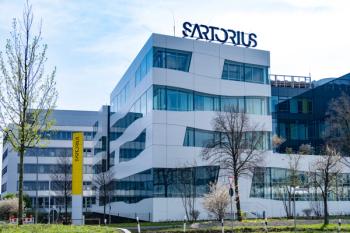
For scientists who depend on accurate, traceable data every day, the tools they use matter enormously. Sartorius, a global leader in biopharma research and manufacturing solutions, has introduced its latest generation of laboratory balance—the Cubis III—and it reflects how much the expectations placed on such instruments have changed in recent years.
"Peak to Plate: Expert Insights in Food Analysis" brings you exclusive insights from chromatography professionals on the front line of food analysis.
In "Peak to Plate: Expert Insights in Food Analysis,” we present a compilation of the latest news articles and peer-reviewed content that highlight the utility of chromatography in food analysis. Happy reading!

ASMS 2026 highlighted AI-driven MS software, faster/deeper proteomics, spatial biology imaging, biopharma characterization tools, PFAS monitoring, and greener instrumentation.

HPLC 2026 session on AI in separations science, covering LC–MS, modelling, peak integration and digital method development.
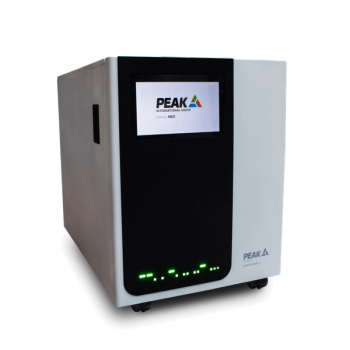
This week at the ASMS Annual Conference, Peak Scientific unveiled its latest nitrogen generator, the Genius NEO, describing it as the most advanced product in the company's history
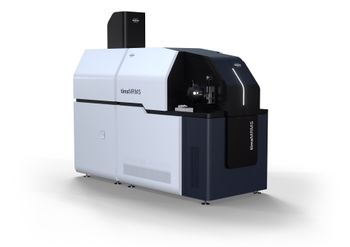
Bruker debuts advanced proteomics, metabolomics, and ultra-high-resolution mass spectrometry (MS) platforms at ASMS.
Thermo Fisher’s three new mass spectrometer platforms, AI-driven software acquisitions, and integrated workflows aim to reduce analytical tradeoffs across complex scientific markets

Velaris unites major laboratory automation brands to advance chromatography and analytical workflows.

Waters Corporation reported double-digit organic growth and raised its 2026 outlook as the company begins integrating the recently acquired BD Biosciences and Diagnostic Solutions businesses into its analytical and diagnostic portfolio.
As we celebrate Earth Day 2026, LCGC revisits the archives and looks back at the content that remains as relevant as ever.

Analytica 2026, March 24–27 in Munich, brings together 1100+ exhibitors alongside expert forums, live lab demos, and career events shaping the future of laboratory technology.

A session exploring the latest analytical and computational strategies in metabolomics/lipidomics is scheduled at analytica 2026 on Thursday, March 26, from 15:00–17:00 in ICM Saal 2. Four speakers from academia and industry will address the growing challenges of large, complex metabolomic data sets, from multivariate data analysis to single-cell multi-omics.
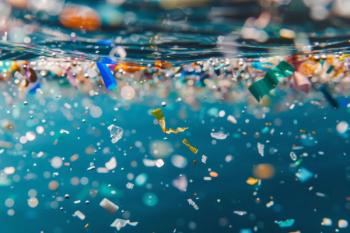
Stephan Wagner, Professor of Environmental Analysis at Fresenius University of Applied Sciences in Idstein and chair of an analytica conference session on plastics analysis, shares his insights on microplastic particles.

Recent analytical science milestones feature major leadership and achievement awards from Pittcon 2026, alongside groundbreaking research using advanced chromatography to detect endocrine-disrupting chemicals and identify early-stage pancreatic cancer.
Top articles include a new “GC Connections” article on maintenance practices for modern capillary gas chromatography (GC) systems, an interview on rapid per- and polyfluoralkyl substances (PFAS) analysis, and a preview of an upcoming session at Analytica 2026 in Munich, Germany.
Top articles published this week highlight the analytical challenges of metal speciation in biological systems, a new machine-learning framework called assisted active learning (AAL), and the value of in-person conferences.
Top articles published this week highlight International Day of Women and Girls in Science and a new acquisition from Waters Corporation.
Top articles published this week highlight troubleshooting issues close to the point of sample injection and the importance of continued collaboration between industry and academia.

The Pittsburgh Conference on Analytical Chemistry and Applied Spectroscopy (Pittcon) has served as a major international meeting for analytical scientists across academia, industry, and government laboratories for more than 75 years. Pittcon 2026 will take place March 7–11, 2026, at the Henry B. González Convention Center in San Antonio, Texas, under the conference theme The Scientific Frontier.

In a recent review article, researchers from Concordia University examined recent advancements in LC–MS workflows for tissue lipidomics.

A recent study used two-dimensional liquid chromatography (2D-LC) to study the therapeutic characteristics of Arnebiae Radix (“Zicao”), a traditional herbal medicine.

A multidisciplinary study was conducted to increase our understanding of thiosuccinimide linkers in bioconjugates.
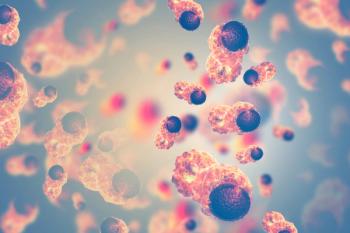
In a recent study, researchers from the Chinese Academy of Medical Sciences and Peking Union Medical College used liquid chromatography–mass spectrometry (LC–MS) to gain further insight into tumor metabolism.

A new study from the University of Tübingen presents a new Python-based open-source software tool for PFAS detection.

A recent study looks at wastewater generated by power plants, using large-volume injection ion chromatography to accurately assess corrosive anions and cations in wastewater.

A recent study published in Analytical and Bioanalytical Chemistry examined a new detection method for natural bioactive compounds.

March 6th 2024

January 15th 2024


