The AppNote describes the fully automated determination of MOSH/MOAH in Food and Packaging extracts following DIN EN 16995. Industrial production, processing and transportation invariably put food at risk of contamination with MOSH/MOAH. To ensure a reasonable cost benefit balance, high laboratory productivity and good quality of results, leading contract laboratories increasingly strive to automate their processes. An example is the determination of MOSH/MOAH using a LC-GC-FID Coupling Platform. Depending on the sample matrix, additional automated sample preparation by aluminum oxide clean-up, epoxidation, and/or saponification is necessary prior to analysis. The dedicated evaluation software integrates the complex MOSH/MOAH chromatograms accurately and reproducibly.
This week, Chromatography Online explored how the technique is advancing wastewater drug monitoring, siRNA method development, and food safety testing, with previews of RAFA 2026 and a return to HPLC fundamentals with Michael Dong.
In this seventh part of " Conversations with Michael Dong," a series on fundamentals of HPLC in pharmaceutical analysis, LCGC International’s "Perspectives in HPLC" column editor explains why 2.1-mm i.d. columns are less preferred for pharmaceutical quality control.
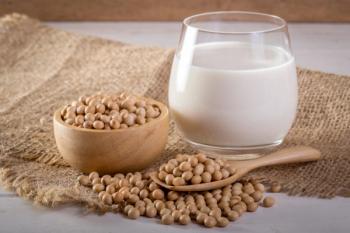
Ultrahigh-performance liquid chromatography–quadrupole time-of-flight mass spectrometry (UHPLC–QTOF-MS) shows how soaking and cooking break down soybean fats.
Nicolai Zederkopff explores chromatography’s role to help implement the maximum tolerable level (MTL) framework for food adulteration to translate analytical results into compliance decisions.