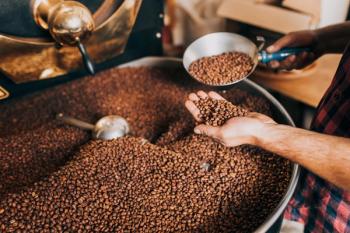
Liquid chromatography–tandem mass spectrometry (LC–MS/MS) finds low glyphosate residues of the weedkiller glyphosate in coffee beans.
The week’s highlights include a four-part interview with Koen Vanhoutte of Johnson & Johnson Innovative Medicine on building more sustainable and efficient analytical laboratories, alongside stories on self-optimizing LC workflows, chromatography-based orange juice debittering, pesticide transformation during apple digestion, LC–MS/MS vitamin D profiling in breast cancer patients, and approaches for monitoring microbial spoilage in refrigerated meat.
This week, the LCGC International website explored how analytical science is evolving through sustainability, automation, and advanced chromatography applications. Highlights include a four-part interview with Koen Vanhoutte of Johnson & Johnson Innovative Medicine discussing greener, more resource-efficient laboratory workflows and the growing role of self-optimizing LC systems and model-driven analytical science. Readers can also discover how chromatography is helping improve orange juice quality through non-thermal debittering, revealing how digestion changes pesticide behavior in apples, identifying vitamin D as a possible predictor of chemotherapy-induced neuropathy, and enabling rapid spoilage detection in refrigerated meat using advanced volatilomics and mass spectrometry techniques.
This is the Best of the Week.
LCGC International Presents a Four-Part Interview with Koen Vanhoutte of Johnson & Innovative Medicine
Analytical laboratories around the world are changing as they look for ways to reduce their environmental impact while still delivering high-quality results. A recent session at analytica 2026 brought together leading researchers, industry experts, and innovators who are helping shape this shift. By introducing new technologies and smarter ways of working, they showed how laboratories can become greener, more efficient, faster, and more affordable at the same time.
LCGC International spoke to one of the session’s participants, Koen Vanhoutte of Johnson & Johnson Innovative Medicine, to discuss realistic ways to make analytical workflows more sustainable and resource-efficient.1-4
A chromatography-based, non-heat process removes bitterness from orange juice while preserving its flavor and nutrients. LCGC International spoke to Araceli Rivera‑Pérez, lead author of the paper that resulted from its development.5
Using high-performance liquid chromatography-mass spectrometry (HPLC–MS) alongside bioassays and microbiota analysis, research has shown that gastrointestinal digestion alters the chemical fate, bioaccessibility, and toxicity of pesticides in apples in a compound-dependent manner.6
Using liquid chromatography-tandem mass spectrometry (LC–MS/MS) to measure pre-treatment vitamin D levels, researchers found that low vitamin D is associated with a higher risk of severe paclitaxel-induced nerve damage in breast cancer patients.7
Using headspace-gas chromatography-ion mobility spectrometry (HS-GC-IMS) and solid phase microextraction-GC-mass spectrometry (SPME-GC-MS) coupled with multivariate modelling, researchers correlated meat volatile profiles with microbial counts to enable rapid, chromatography-based assessment of spoilage and shelf-life.8
References
1. Vanhoutte, K.Beyond Trial-and-Error: Self-Optimizing LC Workflows. Chromatography Online website
2. Vanhoutte, K.The Evolving Role of Chromatography in Model-Based Analytical Science. Chromatography Online website
3. Vanhoutte, K. Balancing In-Silico Retention Predictions with Experimental Chromatography Confidence. Chromatography Online website
4. Vanhoutte, K. From Routine Testing to Model-Driven Analytical Workflows in Modern Laboratories. Chromatography Online website.
5. Rivera‑Pérez, A.; Chasse, J. Chromatography-Driven Non-Thermal Debittering Improves Orange Juice Quality. Chromatography Online website.
6. Chasse, J. Chromatographic Analysis of Digestion-Driven Pesticide Transformation in Apples. Chromatography Online website.
7. Chasse, J. LC–MS/MS-Based Profiling of Vitamin D Status as a Predictor of Paclitaxel-Induced Neuropathy in Breast Cancer Patients. Chromatography Online website.
8. Chasse, J. Chromatographic Volatilomics for Microbial Spoilage Monitoring in Refrigerated Meat. Chromatography Online website.