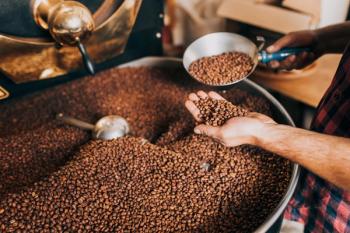
Gas chromatography (GC) tests show spoilage yeasts alter flavor and raise alcohol in NoLo beer.
This week on ChromatographyOnline.com, we highlight sustainable sample preparation alongside the transformative impact of AI and machine learning in chemical analysis, and explore advanced methodologies like ion mobility-HRMS and HPLC for tackling complex real-world challenges.
ChromatographyOnline.com articles this week included the first installment of our “Sample Prep Perspectives” series on sustainable analytical methods. Also, discover how artificial intelligence and machine learning are revolutionizing data interpretation and workflow efficiency. We feature insights from Rasmus Bro on the integration of generative AI with chemometrics and explore how neural networks and ML are predicting retention times to boost confidence in screening and non-targeted workflows.
Beyond AI, we’re diving into practical applications and advanced methodologies. Learn how Gauthier Eppe is using ion mobility–high resolution mass spectrometry (HRMS) to tackle complex environmental pollutants and see how researchers are combining high=pressure liquid chromatography (HPLC) with genomic modeling to finally standardize the heat levels in chili pepper breeding.
This is the Best of the Week.
Because sample preparation uses the most solvents, it is typically the least environmentally friendly step of the process. While completely eliminating sample preparation is the ideal "green" scenario, it is rarely practical. Therefore, we present the first1 of what will be a series of "Sample Prep Perspectives" columns written by Mary Ellen McNally evaluating various tools developed over the past decade to gauge the sustainability of these methods, with the ultimate goal of helping the scientific community adopt a universal, practical standard for measuring analytical "greenness."
LCGC International spoke to McNally about
Rasmus Bro shows how generative AI extends chemometrics by automating curation, linking analytical data with text knowledge, and improving interpretation.3
At analytica 2026, Gauthier Eppe described adding ion mobility–HRMS to GC–HRMS workflows to support analysis of environmental pollutant mixtures.4
A recent paper introduced what the authors described as “an uncertainty-aware graph-based neural network that predicts retention times across multiple column chemistries and buffer pH conditions. LCGC International spoke to some of the authors of this paper, including corresponding author Pankaj Aggarwal, about their work.5
Saer Samanipour from the University of Amsterdam, The Netherlands used machine-learning (ML)-predicted retention time indices to estimate true-match probabilities to boost identification confidence when retention time calibrants are unavailable.6
Controlling the "heat" or pungency levels in chili peppers (Capsicum annuum) is a major challenge for breeders due to complex genetic inheritance. To address this, researchers are using high-performance liquid chromatography (HPLC) to precisely quantify capsaicin and dihydrocapsaicin levels.7 By combining these accurate chemical measurements with genomic prediction (GP) models, scientists can now better predict the spice levels of offspring based on parental data.
References
1. McNally, M. E. Sustainable Analytical Methods: The Challenge Is Assessing Methods Before and After Improvements. Chromatography Online website.
2. The Editors of LCGC International. Advancing Green Chromatography: Sustainable Separations Strategies for Industrial and Agricultural Applications.Chromatography Online website.
3. Eppe, G.; Jones, K. Gauthier Eppe on Ion Mobility–HRMS for Complex Environmental Pollutants. Chromatography Online website.
4. Bro, R. Jones, K. Chemometrics and Generative AI: New Possibilities for Analysis Today. Chromatography Online website.
5. Aggarwal, P.; Beck, A.; Jones, G. et al. MC-Retention: Accelerating Liquid Chromatography Screening with Neural Network. Chromatography Online website.
6. Samanipour, S.; Matheson, A. AI/ML in Practice: Enhanced Identification Probability for Non-Targeted Workflows. Chromatography Online website.
7. Chasse, J. Utilizing HPLC and Genomic Prediction to Standardize Pungency in Chili Pepper Breeding. Chromatography Online website.