Nitrosamine contamination in pharmaceuticals has become a major regulatory concern due to their potent carcinogenicity, requiring ultra-trace-level detection to ensure patient safety. Advanced LC-MS/MS workflows provide the necessary sensitivity, selectivity, and robustness to accurately quantify nitrosamine drug substance-related impurities (NDSRIs), even within complex pharmaceutical matrices. Case studies with betahistine, orphenadrine, and chloropyramine demonstrate how streamlined LC-MS/MS strategies can reliably detect and confirm nitrosamine impurities well below regulatory thresholds.
In this seventh part of " Conversations with Michael Dong," a series on fundamentals of HPLC in pharmaceutical analysis, LCGC International’s "Perspectives in HPLC" column editor explains why 2.1-mm i.d. columns are less preferred for pharmaceutical quality control.
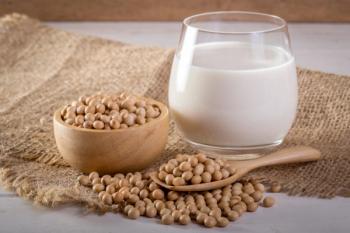
Ultrahigh-performance liquid chromatography–quadrupole time-of-flight mass spectrometry (UHPLC–QTOF-MS) shows how soaking and cooking break down soybean fats.
Nicolai Zederkopff explores chromatography’s role to help implement the maximum tolerable level (MTL) framework for food adulteration to translate analytical results into compliance decisions.
Franz Berthiller (BOKU University, Austria) discusses a multilaboratory study that used retention index markers to align mycotoxin liquid chromatography–mass spectrometry (LC–MS) data.
A QuEChERS/ultrahigh-performance liquid chromatography and high-resolution mass spectrometry (UHPLC-HRMS) method tracks 23 plant toxins in cereals and spices. Michele Suman discusses the method with LCGC International.