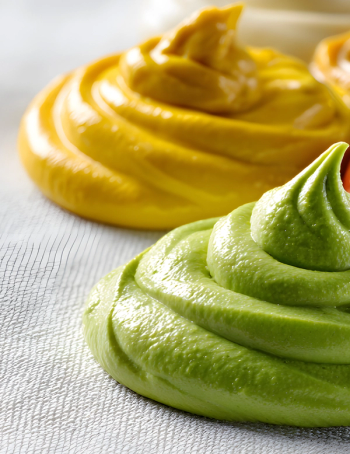
Gas chromatography–mass spectrometry (GC–MS) and ion chromatography profile wasabi and mustard heat and acidity.
John Dolan?s recommendation for Session 1120, ?HILIC- Fundamentals and New Applications,? was presided over by Olujide T. Akinbo of Butler University. The session focused on innovations and breakthroughs in HILIC.
John Dolan’s recommendation for Session 1120, “HILIC- Fundamentals and New Applications,” was presided over by Olujide T. Akinbo of Butler University. The session focused on innovations and breakthroughs in HILIC.
The first presentation, from Yury Zelechonok of Sielc, titled “HILIC, Mixed-Mode and AQ- Three Approaches for Analysis of Polar Compounds. Their Scope, Limitations, Applications,” was focused on the analysis of polar compounds. Following this presentation was one from David S. Bell of Sigma-Aldrich entitled, “New Insights into Retention and Selectivity in Aqueous-Normal Phase/HILIC Separations.”
Next on the agenda was “Fundamental Importance of Buffer Cation and Anion on the Robustness and Selectivity of HILIC Separations of Basic Compounds,” given by A. Carl Sanchez of Phenomenex. Last up before a the recess was a presentation by Joseph Pesek of San Jose State University on “Why Aqueous Normal Phase and HILIC are Different.”
Immediately following the brief recess was, “Undirected Metabolomic Analysis of Islets of Langerhans by Hydrophilic Interaction Liquid Chromatograph- Time of Flight Mass Spectrometry,” presented by Matthew Allen Lorenz of the University of Michigan. Finally, there was a presentation on “The HILIC Behavior of Reversed-Phase/ Ion Exchange Mixed-Mode HPLC Columns and Applications,” presented by Xiaodong Liu of Dionex Corporation.