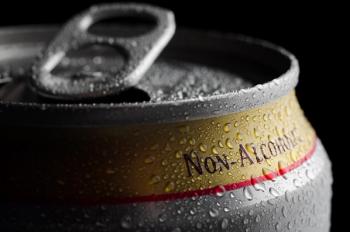
Gas chromatography (GC) tests show spoilage yeasts alter flavor and raise alcohol in NoLo beer.
Headspace-gas chromatography–ion mobility spectrometry (HS-GC-IMS) alongside an electronic nose (E-nose) was applied to characterize volatile compounds in ginger slices subjected to hot-air drying (HAD), infrared drying (IRD), and microwave-assisted hot-air drying (MHD). Overall, the dual-platform chromatographic approach effectively connected chemical fingerprints with sensory-relevant attributes, supporting optimized drying strategies for high-quality ginger products.
Researchers investigated the effects of hot-air drying (HAD), infrared drying (IRD), and microwave-assisted hot-air drying (MHD) on the drying kinetics, quality attributes, and flavor profiles of ginger slices. Headspace-gas chromatography-ion mobility spectrometry (HS-GC-IMS) and electronic nose (E-nose) detected 67 volatiles. A paper based on this work was published in Food Chemistry.1
A food and medicinal crop valued for its bioactive components, such as gingerols, zingerone, and zingiberene, these compounds found in ginger (Zingiber officinale) contribute to a wide range of antioxidant, anti-inflammatory, and hypoglycemic effects.2 The high moisture content and thermal sensitivity of its bioactive profile, however, cause fresh ginger to be highly perishable and vulnerable to nutrient degradation during the handling and storage processes after harvest.3 As a result, drying methods such as HAD, IRD, MHD, and vacuum freeze drying (VFD) are commonly applied in ginger processing. While HAD is advantageous economically and simple to operate, prolonged exposure to elevated temperatures frequently results in color degradation and volatile loss.4 Although IRD generally allows relatively efficient heat transfer and satisfactory quality retention, the limited penetration depth of infrared radiation can restrict consistent heating in samples that are thick or bulky.5 MD significantly enhances drying efficiency and reduces processing time through volumetric dielectric heating, though rapid internal energy accumulation can induce localized overheating and non-uniform moisture distribution.6 Although VFD is effective in maintaining food quality, it is time-consuming and cost prohibitive, so much so that the researchers did not include the method in their study .7 Due to the differences in moisture removal mechanisms among these four technologies, the researchers believed that a systematic investigation of how such mechanistic variations influence product quality is necessary, with special emphasis on flavor characteristics in ginger, which are an essential component of its value as a spice and functional ingredient.1
The researchers found that MHD significantly accelerated drying compared with HAD and IRD. HAD better preserved lightness and yellowness, however, whereas IRD and MHD promoted browning and red shifting. The highest rehydration ratio (6.67) was observed in HAD at 70 °C, while MHD reduced rehydration capacity. Total gingerols content reached its maximum in IRD at 80 °C (30.48 mg·g-1), whereas HAD showed lower retention. As mentioned earlier, HS-GC-IMS and E-nose detected 67 volatiles. Principal component analysis explained 83.7% variance, and orthogonal partial least squares discriminant analysis identified 18 key markers. Correlation analysis revealed that color attributes closely reflected gingerols content and key aromas.1
“These results,” write the authors of the paper,1 “validate the efficacy of a dual-platform approach in bridging chemical fingerprints with sensory attributes, providing a scientific basis for the precision processing of high-quality dried ginger.”
Read More on Similar Topics
References