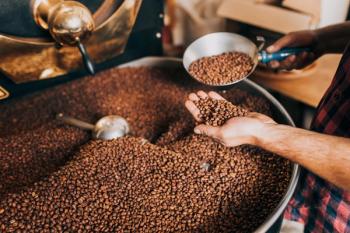
Liquid chromatography–tandem mass spectrometry (LC–MS/MS) finds low glyphosate residues of the weedkiller glyphosate in coffee beans.
Headspace solid-phase microextraction gas chromatography-mass spectrometry (HS-SPME-GC-MS) identified key aroma compounds differentiating peaches and nectarines by flesh type.
The smell of peaches is a key attribute of the fruit’s popularity, but there is little understanding as to why different kinds of peaches have such different scents. In response, researchers conducted a comprehensive characterization of the aroma profiles and identified key odor-active compounds distinguishing peaches from nectarines, as well as across different peach flesh colors using headspace solid-phase microextraction gas chromatography-mass spectrometry (HS-SPME-GC-MS). A paper based on this research was published in Food Research International.1
How Do Aroma Compounds Influence the Flavor of Peaches and Nectarines?
Earlier studies have shown that a fruit's smell plays a huge role in how it tastes, and consumers pick that up both by sniffing the fruit straight and through the back of our nose while eating.2 In peaches, that signature peachy scent comes from a mix of different compounds, and the exact blend and strength depend on the fruit's genes, how far along it is in ripening, and the growing conditions.3-5 Past studies have looked at these compounds in some peaches and nectarines, but they were limited to just one type, small groups of fruits, or didn't compare peaches and nectarines or different flesh colors directly.6-8 This has led the researchers involved with the study to believe that there is a wide gap in understanding how these compounds actually affect how people smell the fruit across lots of different peach varieties.1
What Were the Finds and What Did They Mean?
The researchers identified 80 aroma-related compounds and used statistical analysis to better understand their activity levels. The study showed that both skin texture and flesh color strongly affect aroma composition. Nine important aroma compounds were linked to differences between peaches and nectarines, while eight others were connected to differences in flesh color. Additional analysis suggested that compounds such as lactones, terpenes, and norisoprenoids are mainly responsible for the fruity, sweet, and floral aromas in peaches, while certain C6 (a molecule containing six carbon atoms) compounds contribute more to the green and waxy notes found in nectarines. Aroma testing experiments also confirmed the importance of several key compounds, including linalool, β-ionone, γ-decalactone, hexyl acetate, and nonanal in peaches, and linalool, (E)-2-hexenal, and hexanol in nectarines, in recreating their characteristic aromas.1
“These findings,” write the authors of the paper,1 “provide mechanistic insights into aroma differentiation and offer practical guidance for flavor-oriented breeding strategies.”
The researchers point out that this combined sensory and chemical analysis only applies to the comparison between peaches and nectarines. The differences related to flesh color were observed only in the chemical data, since people tasting the fruit did not notice clear aroma differences between the groups. In general, aroma profiles were similar across different flesh colors, but skin type had a noticeable effect on overall aroma quality. Together, through both chemical testing and sensory evaluation, these results show that certain aroma compounds play an important role in creating the distinct aromas of peaches and nectarines. This helps improve understanding of peach aroma and may support future breeding efforts focused on flavor.1
Read More on Similar Topics
References