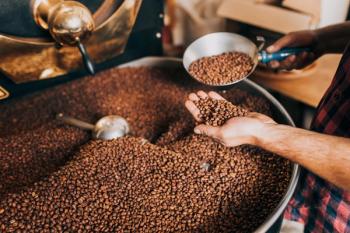
Liquid chromatography–tandem mass spectrometry (LC–MS/MS) finds low glyphosate residues of the weedkiller glyphosate in coffee beans.
EPRW 2026 marks 30 years of pesticide residue analysis innovation in Rotterdam.
The 16th European Pesticide Residue Workshop (EPRW 2026) convened from June 8–12, 2026 at the Postillion Hotel & Convention Centre WTC, drawing more than 400 analytical chemists, regulatory officials, and industry representatives from around the world for a milestone edition of the biennial conference.
A Return to Its Roots
This year's workshop held special significance: the 16th edition in Rotterdam marked the 30th anniversary of the event and returned to the country where it all began, since EPRW was founded in 1996 with its first edition held in Alkmaar, the Netherlands. The gathering was organized by the EPRW Scientific and Organizing Committee, with Hans Mol of Wageningen Food Safety Research serving as EPRW 2026 Chair, alongside EPRW founder André de Kok, who took on the role of Co-Chair.
The full program spanned five days, opening with a pre-workshop session on Monday afternoon followed by a welcome reception. The scientific program running from Tuesday through Friday consisted of plenary sessions featuring keynote lectures, invited speakers, regular presentations, and talks from young scientists, supplemented by poster and vendor sessions.
Keynote speakers and invited presentations included:
Speakers for the Themed Day on Challenging Pesticides and Matrices included Michelangelo Anastassiades of the European Union Reference Laboratory for Pesticide Residues in Food with Single Residue Methods, CVUA-Stuttgart, Fellbach, Germany, who presented “20 years Retrospect of EURL-SRM Activities on Challenging Pesticides,” Sarah King of the Eurofins Central Analytical Laboratory, New Orleans, Louisiana, who discussed “Analytical Challenges of Polar Pesticides in Complex Food Matrices: Case Studies on Botanicals, Dietary Supplements and Green Coffee,”and Jonathan DeCenzi of NOW Foods in Bloomingdale, Illinois, who spoke on “Streamlined Sample Preparation for LC-MS and GC-MS Multi-pesticide Residue Analysis of Botanicals and Oils in a Quality Control Environment.”
Discussions on the Newest Developments on Analytical Methods and QA/QC included Steven Lehotay of the USDA Agricultural Research Service
Wyndmoor, Pennsylvania, who presented “The QECh*All Mega-Method is Better than the QuEChERS Method,” and Elisa Gredilla of the European Accreditation Laboratory Committee (TN Food and Feed),Madrid, Spain, who spoke on “EA Guidelines on Accreditation of Pesticide Residues Analysis in Food and Feed.”
Speakers for the Special Session on Artificial Intelligence (AI) and Pesticide Residues included Bas van der Velden of Wageningen Food Safety Research in The Netherlands, who spoke on “AI in Food Safety,” Leah Riter of Bayer Crop Science in Chesterfield, Missouri, who presented “AI & Machine Learning: Driving Innovation in Regulatory Science,” and Henrik Hupatz of Sweden’s Stockholm University and Stockholm University Center for Circular and Sustainable Systems (SUCCeSS), who spoke on “Making More of Pesticide LC/HRMS Data: Machine Learning for Standard-free Quantification and Risk-based Prioritisation.”
Science and Sample Preparation Take Center Stage
Sessions throughout the week focused on state-of-the-art gas chromatography-tandem mass spectrometry (GC-MS/MS) and liquid chromatography-tandem mass spectrometry (LC-MS/MS) workflows for monitoring pesticide residues in food and beverages, alongside discussions of shifting dietary trends, pesticide registration updates, toxicology, risk assessment, and single-residue methods.
Sample preparation and automation were also prominent themes. GERSTEL highlighted new Twister phases, micro-solid-phase extraction (μ-SPE) workflows, and its Automated Liner Exchange (ALEX) system, while major instrument and consumable vendors used the exhibition floor to showcase next-generation column technologies, virtual modeling software, and rapid method development tools.
GERSTEL also presented innovative solutions for automated sample preparation and efficient GC-MS analysis, including new Twister phases, uSPE, and automated liner exchange (ALEX) , with company representatives on-site to discuss practical approaches for conducting this work.
A Hub for the Global Residue Community
The workshop remains the key event dedicated to the latest developments in the analysis of pesticide residues in food and drink, offering a unique opportunity to network with residue experts from around the world, including specialists and authorities from governmental and private laboratories, public organizations, regulatory bodies, research institutes, food producers and distributors, pesticide manufacturers, and major vendors of analytical equipment and consumables.
As the pesticide residue analysis community looks ahead, attention now turns to continued advances in automation, sensitivity, and regulatory harmonization, all themes expected to shape the conversation until the next EPRW convenes May 29 - June 2, 2028 in Krakow, Poland.
References
EPRW 2026. European Pesticide Residue Workshop website