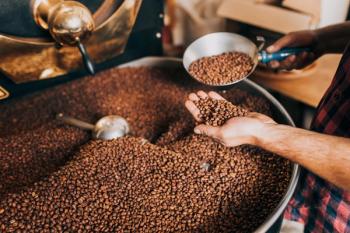
Liquid chromatography–tandem mass spectrometry (LC–MS/MS) finds low glyphosate residues of the weedkiller glyphosate in coffee beans.
Researchers applied ultra-performance liquid chromatography coupled to electrospray ionization quadrupole-time-of-flight mass spectrometry (LC–ESI-QTOF–MS) and gas chromatography-mass spectrometry (GC–MS) to comprehensively profile bioactive peptides and short-chain fatty acids (SCFAs) in mixed-species probiotic yogurt. These chromatographic and mass spectrometric analyses demonstrated how specific Lacticaseibacillus and Bifidobacterium strains enhance the production of therapeutic metabolites, successfully identifying novel short peptides and providing actionable insights for developing functional, health-oriented dairy products.
Eating yogurt has become a popular way of accessing bioactive metabolites such as peptides and short-chain fatty acids (SCFA). These bioactive metabolite profiles are influenced by proteolytic systems and metabolic pathways of lactic acid bacteria (LAB) and probiotics. which differ among the species, influence bioactive metabolite profiles in yogurt. A joint study conducted by researchers at the University of Pretoria (Hatfield, South Africa) and the National University of Lesotho (Maseru, Lesotho) determined the bioactive peptide and SCFA profiles in mixed-species yogurt incorporating Bifidobacterium bifidum ATCC 11863, Bifidobacterium breve ATCC 15700, Bifidobacterium animalis ssp. animalis ATCC 25527, and Lacticaseibacillus rhamnosus GG using ultra-performance liquid chromatography coupled to electrospray ionization quadrupole-time-of-flight mass spectrometry (LC–ESI-QTOF–MS) and gas chromatography-mass spectrometry (GC–MS), respectively. A paper based on this research was published in the Journal of Dairy Science.1
Milk, a natural source of vital nutrients, including proteins, carbohydrates, minerals, and vitamins, is a fundamental component of the human diet.2 In addition to its rich nutritional content, It has been established that the ingestion of fermented milk is even more valuable to human health, as their bioactivity has been attributed to bioactive metabolites, mainly SCFAs and the peptides which are produced during the fermentation process by starter and probiotic species.3-7 SCFAs are monocarboxylic acids consisting of two to six carbon atoms that are produced as metabolic byproducts of many fermentative pathways; these acids are associated with various bioactivities such as anti-inflammatory, immunomodulatory, and gut barrier strengthening effects.4,8
The researchers report that significantly higher proteolytic activities were observed in yogurt incorporating either probiotic species of B. bifidum ATCC 11863 or L. rhamnosus GG. Yogurt incorporating B. bifidum ATCC 11863 contained more peptides with higher bioactivity. Bifidobacterium animalis ssp. animalis ATCC 25527 significantly enhanced the SCFA content in yogurt. Whereas L. rhamnosus GG increased the production of both bioactive peptides and SCFA in yogurt when incorporated as a monoculture or coculture with B. bifidum ATCC 11863 and B. animalis ssp. animalis ATCC 25527, respectively. Novel short peptides (<10 AA) which were derived from minor milk serum proteins with potential antimicrobial properties were identified in the different probiotic yogurts.1
“This study, write the authors of the paper,1 “provides insights into the bioactive metabolite profiles of yogurt incorporating probiotics, L. rhamnosus and Bifidobacterium spp., and their role in developing yogurt with enhanced therapeutic benefits.” They go on to state that “informed selection of probiotic strains to be incorporated in yogurt is vital for enhanced functionality. This information could be used by the dairy and probiotic industries for the development of novel functional yogurt for health-oriented consumers. The utilization of other peptidomic techniques, such as targeted approaches, can further provide additional information on peptide profiles of probiotic combinations used in this study.”1
Read More on Similar Topics
References