The panel considers how AI and automation could reshape peptide method development, and why scientific judgment will remain essential.
Targeted liquid chromatography-mass spectrometry (LC-MS) metabolomics identifies plasma biomarkers for lung cancer screening.
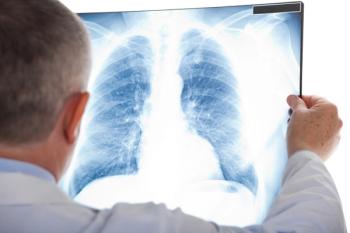
Lung cancer kills more people worldwide than any other cancer. Finding it early (ideally through affordable blood tests) could save many lives.
Researchers at The Third Affiliated Hospital of Kunming Medical University (Yunnan, China) and Fudan University (Shanghai, China), in conjunction with colleagues at the University of Alberta (Edmonton, Canada) recently reported in the journal Phenomix.1 the results of their large-scale, quantitative metabolomics study exploring whether certain natural chemicals in the blood could serve as early warning signs of lung cancer. Plasma samples were collected and analyzed using an in-house-developed, targeted liquid chromatography-mass spectrometry (LC-MS) metabolomics method.
Why is Lung Cancer Such a Serious Problem in China?
Major health organizations around the world, including the U.S. National Cancer Institute, the United Nations, and the World Health Organization, all agree that tackling lung cancer is one of the most urgent public health challenges we face today.2While lung cancer rates are gradually falling in countries like the United States and Canada, Asia bears a disproportionate share of the burden, accounting for half of all new lung cancer cases worldwide, with China particularly continuing to see rising numbers of both new cases and deaths from the disease.3 By 2040, China is expected to see more than 1.3 million new lung cancer diagnoses every single year.4
Smoking is by far the biggest risk factor for lung cancer. In China, three out of four lung cancer cases occur in people who smoke. However, about one in four cases develops in people who have never smoked at all.5Beyond smoking, other factors that can raise the risk of lung cancer in China include breathing in secondhand smoke, exposure to polluted outdoor air, radon gas in the home, a diet lacking in fruits and vegetables, and having a chronic lung condition.6
Can a Simple Blood Test Accurately Detect Lung Cancer?
The researchers team set out to develop a simple blood test that could tell apart people who are likely to have lung cancer from those who are healthy. All participating patients agreed to take part, and the study was approved by the appropriate medical ethics board. Every step of collecting and storing blood samples followed established safety and quality standards.
The study included 410 people in total: 137 healthy individuals, 189 people diagnosed with early-stage lung cancer, and 84 with advanced-stage lung cancer. Blood samples were analyzed using a specialized technique capable of detecting 138 different chemical compounds.1
Using the data collected, the researchers developed a test based on just six of those chemicals that could identify lung cancer patients across all stages with 95% accuracy. A separate version of the test, focused on catching lung cancer in its earliest stages, performed nearly as well at 94.3% accuracy. Both tests were first developed using one group of patients and then successfully confirmed using a separate group, which the researchers believe is an important step in proving their reliability.1
“Our proposed biomarker models,” write the authors of the paper,1 “show significant improvements over previously published models for metabolite-based lung cancer diagnosis and detection. These metabolite biomarker panels are intended for the development of a low-cost, minimally invasive blood test for lung cancer screening in China.”
The researchers acknowledge that more testing is still needed. They are working on larger studies that include more patients, including people with other lung diseases, to make sure the results are not being confused with other conditions. The goal is to confirm that this blood-based approach is reliable enough to eventually be used as a routine lung cancer screening tool in the Yunnan, China region.1
Read More About Similar Topics
References