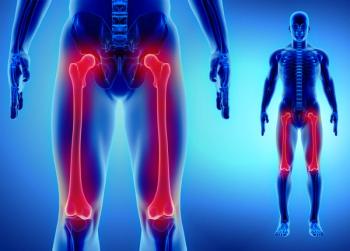
Data-independent acquisition (DIA) liquid chromatography-tandem mass spectrometry (LC–MS/MS) reveals shared and site-specific proteins across the thighbone.
Using liquid chromatography-tandem mass spectrometry (LC-MS/MS), researchers mapped where sugar-related collagen crosslinks occur in human bone and found site-specific differences in their distribution and only weak links to bone strength.
Changes in the structure of the bone’s supporting material (the “scaffolding” around bone cells) can affect how strong bones are, not just how much bone there is. One factor thought to weaken bones in aging and diabetes is the build-up of certain sugar-related chemical links in collagen, a key bone protein. However, scientists still do not exactly know where these changes occur in the bone or how much of them is present, which makes it harder to fully understand their role in bone weakness. In response, a joint study conducted by researchers at Vanderbilt University and the Tennessee Valley Healthcare System (both in Nashville, Tennessee)involved the analysis of physiological crosslinks, glucosepane (GN) and pentosidine (PE), in collagen I from cortical bone of 12 male and 12 female cadaveric femurs using liquid chromatography-tandem mass spectrometry (LC-MS/MS). A paper based on this research was published in the journal Bone.1
What are Advanced Glycation End-Products, and How Are They Related to Bone Weakening in Aging and Disease?
Weakening of bones in aging, diabetes, osteoporosis, and related conditions happen when sugars in the body react naturally with proteins, creating compounds known as advanced glycation end-products (AGEs). Several types of these sugar-related links have been found in human tissues, but two are especially important: glucosepane, because it is the most common, and pentosidine, because it is often used as a general marker of this type of chemical damage in the body.2-4 Both PE and GN were first found in lab-made protein samples exposed to glucose, and later were also detected in animal and human tissues. 3,5,6The amount of these cross-links has been found to rise noticeably in diabetes, ageing, and other diseases.3,7-9
Where are GN and PE Crosslinks Located in Collagen I, and How Do They Relate to Bone Strength?
The analysis identified 11 distinct crosslinks at 8 different sites within the collagen I triple helix. Crosslinks at two sites formed only within the same collagen chain, while the remaining crosslinks formed within the same triple helical molecule and/or between different molecules of the neighboring microfibrils. Most of the GN and PE crosslinks were located to the D-periodic overlap zone of the microfibril. The relative crosslink levels varied significantly at different sites: 0.005% to 2.1% for PE and 0.06% to 24.9% for GN. Female donors had fewer crosslink sites compared to male donors. While total PE and total fluorescent advanced glycation end-product (fAGE) levels did not correlate with bone mechanical properties in the present sample size, the level of GN at one site positively correlated with ultimate stress, while the level of PE at another site negatively correlated with post-yield toughness. However, these correlations were weak, and several other correlations between site-specific GN and PE levels and these mechanical properties were not consistent between the sexes.
“This study,” write the authors of the paper,1 “identified the native locations of GN and PE within collagen I of bone, an innovation essential for addressing the question of how the specific structural features of bone extracellular matrix affect bone quality.”
“However,” the authors continue,1 “these correlations were weak, primarily due to low statistical power, imprecise group matching and other limitations, and should not be overinterpreted. Thus, additional studies are needed to elucidate a complex role of these AGEs in bone fragility with respect to other determinants of bone toughness, fracture toughness, and strength.”
Read More on Similar Topics
References