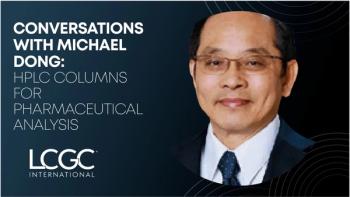
In Part 2 of "Conversations with Michael Dong," the LCGC column editor discusses HPLC columns for pharmaceutical analysis and the case for short columns.
Two-dimensional gas chromatography has advanced considerably since its first emergence in the late 1980s and its first applications for the hydrocarbon fingerprinting of crude oils. In a new interview, Frank L. Dorman of Penn State University talks about the evolution of GCxGC and the key advantages and disadvantages of the technique, including why fear of its complexity gets in the way of its broader use.