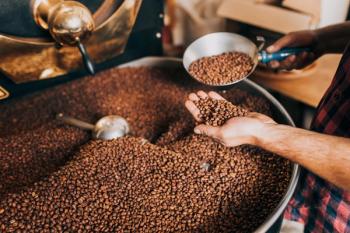
Liquid chromatography–tandem mass spectrometry (LC–MS/MS) finds low glyphosate residues of the weedkiller glyphosate in coffee beans.
Osaka University researchers developed a non-destructive model to predict banana ripeness by analyzing emitted volatile organic compounds (VOCs). Using gas chromatography-mass spectrometry (GC-MS) and orthogonal partial least squares (OPLS) regression, they accurately linked VOC composition to color and sugar content. This metabolomics-based approach aims to replace destructive testing, offering a practical tool for improving banana supply chain management.
A recent study conducted at The University of Osaka (Japan), based on the research team’s hypothesis that a non-destructive model for predicting fruit ripeness could be developed using volatile organic compounds (VOCs) generated through biological reactions, collected and analyzed VOCs emitted by bananas using gas chromatography-mass spectrometry (GC-MS). Orthogonal partial least squares (OPLS) regression analysis was performed, with VOC composition as explanatory variables and ripeness indicators (hue angle and soluble solids content [SSC}) as response variables. A paper based on this research was published in Journal of Bioscience and Bioengineering.1
Bananas are among the most widely produced and consumed fruits worldwide, and are valued for their sweetness, aroma, and nutritional content.2Imported green bananas undergo artificial ripening. Current quality testing is destructive, and non-invasive monitoring technologies are not yet established.3 Conversely, a non-invasive model developed for this study uses VOC-based metabolomics to predict banana ripening by monitoring softening, color changes, and sugar content increases.4Previous studies have shown that changes in total VOC emission from bananas during storage are closely linked to ripening-related parameters such as firmness, color, and soluble sugar content.5 Similar relationships between VOC formation and ripening indicators, such as texture and SSC, have also been reported in other fruits such as pears and tomatoes, which suggests that VOC dynamics are broadly associated with fruit ripening.6,7
However, the previous research mostly focused on observing VOCs and ripening indicators, with few identifying specific marker compounds critical for predicting ripening status or understanding their correlation with ripening parameters. In addition, no standardized non-destructive or non-contact indicators exist for evaluating ripening using VOCs naturally generated and emitted by bananas. As VOCs emitted by bananas result from biological reactions in both the peel and pulp, the Osaka research team hypothesized that a non-destructive model for predicting ripening could be developed using VOCs as indicators.1
The researchers treated Cavendish bananas with ethylene gas to induce ripening, then monitored VOCs, color, and sugar content over five days across three batches. This data from 12 bananas was used to create an OPLS regression model, aiming to replace destructive testing in the banana supply chain. The resulting model predicted banana ripeness indicators with high accuracy. Esters, which contribute to the characteristic sweet and fruity aroma of bananas, and their precursor alcohols were identified as key contributors to ripeness prediction.1
“To the best of our knowledge,” wrote the authors of the study,1 “this study represents the first attempt to predict banana ripeness indicators (hue angle and SSC) non-destructively and non-invasively using VOCs emitted by the fruit.”
The research team proposes that future work integrating sensor technologies and validating the model across different cultivars and production regions would advance practical implementation in banana supply chain management. Moreover, extension of the model to incorporate environmental factors, such as temperature and humidity, would enhance its robustness significantly. Overall, the team believes that this study provides a possible foundation for simple, real-time monitoring of ripening and quality control in post-harvest processing, transportation, and retail management of bananas.1
Read More on Similar Topics
References