

Opinion|Videos|June 18, 2026
Reference Standards: The Foundation of Analytical Confidence
The panel addresses the quality, availability, and reliability of reference standards, and explores where stable isotope-labelled internal standards add the most analytical value.
Advertisement
Episodes in this series
The panel addresses one of the most practically frustrating aspects of nitrosamine testing: the quality, availability, and reliability of reference standards. The discussion covers the prevalence of poorly characterized or even chemically impossible standards in the marketplace, what organizations should require as evidence that a standard is genuinely fit for purpose, and the analytical techniques best suited to confirming identity and establishing purity. The panelists also examine the role of stable isotope-labelled internal standards, discussing where they add the most value and sharing examples of situations where their absence has led to significant analytical problems. The segment underscores how the pressure to move quickly in this field has repeatedly led to shortcuts in standard qualification that carry long-term consequences.
Moderated by Joseph Lackey, Technical Manager at LGC Standards, the discussion brings together Jason Brown, Principal Consultant at Brown Pharma Consulting Ltd, Maria Kristina Parr, a professor in pharmaceutical chemistry from the Freie Universität Berlin, Jörg Schlingemann, Director, Principal Expert Quality Control Systems at Merck Healthcare KGaA, and George Johnson, an associate professor at Swansea University.
Advertisement
Related to this article
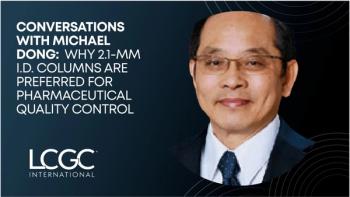
In this seventh part of " Conversations with Michael Dong," a series on fundamentals of HPLC in pharmaceutical analysis, LCGC International’s "Perspectives in HPLC" column editor explains why 2.1-mm i.d. columns are less preferred for pharmaceutical quality control.

Ultrahigh-performance liquid chromatography–quadrupole time-of-flight mass spectrometry (UHPLC–QTOF-MS) shows how soaking and cooking break down soybean fats.

Liquid chromatography–tandem mass spectrometry (LC–MS/MS) links altered metabolism to lingering symptoms in Ebola survivors.

Nicolai Zederkopff explores chromatography’s role to help implement the maximum tolerable level (MTL) framework for food adulteration to translate analytical results into compliance decisions.

Franz Berthiller (BOKU University, Austria) discusses a multilaboratory study that used retention index markers to align mycotoxin liquid chromatography–mass spectrometry (LC–MS) data.
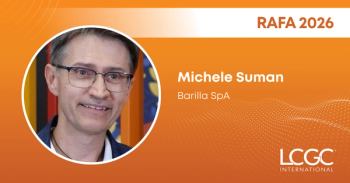
A QuEChERS/ultrahigh-performance liquid chromatography and high-resolution mass spectrometry (UHPLC-HRMS) method tracks 23 plant toxins in cereals and spices. Michele Suman discusses the method with LCGC International.

Gas chromatography-mass spectrometry (GC-MS) study links 110 scent compounds to cinnamon variety and origin.

Affinity chromatography-purified viral protein powers a new FAdV-8b test for chickens.
Advertisement
Advertisement
Trending on LCGC International
1
A New Era in LC Troubleshooting Tools
2
Conversations with Michael Dong: Acetonitrile and Methanol: A Comparison of Their Chromatographic Properties
3
Conversations with Michael Dong: Why 2.1-mm i.d. Columns Are Preferred for Pharmaceutical Quality Control
4
LC–MS/MS Tracks Drugs in Australian Wastewater
5