|Articles|April 19, 2012
- The Column-04-19-2012
- Volume 7
- Issue 8
Strategies for Rapid Chiral HPLC Method Development for Pharmaceutical Analysis
Author(s)Kelly Ke Zhang, Midco Chi-Ying Tsang
Automated column and mobile phase screening is the current trend in the pharmaceutical industry to develop chiral methods. This study presents comprehensive strategies for automated rapid chiral HPLC method development including normal-phase, reversed-phase and polar organic phase separation modes.
Advertisement
Automated column and mobile phase screening is the current trend in the pharmaceutical industry to develop chiral methods. This study presents comprehensive strategies for automated rapid chiral HPLC method development including normal-phase, reversed-phase and polar organic phase separation modes.
Articles in this issue
over 14 years ago
Oil spillover 14 years ago
Autism biomarkersover 14 years ago
High Throughput Microchromatographyover 14 years ago
Organic separationover 14 years ago
Biofuel analysisAdvertisement
Related to this article

In this fifth part of " Conversations with Michael Dong," a series on fundamentals of HPLC in pharmaceutical analysis, LCGC International’s "Perspectives in HPLC" column editor discusses how to overcome challenges with reversed-phase chromatography in drug analysis.


Liquid chromatography–tandem mass spectrometry (LC–MS/MS) and microbiome data reveal kidney markers of diabetic disease.

Ultrahigh-performance liquid chromatography–tandem mass spectrometry (UHPLC-MS/MS) shows Maresin1 drops in heatstroke and may protect the heart.

This week on Chromatography Online, leading experts shared practical insights with LCGC International on sustainable affinity methods, siRNA impurity profiling, nontarget screening, peptide tech transfer, and AI in separation science.

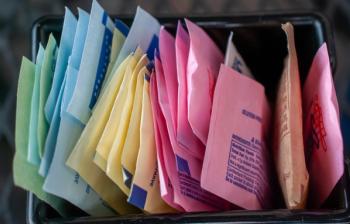
Liquid chromatography–mass spectrometry (LC–MS) was used to determine if there is a link between artificial sweeteners and breast cancer.

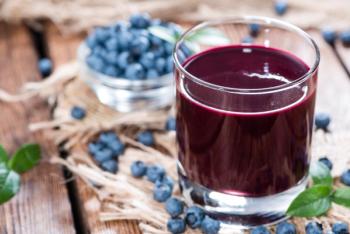
Chiral gas chromatography–mass spectrometry (GC–MS) shows how heat and storage alter linalool in blueberry juice.

Anneli Kruve reports that toxicity predictions from MS2-derived molecular fingerprints outperform spectral-similarity methods in nontarget screening of food.
Advertisement
Advertisement
Trending on LCGC International
1
Prioritizing Unknowns in Nontarget Screening of Food Samples
2
Jan Christensen on Quantitative Non-Targeted Screening
3
Conversations with Michael Dong: Overcoming Challenges with Reversed-Phase Chromatography in Drug Analysis
4
Conversations with Michael Dong: Buffers for Mobile Phase A in Pharmaceutical Analysis
5