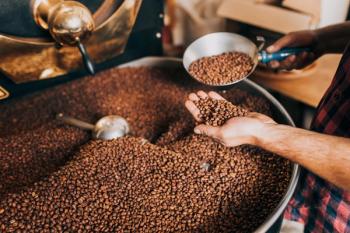
Liquid chromatography–tandem mass spectrometry (LC–MS/MS) finds low glyphosate residues of the weedkiller glyphosate in coffee beans.
Ultrahigh-performance liquid chromatography coupled with quadrupole time-of-flight mass spectrometry (UHPLC–QTOF-MS) was used for the analysis of serum and urine metabolites in patients with cirrhosis. By identifying dysregulated pathways—including tryptophan and glycerophospholipid metabolism—researchers established a dual-biofluid diagnostic strategy. This metabolomics approach offers a non-invasive method for identifying biomarkers and potential therapeutic targets for liver cirrhosis detection.
Researchers utilized untargeted metabolomics for the characterization of serum and urine metabolites in patients with cirrhosis, with analysis carried out using ultra-performance liquid chromatography coupled with quadrupole time-of-flight mass spectrometry (UHPLC–QTOF-MS). In an article published in Frontiers in Medicine,1 the authors write that the research provides “mechanistic underpinnings for non-invasive diagnosis of cirrhosis and identification of therapeutic targets.”
Representing the end-stage consequence of chronic hepatitis, patients with cirrhosis have their usual hepatic structure usurped by regenerative nodules which, in severe instances, may culminate in liver failure. The early stage of the condition, while often asymptomatic, is potentially reversible.2 Preliminary evaluations for cirrhosis include serological assays for viral hepatitis, quantification of the saturation of ferritin and transferrin, abdominal ultrasonography, a complete blood count, evaluations of liver function, and determination of the prothrombin time/international normalized ratio.3 The therapeutic objectives for cirrhosis are preventing its onset and decompensation, and protecting the life of the patient, with ion-selective beta-blockers are frequently used in treatment.4,5
For this study, compared the serum and urine metabolic profiles between 30 healthy individuals and 28 liver cirrhosis patients were compared to screen for biomarkers associated with liver cirrhosis. A total of 55 endogenous metabolites showed dysregulation in serum, and 51 did so in urine. Four shared differential metabolites-glycoursodeoxycholic acid, urobilin, glycocholic acid, and urobilinogen-were identified in both biofluids. Pathway enrichment analysis revealed three co-regulated metabolic pathways: tryptophan metabolism, glycerophospholipid metabolism, and porphyrin metabolism (p < 0.05).1
“This study,” write the authors,1 “delineates the distinct metabolic signatures of cirrhosis and proposes a diagnostic strategy based on dual - biofluid analysis. The intersectional biomarkers and pathways elucidate the mechanisms linking bile acid homeostasis and hemoprotein catabolism to cirrhotic progression, offering a noninvasive approach for clinical detection.”
The researchers recommend that future studies concentrate on the leveraging of these metabolomic profiles for the development of prediction models with greater clinical utility, suggesting that, for example, machine learning algorithms be utilized to integrate multi-metabolite features from both serum and urine, and then establishing robust fibrosis classifiers which can be validated in larger clinical cohorts. As their study did not consider the metabolite ratios between serum and urine as potential indicators of disease status (which may offer better pathophysiological insights than individual metabolite concentrations, as changes in relative abundance across biological matrices often reflect the underlying disease mechanisms), researchers might consider prioritizing the exploring of relationships between serum-urine metabolite ratios and clinical disease states. Doing so, in their opinion, might possibly reveal unique diagnostic or prognostic biomarkers to lead future therapeutic strategies.1
Read More on Similar Topics
References