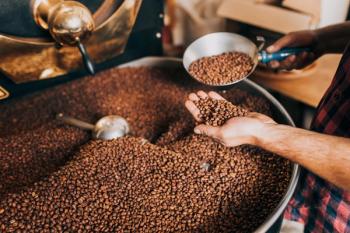
Liquid chromatography–tandem mass spectrometry (LC–MS/MS) finds low glyphosate residues of the weedkiller glyphosate in coffee beans.
Researchers used high-performance liquid chromatography-tandem mass spectrometry (HPLC-MS/MS) to demonstrate that atmospheric cold plasma (ACP) effectively removes up to 82.5% of toxic fenvalerate residues from shiitake mushrooms. The study identified degradation pathways like hydroxylation and ester bond cleavage. ACP offers a promising, non-thermal solution to enhance food safety and preserve mushroom quality during storage.
Residues of the insect repellent fenvalerate on edible mushrooms pose substantial risks to both food safety and aquatic ecosystems, according to a new study published in Foods.1 This study explored the efficiency, degradation mechanisms, toxicity evolution, and quality effects of atmospheric cold plasma (ACP) for removing the pesticide from shiitake mushrooms using high-performance liquid chromatography–tandem mass spectrometry (HPLC-MS/MS), which revealed degradation pathways dominated by hydroxylation, ester bond cleavage, and oxidative transformations.
The second most cultivated edible mushroom worldwide, shiitake mushrooms (Lentinus edodes) are valued for their nutrients such as polysaccharides, proteins, and trace elements.2 However, cultivating shiitake mushrooms, however, is challenged by pests and diseases, which has led to growers applying broad-spectrum and stable pyrethroid pesticides such as fenvalerate.3
According to a 2022 paper,4 354 mushroom samples surveyed from local markets in China revealed that 12.4% contained fenvalerate residues, with concentrations ranging from <0.01 to 0.1 mg/kg. As a result, residue accumulation of the pesticide has become a major food safety concern in mushrooms, underscored by stringent regulatory limits—as low as 0.01 mg/kg in the European Union.5
Because fenvalerate does not break down easily in nature, it sticks around for a long time, which means people can be exposed to small amounts of it over a long period, increasing the risk of health problems—especially for the immune system, brain, and nerves.6 In addition, fenvalerate poses a big threat to nature, especially to fish and other water life. For these reasons, a safe and effective way to clean up these chemical leftovers is necessary, as doing so will make sure shiitake mushrooms are safe to eat and support farming methods that are better for the environment.7-9
Researchers found that ACP was highly effective at breaking down fenvalerate. The stronger the treatment and the longer it was applied, the better it worked—eliminating up to 82.5% of the pesticide in just 15 min. By using computer models, the team was able to pinpoint exactly which parts of the chemical broke apart first. Safety tests also showed that the treatment made the pesticide significantly less harmful overall, though a few leftover traces retained a small amount of toxicity. Additionally, the treatment also helped keep mushrooms fresh while they were stored in refrigeration.1
“Overall” write the authors of the paper,1 “ACP represents a promising non-thermal strategy for pesticide detoxification while preserving edible mushroom quality.”
The authors of the study1 pointed out that the study was conducted at the laboratory scale; industrial application would require further evaluation of energy consumption, processing costs, and quality maintenance. Additional refinement of plasma parameters and elucidation of reactive species contributions will, in their opinion, support broader application across diverse edible fungi and pesticide types.
Read More on Similar Topics
References