Quantitative non-targeted screening with predicted response factors is not for regulation, but can rank environmental chemicals by concentration and toxicity.
Jan H. Christensen is a professor in environmental analytical chemistry. He is leader of the Analytical Chemistry group, Faculty of Science, University of Copenhagen, Denmark, and heads the Research Centre for Advanced Analytical.
Quantitative non-targeted screening with predicted response factors is not for regulation, but can rank environmental chemicals by concentration and toxicity.
Multidimensional chromatography cuts ion suppression in complex environmental samples by separating salts and coeluting compounds from target analytes.
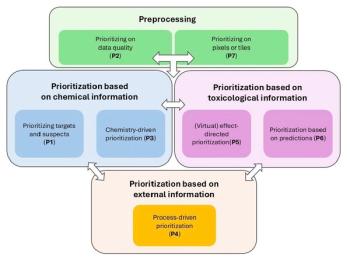
This article discusses how integrating seven prioritization strategies can enhance compound identification, support environmental risk assessment, and accelerate decision-making.

An innovative workflow that combines iterative data-dependent acquisition (DDA) and data-independent acquisition (DIA) to enhance the identification of unknown pollutants in urban runoff is presented.
This article discusses how integrating seven prioritization strategies can enhance compound identification, support environmental risk assessment, and accelerate decision-making.

The authors introduce a new high-throughput approach for analyzing environmental micropollutants.

Selective pressurized liquid extraction and multilayer solid‑phase extraction methods are described for high‑throughput plant, soil, and water sample preparations. Optimal analytical conditions are described for the improvement of detection sensitivities and coverage. A Source Supported Suspect Screening (4S) approach is described; phytotoxins detected in the source plant were used to improve the identification of phytotoxins in soil and water.

In this extended special feature to celebrate the 35th anniversary edition of LCGC Europe, key opinion leaders from the separation science community explore contemporary trends in separation science and identify possible future developments.
LCGC North America
This article describes and tests a dynamic DHS−TD−GC−MS method for the fingerprinting analysis of mobile volatile organic compounds in soil.

LCGC Asia Pacific
The chemical analysis of organic compounds in environmental samples is often targeted on predetermined analytes. A major shortcoming of this approach is that it invariably excludes a vast number of compounds of unknown relevance. Nontargeted chemical fingerprinting analysis addresses this problem by including all compounds that generate a relevant signal from a specific analytical platform and so more information about the samples can be obtained. A DHS−TD−GC−MS method for the fingerprinting analysis of mobile VOCs in soil is described and tested in this article. The analysis parameters, sorbent tube, purge volume, trapping temperature, drying of sorbent tube, and oven temperature were optimized through qualitative and semiquantitative analysis. The DHS−TD–GC−MS fingerprints of soil samples from three sites with spruce, oak, or beech were investigated by pixel-based analysis, a nontargeted data analysis method.

LCGC Europe
The chemical analysis of organic compounds in environmental samples is often targeted on predetermined analytes. A major shortcoming of this approach is that it invariably excludes a vast number of compounds of unknown relevance. Nontargeted chemical fingerprinting analysis addresses this problem by including all compounds that generate a relevant signal from a specific analytical platform and so more information about the samples can be obtained. A DHS−TD−GC−MS method for the fingerprinting analysis of mobile VOCs in soil is described and tested in this article. The analysis parameters, sorbent tube, purge volume, trapping temperature, drying of sorbent tube, and oven temperature were optimized through qualitative and semiquantitative analysis. The DHS−TD–GC−MS fingerprints of soil samples from three sites with spruce, oak, or beech were investigated by pixel-based analysis, a nontargeted data analysis method.