Nikoline Juul Nielsen

Nikoline J. Nielsen is an associate professor in the Analytical Chemistry Group, Faculty of Science at UCPH. Her teaching and research evolve around chromatographic/mass spectrometric analysis of complex biological/environmental samples. She is currently heading the MSc-program in Environmental Science at UCPH.

Articles by Nikoline Juul Nielsen

Image Credit: © adamikarl - stock.adobe.com

Selective pressurized liquid extraction and multilayer solid‑phase extraction methods are described for high‑throughput plant, soil, and water sample preparations. Optimal analytical conditions are described for the improvement of detection sensitivities and coverage. A Source Supported Suspect Screening (4S) approach is described; phytotoxins detected in the source plant were used to improve the identification of phytotoxins in soil and water.

figure 1.png

LCGC Asia Pacific

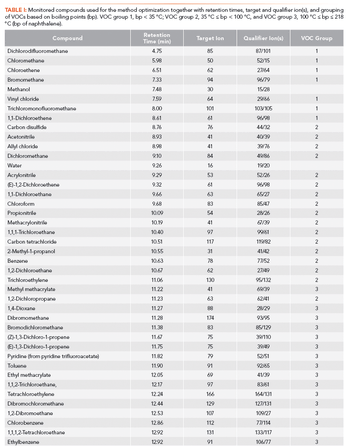
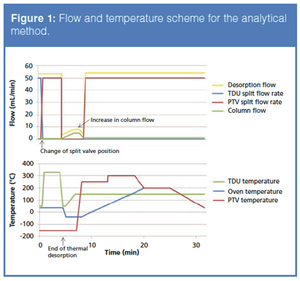
The chemical analysis of organic compounds in environmental samples is often targeted on predetermined analytes. A major shortcoming of this approach is that it invariably excludes a vast number of compounds of unknown relevance. Nontargeted chemical fingerprinting analysis addresses this problem by including all compounds that generate a relevant signal from a specific analytical platform and so more information about the samples can be obtained. A DHS−TD−GC−MS method for the fingerprinting analysis of mobile VOCs in soil is described and tested in this article. The analysis parameters, sorbent tube, purge volume, trapping temperature, drying of sorbent tube, and oven temperature were optimized through qualitative and semiquantitative analysis. The DHS−TD–GC−MS fingerprints of soil samples from three sites with spruce, oak, or beech were investigated by pixel-based analysis, a nontargeted data analysis method.

Chemical Fingerprinting.jpg

LCGC Europe

The chemical analysis of organic compounds in environmental samples is often targeted on predetermined analytes. A major shortcoming of this approach is that it invariably excludes a vast number of compounds of unknown relevance. Nontargeted chemical fingerprinting analysis addresses this problem by including all compounds that generate a relevant signal from a specific analytical platform and so more information about the samples can be obtained. A DHS−TD−GC−MS method for the fingerprinting analysis of mobile VOCs in soil is described and tested in this article. The analysis parameters, sorbent tube, purge volume, trapping temperature, drying of sorbent tube, and oven temperature were optimized through qualitative and semiquantitative analysis. The DHS−TD–GC−MS fingerprints of soil samples from three sites with spruce, oak, or beech were investigated by pixel-based analysis, a nontargeted data analysis method.