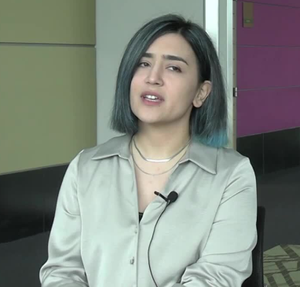
Top articles published this week include an exclusive interview with Nicholas Snow of Seton Hall University and an article highlighting how LC–MS/MS is being used to assess oxysterol imbalances.

Top articles published this week include an exclusive interview with Nicholas Snow of Seton Hall University and an article highlighting how LC–MS/MS is being used to assess oxysterol imbalances.

Top articles published this week include an article recapping the 2025 Eastern Analytical Symposium Young Investigator Award recipient Katelynn Perrault Uptmor’s talk and an article highlighting recent research from Purdue University about nitrosamine formation in drugs.

Top articles published this week include an interview with 2025 Eastern Analytical Symposium Award recipient David S. Hage and a blog entry about the work that the American Chemical Society’s Subdivision on Chromatography and Separations Chemistry (ACS SCSC) is doing.

This past week, LCGC International published a variety of articles on hot topics in separation science. We discuss how mass spectrometry (MS) unveiled new insights into how music modulates protein networks in lipid nanoparticle delivery and how gas chromatography (GC) can be sed to identify aroma types in unburnt cannabis. Also, we make a call for nominations for the 2026 HTC Innovation Award.


This past week, LCGC International published a variety of articles on hot topics in separation science.

This week, LCGC International published a variety of articles on hot topics in separation science. From an interview about the evolution of ion chromatography to a discussion about using ultrahigh-pressure liquid chromatography (UHPLC) coupled with tandem mass spectrometry (MS) to analyze 26 per- and polyfluoroalkyl substances (PFAS), we’ve highlighted some of the most popular articles that were published this week.

This week, LCGC International published a variety of articles on hot topics in separation science. From an interview about the evolution of ion chromatography to an article about the top ten topics that new liquid chromatography (LC) users should know, we’ve highlighted some of the most popular articles that were published this week.

In this interview, John Cashman, product manager for lab filtration at Sartorius, reveals how TFF and affinity chromatography are continuing to advance biopharmaceutical analysis and meeting the needs of the new complex purification workflows that exist.

This week, LCGC International published a variety of articles on hot topics in separation science. From an interview about the latest advancements in supercritical fluid chromatography (SFC), a news article about a new product from Thermo Fisher, and an article about bioanalytical liquid chromatography–mass spectrometry (LC–MS), we’ve highlighted some of the most popular articles that were published this week.

In this interview segment, Christian Mayer discusses the benefits of using pressure cycling to study prebiotic chemistry.


LCGC International spoke to the author of the study, John Mommers, who is a scientist of chromatography and mass spectrometry (MS) at Envalior, about the key challenges faced when developing MASSISTANT and how it can be integrated in GC-EI-MS workflows.

A recent study examined a new method to optimize raisin production by demonstrating how pretreating grapes with extra-virgin olive oil (EVOO) before dehydration can significantly improve the retention of beneficial phenolic compounds during raisin production and storage.

This week, LCGC International published a variety of articles on hot topics in separation science. From several interviews around the role chromatography is playing in forensic analysis to using multidimensional liquid chromatography (LC) in the development of a new Python tool, we’ve highlighted some of the most popular articles that were published this week.


As part of “From Sample to Verdict,” LCGC International sat down with Noemi Procopio, who is the Principal Investigator of the "Forens-OMICS" team and a Senior Research Fellow in Forensic Science at the University of Central Lancashire to talk about her team’s work. In Part III of our conversation with Procopio, she discussed how her team analyzes bone samples for post-mortem interval (PMI) estimation. In the final part of our conversation, Procopio discusses what a routine omics-based PMI assay could look like in the future.


As part of our “From Sample to Verdict” series, LCGC International sat down with Furton to discuss his team’s work in the Global Forensic and Justice Center. In Part II of our conversation with Furton, he discusses the applicability of SPME in other forensic applications, as well as the limitations of using SPME.

As part of “From Sample to Verdict,” LCGC International sat down with Noemi Procopio, who is the Principal Investigator of the "Forens-OMICS" team and a Senior Research Fellow in Forensic Science at the University of Central Lancashire, to talk about her team’s work. In Part I of our conversation with Procopio, she discussed the development of the Forens-OMICS approach and how her team estimates PMI using metabolomics, proteomics, and metabarcoding. Part II dives deep into post-mortem interval (PMI) estimation and how bone proteomics can be used to accurately estimate PMI.


As part of “From Sample to Verdict,” we present a compilation of the latest news articles and peer-reviewed content that highlight the utility of chromatography in forensic analysis.

As part of “From Sample to Verdict,” LCGC International sat down with Ed Sisco and Sarah Shuda, Research Chemists at NIST, to discuss the work that their groups are conducting that are helping to advance forensic analysis.


As part of “From Sample to Verdict,” LCGC International sat down with Furton to talk about his team’s work in the Global Forensic and Justice Center. In Part I of our conversation with Furton, he discusses his work in environmental forensics, including applying solid-phase microextraction (SPME-GC–MS) in distinguishing crude oil sources.


As part of “From Sample to Verdict,” LCGC International sat down with Procopio to talk about her team’s work. In Part I of our conversation with Procopio, she discusses the development of the Forens-OMICS approach and how her team estimates PMI using metabolomics, proteomics, and metabarcoding.

LCGC International sat down with Chip Cody to discuss his work at JEOL USA, as well as how to determine when ambient ionization techniques should be used for analysis.

Published: April 10th 2024 | Updated:

Published: March 3rd 2025 | Updated:

Published: April 10th 2024 | Updated:

Published: August 14th 2025 | Updated:

Published: March 6th 2025 | Updated:

Published: March 13th 2025 | Updated: