

LCGC North America
Whether or not headspace sampling is quantitative depends on the information gleaned from the analysis
LCGC North America
Whether or not headspace sampling is quantitative depends on the information gleaned from the analysis

LCGC North America
We assess the state of the field, first looking back at developments presented at conferences this year, reader questions, and the passing of a pioneer in solid-phase extraction. Then, we look to the future of sample preparation.

LCGC North America
Blanks are important in the pursuits of quality control and robust quantitative analytical methods, but many analysts don’t fully understand their value, or how to use them correctly.

LCGC North America
Our yearly report on new products covers sample preparation instrumentation, supplies, and accessories. New sample preparation technologies introduced in the past year, while not necessarily disruptive, take giant leaps in that direction.
LCGC North America
A look at recent advances in SPME, such as increasing the sorbent surface area available for extraction, accommodating direct analysis by mass spectrometry, and sorbent overcoating to resist fouling by sugars and lipids
LCGC North America
There is a resurgence of interest in chemical derivatization schemes in separation science, particularly in sample preparation. Here’s why.
LCGC North America
Incremental sampling methodology laboratory processing is used to produce an appropriately sized subsample that has the analytes of interest at the same concentration as the large incremental sample collected in the field. The end goal is to produce results that represent the conditions at the site and facilitate good decisions.
LCGC North America
CAE is a versatile sample preparation tool for aqueous samples.
LCGC North America
This yearly report on new products introduced at Pittcon 2017 (or in the preceding year) covers sample preparation instrumentation, supplies, and accessories.
LCGC North America
Traditional extraction methods for food samples, such as liquid-liquid extraction and Soxhlet extraction, are often time-consuming and require large amounts of organic solvents. Therefore, one of the objectives of analytical food safety studies currently has been the development of new extraction techniques that can improve the accuracy and precision of analytical results and simplify the analytical procedure.
LCGC North America
This installment describes several commonly used microextraction sample preparation techniques and their applications to forensic toxicology analysis. Solid-phase microextraction (SPME), microextraction by packed sorbent (MEPS) and different types of liquid-based microextraction (LPME), including single-drop microextraction (SDME), hollow-fiber supported LPME, three-phase LPME, and dispersive liquid-liquid microextraction (DLLME), are discussed. Examples of application of these techniques to determine illicit drugs and drugs of abuse from various biological specimens are provided as well.
LCGC North America
Blood is perhaps the most widely used sample fluid in bioanalysis. Dried blood spots (DBS) have been used with clinical samples for over 50 years but are recently seeing a resurgence of interest. DBS hold several advantages associated with the use of small sample sizes obtained via finger pricks, reduction biohazard, and more. In the previous installment, we gave an overview of microsampling in bioanalysis. This month, we will dig deeper into bioanalysis using DBS.
LCGC North America
The rise of microsampling raises questions about representative sampling.
LCGC North America
This yearly report on new products introduced at Pittcon or in the preceding year covers sample preparation instruments.
LCGC North America
The results obtained from a new survey on sample preparation techniques were compared with the results of previous surveys from 1991 to March 2013. The survey investigated trends in technologies currently being used, sample loads, sample sizes, automation, the use of solid-phase extraction (SPE) devices (cartridges, disks, plates, tips), SPE chemistries, selection criteria, and problems encountered. Respondents were also asked about sample preparation technologies on the horizon.

LCGC North America
At the heart of liquid chromatography lies a column. Because of the importance of the column, we have dedicated a regular place to it in LCGC magazine: “Column Watch.” And what has made “Column Watch” so informative over the years is that it has captured the insights of an insider-someone who really understood the workings of the column and its role in separations: Ron Majors.

LCGC North America
Cloud-point extraction (CPE) manipulates temperature and surfactant concentration to move aqueous solutes into a micelle phase for separation. Although CPE has been around for some time, it is still considered an emerging technique. Much of the development, and most applications, of CPE have dealt with extraction and preconcentration of inorganic solutes. More recently, attention has turned to the use of CPE in the isolation of organic solutes. This month, we review how CPE works and focus on applications for extracting organics.
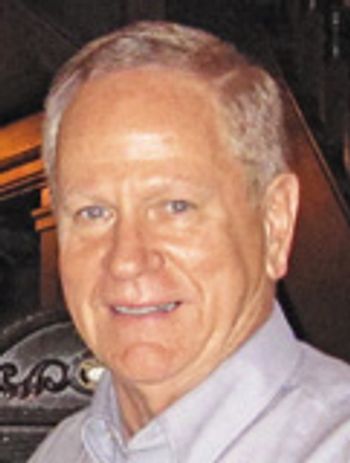
LCGC North America
A farewell letter from long-time LCGC columnist Ron Majors.

Special Issues
Throughout his career, Ron Majors always had his finger on the pulse of the latest chromatography developments, and he kept readers in the know too.
LCGC North America
If sample preparation is the most time and labor intense step in the analytical process, and uses the largest amounts of solvents, it stands to reason that sample preparation may present the most significant safety risks in the analytical lab. While most laboratory workers receive significant safety training, we may become numb to the prospect of accidents or get into the mindset that accidents only happen to other people. Given some recent, significant safety incidents, this month we step back and take a quick refresher on safety concerns appropriate during our sample preparation activities.

LCGC North America
Recently, Nature and Science Citation Index listed the 100 most cited research papers of all time. Two of these are the classic Bligh-Dyer and Folch lipid extraction methods from the late 1950s. This month we will take a look at the lasting impact of these papers and explore the current state of lipid extractions, including lipidomics.

LCGC North America
When developing analytical methods, several parameters are often considered, things like solvent type and amount, sample size, pH, sorptive phases, temperature, time, and more. While some of these considerations can be considered unimportant in a given situation and experience and chemical knowledge can guide us to appropriate starting points, extraction method development is often a one-parameter-at-a-time proposition. A family of statistical approaches, which fall under the category of response surface methodology, are available to screen and optimize several parameters simultaneously.

LCGC North America
As expected, the new products introduced in the past year in the area of chromatographic sample preparation, while somewhat limited, mirror the current development in the field.

LCGC North America
When pyrolyzed, macromolecules will decompose into smaller fragments that can have the appropriate volatility for gas chromatography (GC) separation and analysis.

LCGC North America
In this installment of "Sample Prep Perspectives," we cover some of the basic scientific principles behind solid-phase extraction (SPE) to allow the correct mode of extraction to be selected through an understanding of how analytes interact with and are separated by the sorbent.

LCGC North America
In sample preparation, what does "high-throughput" really mean?
LCGC North America
The selective removal of a fat substitute in food products is discussed to demonstrate options for obtaining selectivity during extraction.
LCGC North America
A look at five sample preparation methods where the application of a charge across barriers provides enhanced selectivity
LCGC North America
Some solid–liquid extraction sorbents that have had significant development recently include MIPs, dSPE for QuEChERS, nanomaterials, and mixed-mode and silicone monolith sorbents.
LCGC North America
Some sample preparation techniques that were introduced in the past are now being used for new applications.