Mary Ellen P. McNally

Mary Ellen McNally is an FMC Fellow at the Stine Research Center for FMC Corporation. Dr. McNally was named to the Analytical Scientist Power List as one of the Top 50 most influential women in the analytical sciences, has received the American Microchemical Society Steyermark Award in the field of microanalysis, the Chromatography Forum of Delaware Valley Award for contributions to the field of chromatography, and has been recognized for her contributions to the field of supercritical fluids by the Midwest SFC Discussion and the Tri-State Analytical Supercritical Fluid Discussion Groups.

Articles by Mary Ellen P. McNally

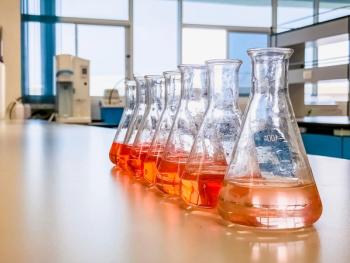
The Erlenmeyer flask in the line with color range solvent using for analysis calibration curve of iron in waste water sample. The experiment in chemistry laboratory. | Image Credit: © Arpon - stock.adobe.com

In recent years, analytical chemists have increasingly adopted a sustainability viewpoint. Yet, at the same time, they still use traditional organic solvents for extractions and other procedures. In this installment of Sample Preparation Perspectives, we will look at solvent selection from green considerations. Trends on solvent use are presented, followed by a discussion on what makes a green solvent. Finally, the CHEM21 Solvent Selection Guide is examined as representative of tools for selecting green solvents for use in analytical methods and other chemical processes.

The 2020 Eastern Analytical Symposium has gone virtual for 2020, and although we will miss the camaraderie of face to face interaction, the theme of this year’s conference “Analytical Science: Cornerstone of Innovation” indicates the strength of the separation sciences and the talks that you will not want to miss.

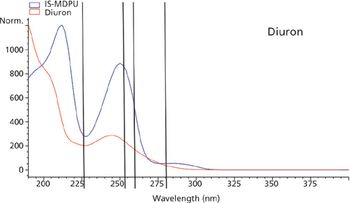
Usher-McNally-Figure-4.jpg

Internal standard methods are used to improve the precision and accuracy of results where volume errors are difficult to predict and control. A systematic approach has been used to compare internal and external standard methods in high performance liquid chromatography (HPLC). The precision was determined at several different injection volumes for HPLC and ultrahigh‑pressure liquid chromatography (UHPLC), with two analyte and internal standard combinations. Precision using three methods of adding the internal standard to the analyte before final dilution was examined. The internal standard method outperformed external standard methods in all instances.

When I was asked to edit a supplement for LCGC again, I was delighted. My background in physical chemistry has always made me captivated by separation theory; my career in industry has taught me to be practical in its use.

i1-812285-1408539466555.jpg

When choosing the articles to include in this supplement, my selection was based on a very simple criterion. My invitations went to the researchers that typically have something to say that I am interested in learning.