The Application Notebook-09-01-2012

i4-789208-1408597200235.gif

Radio Ion Chromatography

The Application Notebook

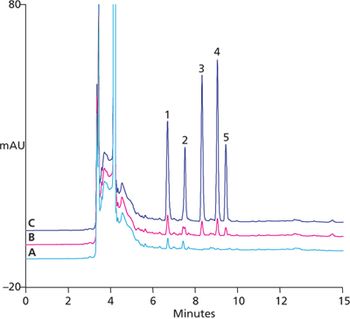
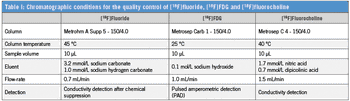
Positron emission tomography (PET) is one of the most powerful non-invasive diagnostic tools for tracing organ functioning. Quality control of the short-lived radiopharmaceuticals is challenging, not least because of the tough time limits, the radiation issue and the near nanomole radiotracer quantities.

i1-789180-1408597270716.jpg

The Application Notebook

Levels of benzene, toluene, ethylbenzene, xylenes, and styrene (BTEXS) are a concern in olive oil. These compounds find their way into olive trees and hence into olives and olive oil mainly as a result of emissions from vehicles, bonfires, and paints into ambient air near orchards. This analysis uses a PerkinElmer? TurboMatrix? 110 Headspace (HS) sampler with a Clarus? SQ 8 gas chromatograph–mass spectrometer (GC–MS) to achieve detection limits below 5 ng/g and concentrations up to 100 ng/g.

i1-789203-1408597212734.jpg

The Application Notebook

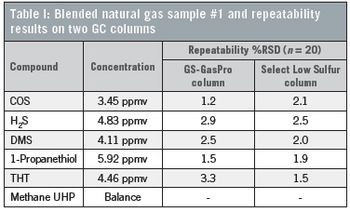
Natural gas and other gaseous fuels contain varying amounts and types of sulfur compounds which can be corrosive to equipment and can inhibit or destroy gas processing catalysts. Small amounts of sulfur odorants are added to natural gas and liquefied petroleum gases (LPGs) for safety purposes. Accurate measurement of sulfur species ensures proper process operation and odorant levels for public safety.

i1-789187-1417779342844.jpg

The Application Notebook

Aniline is an organic compound widely used in the polymer, rubber, pharmaceutical, and dye industries. Aniline and its derivatives (e.g., nitroanilines) are suspected carcinogens and are highly toxic to aquatic life. Because these compounds are thermolabile and polar, the traditional analytical methods require a derivatization step prior to GC analysis.

i1-789177-1408597276162.jpg

The Application Notebook

Selectivity is the most powerful tool to optimize separations in HPLC. This parameter is changed by using different bonded phases or by changing the mobile phase. In this work, Poroshell 120 columns with highly efficient 2.7 ?m superficially porous particles and the Agilent 1260 Infinity Series LC Multi-Method Solution were used to quickly evaluate method development choices for the analysis of steroids.

i1-789174-1408597281236.jpg

The Application Notebook

Low-molecular-weight heparins (LMWHs) are obtained by fractionation or depolymerization of natural heparins. They are defined as having a mass-average molecular weight of less than 8000 and for which at least 60% of the total weight has a molecular mass less than 8000.

i1_t-789178-1416909637783.gif

The Application Notebook

This application note demonstrates the analysis of intact proteins using a Thermo Scientific Accucore 150-C4 (150 ? pore diameter) HPLC column. Analysis of six proteins ranging in mass from 6 to 45 kDa is carried out in 15 min with pressures compatible with conventional HPLC instrumentation.

i1-789214-1408597188959.jpg

The Application Notebook

Ion mobility spectrometry (IMS) has become widely accepted for the detection of chemical warfare agents, explosives, and narcotics as well as for pharmaceutical quality control and pesticide screening of food. Most currently available commercial IMS units have a resolving power of 10–60.

ShodexFig1-789195-1417779302665.gif

The Application Notebook

Determination and quantification of amino acids are important in many fields. For the HPLC analysis of amino acids, cation exchange mode method has been used with post-column derivatization. Recently, use of reversed-phase mode method is also increasing. However, because of amino acids' hydrophilic nature, they are usually not well retained and have less selectivity by reversed-phase mode without pre-column derivatization steps. In contrast, HILIC mode is an ideal separation mode for hydrophilic compound analysis.