The Column-04-11-2017

figure 2.png

The Column

Separating and quantifying both volatile and nonvolatile compounds in complex mixtures is a costly and time-consuming process presenting significant technical challenges. Fabrice Gritti from the Instrument, Core Research, Fundamental Group at Waters Corporation discusses his team’s unique solution to this problem, combining high-vacuum technology and low-density fluid chromatography (LDFC) with carbon dioxide as a mobile phase for a rapid and complete baseline separation of both volatile and nonvolatile compounds on a single instrument, single column, and a single run without the associated loss of resolution.
ocular.jpg

The Column

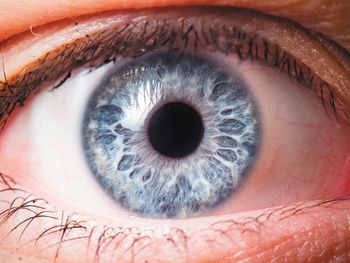
Researchers from the Medical University of Bialystok, Poland, have used metabolomics and liquid chromatography quadrupole time‑of‑flight mass spectrometry (LC–QTOF‑MS) to study human ocular fluids.

The Column

Waters Corporation has announced the opening of a new Solution Centre in Petaling Jaya, Selangor, Malaysia. The new facility is designed to advance liquid chromatography and mass spectrometry analytical capabilities, developing new applications and offering training to scientists within its demonstration and training facilities.

Shimadzu Centre.jpg

The Column

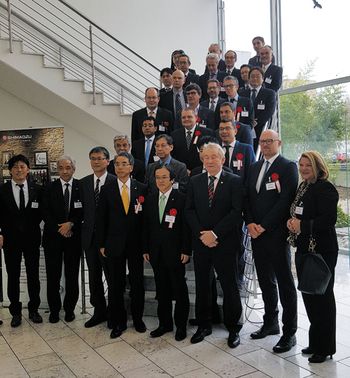
Shimadzu Corporation has opened a new European Innovation Center in Duisburg, Germany. The new facility will merge Shimadzu’s state-of-the-art analytical technologies with prominent topics, market expertise, and scientific research guided by some key opinion leaders.

figure 1 L.png

The Column

Gel permeation chromatography/size-exclusion chromatography (GPC/SEC) is the standard method to separate samples by molecular size. In protein analysis, size-exclusion chromatography is either applied to detect and quantify aggregation, or to measure the complete molar mass distribution. However, method development is not trivial and the choice of suitable detection options is crucial.

figure 3 L1491841902998.png

The Column

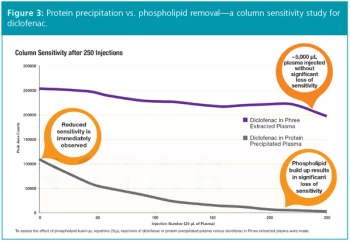
This article describes the evolution of traditional solid-phase extraction (SPE) into new techniques that are customized to the characteristics of specific matrices, including the removal of β-glucuronidase from urine samples and the removal of phospholipids and proteins from plasma samples.