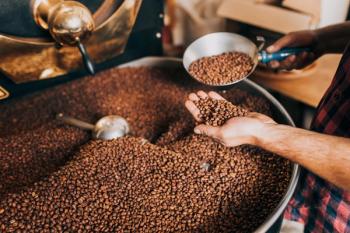
Liquid chromatography–tandem mass spectrometry (LC–MS/MS) finds low glyphosate residues of the weedkiller glyphosate in coffee beans.
Researchers used orthogonal analytical methods, including anion-exchange chromatography (AEC), to investigate the impact of successive freeze/thawing cycles on the stability of the Covid vaccine ChAdOx1-S/nCoV-19.
ChAdOx1/nCoV-19 (AZD 1222), the chimpanzee adenovirus-vectored Covid vaccine developed by the University of Oxford, showed good stability when stored in refrigerated conditions. However, the manufacturers of the vaccine prefer its transportation be conducted under frozen condition.
Data regarding the stability of the vaccine after exposure to repeated freezing processes have not yet been explored, which inspired a study where different batches of the vaccine were exposed to three repeated freezing/thawing cycles. Orthogonal testing using various techniques was employed to assess any induced changes in the properties of the vaccine in comparison with control samples, and physicochemical properties, including appearance, pH, and molecular size distribution by sodium dodecyl sulfate polyacrylamide gel electrophoresis (SDS-PAGE), were evaluated. In addition, anion-exchange chromatography (AEC) was used for the determination of virus particles, and DNA to-protein ratio was evaluated to study the biochemical attributes of the vaccine. A paper based on this research was published in AAPS PharmSci Tech (1).
In December 2019, severe acute respiratory syndrome coronavirus 2 (SARS-CoV-2) was discovered in the city of Wuhan, China, and was later classified as a pandemic by the World Health Organization (WHO) (2,3). The development of new vaccines to combat this epidemic was encouraged. As a variety of viral expression systems had been previously evaluated for use as viral vectors for vaccine development, it was found that the adenoviruses (Ads) vaccine platform demonstrated improved codon usage, in addition to a tenfold increase in antibody responses in laboratory-bred white mice. This platform was used in the development of Covid-19 vaccines (4,5)
The mass production of vaccines in an unprecedented short time was a major concern during the pandemic. While this rapid production did not give enough time to further investigate stability, especially under freezing conditions, manufacturers of the products generally advised that they be kept within their recommended temperature ranges to ensure maximum effectiveness. Except for a few types of vaccines, such as mRNA vaccines, most of the common Covid-19 vaccines have explicit instructions to not be frozen(6).
AZD1222, one of the early-developed vaccines against SARS-CoV-2 and developed by Oxford University with AstraZeneca, consists of a replication-deficient chimpanzee adenoviral vector encoding the SARS-CoV-2 spike protein (7). While the vaccine showed good stability at refrigerator temperatures (2 °C–8 °C), and non-refrigerated storage; up to 20 ℃ for few days, it is recommended by the manufacturer that AZD1222 be transported in a frozen condition (8). The risks involved with the freezing and subsequent thawing of the vaccine during shipment and transportation under frozen conditions was not studied prior to this research (1).
The research team subjected three different batches from the AZD 1222 vaccine to three successive freezing and thawing cycles by freezing the vaccine’s vials at −20°C until they had frozen completely for at least 12 h and followed that by thawing at room temperature for 30–60 min. Samples were drawn at each cycle for testing and stored at 5 ± 3°C until assayed. The treated samples were then evaluated against a control sample which was stored at the recommended storage temperature of 2°C–8°C. The tests applied included, appearance, pH, molecular size distribution by SDS-PAGE and AEC for determination of virus particles (VP), and DNA to protein ratio, as well as an in vivo immunological test, followed by specific antibody determination test by enzyme-linked immunosorbent assay (ELISA) (1).
The study’s results revealed that the physicochemical attributes of the vaccine were not affected by the applied freeze–thaw cycles. Although the virus particles measured for thawed samples by AEC were below the specified limits of 0.7–1.3 × 10¹¹ VP/mL, the values of DNA to protein ratio remained unaffected (1.1 – 1.5), and there was no reduction in the in vivo potency of the tested samples. A statistical analysis of the results of the quantitative tests suggested that the vaccine could withstand as many as three successive freezing and thawing cycles during its transport before significant loss in its structural integrity and biological potency occurs However, in order to verify the freezing stability of the vaccine, as well as comparing its uniformity of freezing stability across lots, the researchers state that a greater number of vaccine lots, and more samples per lot, should be evaluated further (1).
References