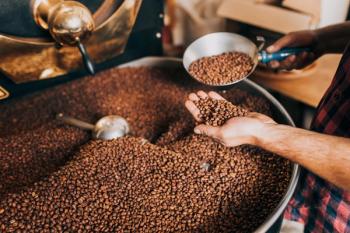
Liquid chromatography–tandem mass spectrometry (LC–MS/MS) finds low glyphosate residues of the weedkiller glyphosate in coffee beans.
Using advanced chromatography–mass spectrometry techniques, researchers mapped how metabolites move between coral tissue and skeleton, uncovering clear metabolic differences across tissue and skeletal layers.
Coral skeletons constitute sources of nutrients and energy for various other forms of sea life. Although bacteria are plentiful in endolithic microbiomes of corals, their ecological functions have previously been concealed by those of symbiotic microalgae.
There is an absence of microalgae in the skeleton of the coral species isopora palifera, but the presence of a green layer dominated by green sulfur bacteria; this system provides a strong model for studying the role of endolithic bacteria in corals. Using this model, researchers from institutions in Taiwan examined the metabolite profile and translocation of organic matter between coral tissue and skeleton, with gas chromatography-time-of-flight-mass spectrometry (GC-TOF-MS) and ultra-high-performance liquid chromatography tandem mass spectrometry (UHPLC-MS/MS) revealing distinctive metabolic profiles in tissue and different skeletal layers. The researchers report that their work provides the first metabolomic data for coral skeletons and evidence for metabolic interactions between coral holobionts and bacterial microbiomes in the underlying skeleton. A paper based on this research has been published in ISME Communications (1).
The skeletons of coral create a distinctive habitat for microalgae, bacteria, and fungi, distinct from those in the surface mucus layer and soft tissue of the living coral (2,3). Coral skeletons are generally poorly illuminated and display drastic daily fluctuations in oxygen and pH levels (4-7), which leads to a dense community of endolithic phototrophs in superficial layers of coral skeletons, forming conspicuous green bands (also referred as the green layer) (4,8). Translocation of carbon and nitrogen from the green layer to coral tissue has been documented using isotope trackers, which implies that endolithic microbes in the green layer may form an alternate energy and nutrient source for those creatures forming a symbiotic relationship with the coral (also known as holobionts) (9-12).
For this study, the researchers used 13C and 15N (stable, non-radioactive isotopes of carbon and nitrogen) for tracking. GC-TOF-MS and UHPLC-MS/MS revealed distinct metabolic profiles in the tissue of the coral as well as different skeletal layers. Further experimentation demonstrated 13C translocation between the tissue and the green layer; however, there was no translocation of 15N (1).
“These findings,” reported the study authors, “suggest communication between the two compartments that is generally carbon-based, possibly in the form of carbohydrates and bioactive compounds, such as corticosterone and domoic acid. Nevertheless, some nitrogenous compounds appear to have an endolithic source, indicating a possible contribution of the skeleton to coral animal. Notably, antibiotic treatment greatly increased 15N translocation in the tissue but not in the green layer. This highlights an important role of bacteria in nitrogen cycling in the holobiont and in establishing the nitrogen-limiting green layer.” (1)
Based on their findings, the researchers propose a model of interactions between coral animal and skeletal bacterial communities, offering a new perspective on the ecological role of endolithic bacteria in corals (1).
Read More on Similar Topics:
References