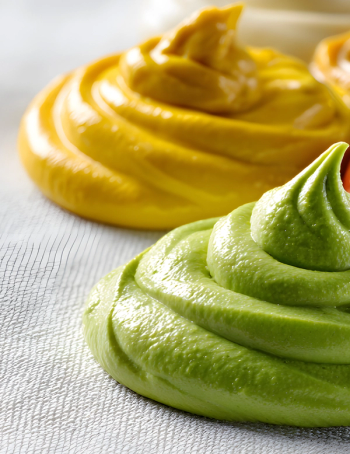
Gas chromatography–mass spectrometry (GC–MS) and ion chromatography profile wasabi and mustard heat and acidity.
AB SCIEX has announced a collaboration with Landeswasserversorgung Water Supply to improve the identification of contaminants in drinking water.
AB SCIEX has announced a collaboration with Landeswasserversorgung Water Supply to improve the identification of contaminants in drinking water. Scientists at the waterworks in Langenau, Germany, are using the AB SCIEX TripleTOF 5600 mass spectrometry system to develop new test methods that can be adopted by testing facilities around the world to obtain better results for water analysis.
This collaboration responds to the ongoing issue of tainted drinking water and addresses the need to increase information about contaminants that are not typically targeted in water testing and can easily go undetected by current technologies.
“Improving control over the quality of drinking water and raw water resources requires powerful analytical tools,” said Walter H. Weber, Head of Laboratory for Operation Control and Research, Landeswasserversorgung Water Supply. “Our collaboration with AB SCIEX gives us the best opportunity to use the latest technology for the most accurate and fastest results for water contaminant analysis.”
Landeswasserversorgung Water Supply provides drinking water to approximately 3 million people in southern Germany, and will use the mass spectrometry technology for detecting chemicals in the Danube River. They will perform analysis and method development as well as also validating methods to save time and expense for other water testing laboratories.
For more information visit