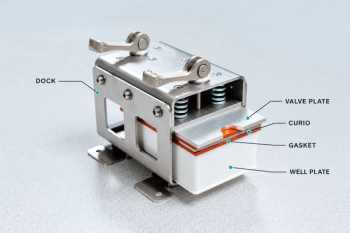
Five years after its founding, the Hungarian developer of centrifugal partition chromatography is making the case that liquid–liquid separation belongs on the analytical bench as well as the production floor.
Yerkanat Syrgabej of Al-Farabi Kazakh National University (Kazakhstan) and his co-authors detail combining liquid chromatography-mass spectrometry (LC-MS) and gas chromatography-mass spectrometry (GC-MS) with matrix-assisted laser desorption ionization-mass spectrometry imaging (MALDI-MSI) to quantify and spatially map tissue contaminants.
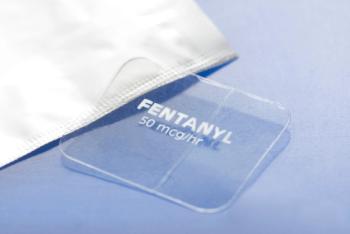
Tracking where pollutants end up inside an organism, not just how much is present overall, is the gap a recent review article published in TrAC Trends in Analytical Chemistry1 tackles. Conventional liquid chromatography-mass spectrometry (LC-MS) and gas chromatography-mass spectrometry (GC-MS) workflows for emerging contaminants like pharmaceuticals, PFAS, pesticides, and micro- and nanoplastics deliver excellent sensitivity, but require homogenizing the sample first, which destroys any information about where a compound localized within a tissue. This is a real blind spot, as bulk extraction can miss whether a pesticide penetrated the interior of a fruit rather than just sitting on its surface, or where a contaminant accumulates relative to specific organs or cell types.