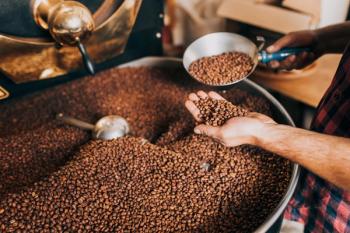
Liquid chromatography–tandem mass spectrometry (LC–MS/MS) finds low glyphosate residues of the weedkiller glyphosate in coffee beans.
Researchers profiled and compared metabolites in drought-tolerant and drought-susceptible sweet potato cultivars under water-deficient conditions. Leaf samples were collected and analyzed for metabolite changes using untargeted ultrahigh-performance liquid chromatography-mass spectrometry (UHPLC-MS).
Sweet potatoes have the potential to improve food security, yet the productivity of this nutrient-dense crop is constrained by drought stress. Metabolic profiling in sweet potato, particularly in response to abiotic stress, remains poorly understood, with limited knowledge on the metabolites contributing to drought response. A study conducted by researchers at South African institutions aimed to profile and compare metabolites in drought-tolerant (cv Atacama) and drought-susceptible (cv Blesbok) sweet potato cultivars under water-deficient conditions. After two weeks of drought stress imposition, leaf samples from each of the cultivars were collected and analyzed for metabolite changes using untargeted ultrahigh-performance liquid chromatography-mass spectrometry (UHPLC-MS). A paper based on their research as published in Plants (1).
A widely cultivated staple crop with global production reaching 88.87 million tons in 2021 (with China producing 53.6% of the total), sweet potatoes are valued for their rich nutritional value, providing starch, dietary fiber, protein, and essential minerals such as manganese, copper, potassium, and iron (2,3). In addition, sweet potatoes are an important source of B-complex, vitamin C, and E, as well as provitamin A (carotenoids), anthocyanins, flavonoids, and coumarin (3,4). Cultivated all over the world, sweet potatoes are characterized by varying colors of their flesh and their unique phytochemical composition; also, their nutritional values and bioactivities of phytochemicals found in different plant species may fundamentally differ (5,6).
Drought stress is a major limiting factor to crop production, affecting plant growth and development at various stages (7,8). Plants respond to drought stress through a variety of complicated biological mechanisms which are critical for maintaining homeostasis and ensuring survival under adverse conditions, including changes in metabolism (9), which involves both primary metabolites (which are essential for growth and development) and secondary metabolites (which play specialized roles in stress tolerance) (10,11). In drought conditions, plants frequently accumulate osmolytes (low-molecular-weight organic compounds that influence the properties of biological fluids [12]) and osmoprotectants (small organic molecules with neutral charge and low toxicity at high concentrations that help organisms to survive in extreme osmotic stress [13]) as primary metabolites, alongside defense-related secondary metabolites; together, they enable the host plant to withstand the harsh conditions (1).
Using chemometric analyses—primarily principal component analysis (PCA) and orthogonal partial least squares discriminant analysis (OPLS-DA)—the scientists observed clear separation among the three drought stress conditions and between the two cultivars, reflecting distinct patterns of metabolite accumulation. Ten significantly regulated metabolites were identified by the researchers (VIP > 1, p < 0.05), with the most pronounced log2 fold changes observed for kaempferol-3-O-galactoside (3.48), chlorogenic acid (3.34), glc-glc-octadecatrienoyl-sn-glycerol (3.14), and apigenin-7-O-β-D-neohesperidoside (2.71). Metabolite concentration varied in the two cultivars, although most were positively correlated with Atacama. Enriched pathways included flavonoid biosynthesis, zeatin biosynthesis, and starch and sucrose metabolism. The researchers believe that these findings highlight cultivar-specific metabolic responses and propose candidate biomarkers for breeding more drought-tolerant strains of sweet potato (1).
The study revealed that each of the cultivars clearly showed different metabolic adjustments under early drought stress, with key metabolite classes such as flavonoids, sugars, and glycolipids identified as potential biomarkers. These metabolites may also contribute to plant responses under other environmental stresses, underscoring their broader significance in stress adaptation and resilience. Although no visible phenotypic differences were observed in the two cultivars when exposed to drought, molecular differences highlight the value of metabolomics in uncovering hidden stress responses and provide a foundation for breeding programs aimed at improving drought tolerance in sweet potato. “Nonetheless,” wrote the authors of the paper, “the focus on early drought in this study limits an overall understanding of the broader regulatory mechanisms active during prolonged or terminal stress.” (1)
The researchers believe that, to gain a comprehensive view, future studies should investigate metabolic changes across different drought stages and genotypes, correlating these with physiological and morphological traits. “We do acknowledge that untargeted metabolomics, despite its comprehensive coverage, has inherent limitations in compound specificity, particularly when differentiating isomers or structurally similar metabolites without the use of authentic standards,” the authors of the paper stated. “To overcome some limitations of untargeted metabolomics, targeted approaches with authentic standards and optimized extraction methods could improve specificity and quantification. This approach would create a clearer picture of drought tolerance mechanisms and guide breeding programs aimed at improving sweet potato’s drought tolerance. Overall, leveraging these insights can enhance sweet potato resilience and support food security in regions affected by climate variability and water scarcity.” (1)
Read More on Similar Topics:
References