Multidimensional chromatography cuts ion suppression in complex environmental samples by separating salts and coeluting compounds from target analytes.
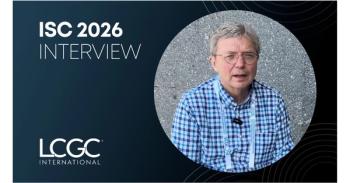
Chip Cody discusses his work in mass spectrometry, including DART ion source innovations and insights on chromatography integration.
In this interview, Robert B. “Chip” Cody—recognized in Stanford-Elsevier’s 2025 top 2% of scientists—reflects on the cumulative innovations behind his impact, from early trapped-ion MSⁿ work to the development of the DART ion source. He discusses how ambient ionization complements chromatographic workflows and shares insights on balancing resolution, speed, and robustness in MS systems.
You have been selected for both the "single recent year impact" and "career-long impact" categories in Stanford-Elsevier’s list of the world's top 2% of scientists in 2025. Can you elaborate on what achievements are recognized in each category?
I am certainly honored to be included on the list, but I should acknowledge that it is a large list and I share a place with many other great scientists.
As I understand it, the list is based on cumulative data from publications, so there’s no specific achievement recognized. I’m best known as co-inventor of the Direct Analysis in Real Time (DART) ion source, and the original DART paper is my most widely cited publication by far, according to Google Scholar. It is not as well known, but my graduate work in Ben Freiser’s research group at Purdue resulted in the first trapped-ion tandem-in-time mass spectrometry (MS/MS) and MSn experiments (1,2) and the demonstration of electron-collision induced dissociation (that we called “EIEIO”) (3). In the long term, I feel that the trapped-ion MSnexperiment has been more significant than DART.
I’ve been fortunate to work with a wide range of colleagues and collaborators who have led my research in many directions, from sample measurements to the development of new data analysis methods. There’s been nothing more rewarding than spontaneous conversations with other scientists that lead to new ideas for chemical analysis or data interpretation.
You’ve worked on several novel interfaces over the years. What were the biggest technical challenges in coupling separation and detection back then, and what improvements could still be made now?
My undergraduate research project in the 1970s was to build and program an interface between a packed-column gas chromatograph (GC) and a PDP-11 computer. That was a formidable challenge, given the primitive state of computers at the time! My first experience with combined GC–MS came with the development of the dual-cell Fourier transform ion cyclotron resonance mass spectrometer (FTICR) at Nicolet in the 1980s. Coincident with the migration from packed GC columns to capillary columns, the challenge of introducing the effluent from the GC into the ultrahigh vacuum of the FTICR was approachable. The proof-of-concept demonstration of supercritical fluid chromatography (SFC)/FTICR that we worked on with Jack Henion and Ed Lee was a similar effort in going from high-pressure chromatography to high-vacuum mass spectrometry. Although we made it work, I never found GC–FTICR to be a good combination. Complexity, tradeoffs between resolving power and spectral acquisition rate, and the presence of unwanted ion-molecule reactions are some of the reasons it isn’t a good match. As a high-resolution mass spectrometer detector for GC–MS, time-of-flight is a much better combination. Although it happened after I left Nicolet, liquid chromatography (LC)–MS with electrospray ionization (ESI) eventually turned out to be the “killer application” for FTICR and later, the orbital ion trap.
LC–MS saw dramatic changes in my early years at JEOL. In the early 1980s, LC–MS was based on interfaces like thermospray, particle-beam, and continuous-flow fast atom bombardment (FAB).
The introduction of electrospray was a game-changer. At JEOL, we used an early Analytica of Branford ESI source to explore the combination of ESI with a high-resolution magnetic sector mass spectrometer (4). We continued to develop and provide LC–MS interfaces for magnetic sector mass spectrometers through the 1990s.
The introduction of the AccuTOF-LC instrument in 2000 as our LC-time-of-flight mass spectrometer made LC–MS and accurate mass measurements much easier. This instrument was the first LC-time-of-flight mass spectrometer that used a fast analog-to-digital converter instead of a time-to-digital converter. Easy access to the atmospheric pressure interface was one of the main factors that allowed me to develop DART.
As for future improvements, it is always hard to predict what unexpected developments will occur. Modern chromatography-MS interfaces are quite robust! I have seen improvements in the efficiency of ion transfer into vacuum for both GC–MS and LC–MS. GC–atmospheric pressure chemical ionization (APCI) provides remarkably sensitive GC interfaces for mass spectrometers equipped with atmospheric pressure interfaces. The results are soft ionization mass spectra and not EI mass spectra, so searching against conventional GC–MS databases isn’t practical. However, the combination of high sensitivity and soft-ionization mass spectra is finding unique applications.
Mass spectrometry can be coupled with other forms of chromatography, including thin-layer chromatography (TLC), SFC, and capillary electrophoresis (CE). I think we will see an increase in these technologies for certain applications in the future. We are already planning to work with an SFC company over the next few months to explore applications for SFC–MS.
DART is often seen as an alternative to chromatography, yet you’ve called it complementary. Could you expand on how you see ambient ionization fitting alongside chromatographic workflows?
The original goal for DART was to make a replacement for the radioactive source in hand-held chemical weapons detectors. We only intended to make a detector for volatile samples. The surprise came in late 2002 or early 2003 when I positioned the device in front of the atmospheric sampling orifice of a TOF-MS and realized that I could obtain mass spectra for samples in open air under laboratory-ambient conditions. We immediately filed a patent application and began development of a commercial DART source.
With the publication of the DESI article from Purdue in late 2004 (5) and the DART article from JEOL in early 2005 (6), marketing promoted direct analysis with no sample preparation. That is valid for specific applications such as the identification of illegally traded timber or screening for illicit drugs. In the absence of chromatography, those analyses rely solely on information from the mass spectrometer: high-resolution accurate-mass and isotope data, fragment ion spectra, and thermal or chemical selectivity. It quickly became clear that rapid and inexpensive sample preparation methods like solid-phase microextraction (SPME) can dramatically reduce DART detection limits and add selectivity. Because no single ambient ionization method can do everything, I’ve also used paper spray, inlet ionization, coated blade spray, and even flame ionization.
DART is great for rapid snapshots of a chemical composition. Well-established applications include certain targeted analyses (for example, screening for seized drugs) and fingerprinting of materials (identifying wood from endangered species).
Ambient ionization and mass spectrometry alone cannot separate all isomers or provide a comprehensive analysis of highly complex mixtures. That is where chromatography comes in. GC–MS combines powerful separation capabilities with good reproducibility and the availability of large mass spectral and retention index databases. Comprehensive two-dimensional gas chromatography (GCxGC)–MS takes that to the next level with the ability to separate even more complex mixtures.
The kinds of samples I see range from asphalt to chocolate, motor oil, and uranium. Because the probability of getting information with DART is high and the effort required is low, I generally survey samples with DART or one of the other ambient ionization methods. Even if I’m planning to run a detailed analysis, having a general idea of the sample composition from ambient ionization can guide the setup of a GC–MS or GCxGC–MS analysis or confirm the data interpretation. Ambient ionization can also reveal compounds or interferences that may not be detectable by GC–MS.
DART can serve as a “triage” method if there is a heavy sample load, such as in seized drug analysis. A high-probability DART identification that an illicit drug is present can direct the choice of protocol and standards for confirming GC–MS measurements, saving time and money.
You have worked with everything from high-resolution TOF-MS to quadrupoles—what trade-offs do you see between resolution, speed, and robustness in chromatography–MS pairings?
Because I started my mass spectrometry career with FTICR, I’ve always favored high resolution and accurate mass measurements. Knowing the elemental composition of the molecule and fragment ions is incredibly valuable information. Soft ionization and accurate mass measurements play a critical role in the structure analysis functions in the software that assists in the identification of unknown compounds that are not in conventional databases.
It is hard to beat a quadrupole mass spectrometer for a simple, compact, and cost-effective GC–MS system! Quadrupole GC–MS systems have a wide dynamic range that is useful for the detection of trace impurities. Adding MS/MS results in lower detection limits than either GC–TOF or GC-quadrupole MS systems. Chromatography–MS/MS systems are the best solution for trace quantitation.
As for speed, TOF mass spectrometers are unmatched. High spectral acquisition rates are needed for GCxGC, especially for the petroleum industry, where truly complex mixtures require powerful separation capabilities and soft ionization methods like photoionization and field ionization.
I’ve been pleasantly surprised by the initial results my colleague Kirk Jensen is getting by using quadrupole MS for GCxGC–MS. With a high scan speed (up to 50 Hz), the two-dimensional chromatograms that he’s obtained using thermal modulation look just as good as the ones we obtain with TOF. Of course, there are tradeoffs as the quadrupole does not provide high-resolution accurate-mass data, and the database match scores can be a bit lower for the fastest scan rates. Nevertheless, it is nice to see GCxGC on a more compact and less expensive platform.
Across your career, you’ve seen the shift from hardware innovation to software-driven insight. Which frontier do you think will define the next 20 years of chromatography–mass spectrometry?
GC–MS is a mature technology, so the most recent developments I have seen have been with GCxGC and data analysis. JEOL recently added support for GCxGC–HRMS data to their qualitative analysis software. That software makes use of all the available information from a GC–MS or GCxGC–MS analysis: EI and soft ionization, chromatographic deconvolution, accurate mass and isotope data, database search, fragment ion assignments, and retention index matching (7). A searchable AI-generated database of EI mass spectra and predicted retention indices is invoked to assist in identifying compounds that are not registered in the NIST and Wiley databases (8). By using the information from our software in combination with other software tools like the NIST Hybrid Search and MS Interpreter, I’ve had several successes in identifying complete unknowns.
We’re using all the mass spectral and chromatographic data, so there’s no more information left to extract from GC–MS for qualitative analysis of unknowns. Combining GC–MS with information from other analytical techniques like FTIR, Raman, nuclear magnetic resonance (NMR), and UV is a possible approach to add more information. Wiley’s Know-It-All product is an example of software that is attempting to do just that.
On the other hand, LC–MS is still a rapidly evolving technology. I have not been heavily involved in LC–MS in recent years, so I’ll leave any predictions to those who work more closely in that area. As an observer, I have seen great advances in the expansion of LC–MS databases and data analysis tools. I have also seen a growing number of presentations on two-dimensional liquid chromatography (with or without mass spectrometry) and even multidimensional chromatography combining GC and LC separations, so I won’t be surprised to see the development of new and creative analytical solutions that combine different separation methods.
SFC hasn’t received as much attention as gas and liquid chromatography, but SFC–MS is a promising alternative for applications such as the characterization of jet fuel. TLC is still widely used for reaction monitoring. In fact, TLC was coupled with DART mass spectrometry as early as 2006 (9). The coupling of mass spectrometry with microfluidic separations is in its early stages, but I expect to see a lot of growth in that area. We must also consider the growing role of ion mobility, both as an alternative to, and in combination with, chromatography.
As a closing thought, I don’t believe in “one size fits all” analytical solutions. Each piece of the analytical puzzle brings different information, and the number of different puzzle pieces we need to solve a problem is directly related to the complexity of the problem we’re trying to solve. I frequently cite Curt Brunnée’s tour-de-force article “The Ideal Mass Analyzer: Fact or Fiction?” in which he compared the strengths and weaknesses of different mass analyzers and concluded that no one mass analyzer can do everything (10). I think the same applies to all separation methods, detectors, and analyzers. We need to choose the appropriate technology and system complexity that answers the analytical problems we are trying to solve.
(1) Cody, R. B.; Freiser, B. S. Collision-induced Dissociation in a Fourier-transform Mass Spectrometer. Int. J. Mass Spectrom. Ion Phys. 1982, 41, 199–204. DOI: 10.1016/0020-7381(82)85035-3
(2) Cody, R. B.; Burnier, R. C.; Cassady, C. J.; Freiser, B. S. Consecutive Collision-induced Dissociations in Fourier Transform Mass Spectrometry. Anal. Chem. 1982, 54, 2225–2228. DOI: 10.1021/ac00250a021
(3) Cody, R. B.; Freiser, B. S. Electron Impact Excitation of Ions from Organics: An Alternative to Collision Induced Dissociation. Anal. Chem. 1979, 51, 547–551. DOI: 10.1021/ac50040a022
(4) Cody, R. B.; Tamura, J.; Musselman, B. D. Electrospray Ionization/Magnetic Sector Mass Spectrometry: Calibration, Resolution, and Accurate Mass Measurements. Anal. Chem. 1992, 64, 1561–1570. DOI: 10.1021/ac00038a012
(5) Takats, Z.; Wiseman, J. M.; Gologan, B.; Cooks, R. G. Mass Spectrometry Sampling Under Ambient Conditions with Desorption Electrospray Ionization. Science 2004, 306, 471–473. DOI: 10.1126/science.1104404
(6) Cody, R. B.; Laramée, J. A.; Durst, H. D. Versatile New Ion Source for the Analysis of Materials in Open Air Under Ambient Conditions. Anal. Chem. 2005, 77, 2297–2302. DOI: 10.1021/ac050162j
(7) Ubukata, M.; Kubo, A.; Nagatomo, K.; et al. Integrated Qualitative Analysis of Polymer Sample by Pyrolysis–Gas Chromatography Combined with High-resolution Mass Spectrometry: Using Accurate Mass Measurement Results From Both Electron Ionization and Soft Ionization. Rapid Commun. Mass Spectrom. 2020, 34, e8820. DOI: 10.1002/rcm.8820
(8) Kubo, A.; Kubota, A.; Ishioka, H.; et al. Construction of a Mass Spectrum Library Containing Predicted Electron Ionization Mass Spectra Prepared Using a Machine Learning Model and the Development of an Efficient Search Method. Mass Spectrom. 2023, 12, A0120–A0120. DOI: 10.5702/massspectrometry.A0120
(9) Morlock, G.; Schwack, W. Determination of Isopropylthioxanthone (ITX) in Milk, Yoghurt and Fat by HPTLC-FLD, HPTLC-ESI/MS and HPTLC-DART/MS. Anal. Bioanal. Chem. 2006, 385, 586–595. DOI: 10.1007/s00216-006-0430-5
(10) Brunnée, C. The Ideal Mass Analyzer: Fact or Fiction? Int. J. Mass Spectrom. Ion Processes. 1987, 76, 125–237. DOI: 10.1016/0168-1176(87)80030-7
Robert B. (Chip) Cody holds a B.S. in chemistry (Roanoke College, 1976) and Ph.D. in analytical chemistry (Purdue University, 1982 with the late Professor Ben Freiser). From 1982 to 1989, Cody worked at Nicolet Analytical Instruments (Madison, WI) in the Fourier Transform Mass Spectrometry group as a senior scientist, Nicolet fellow, and University of Wisconsin fellow. He has worked at JEOL USA, Inc. in Peabody, MA, for the past 36 years and is currently principal scientist.
Cody is responsible for developing the trapped-ion tandem-in-time MS/MS and MSn techniques, laser-desorption in a trapped ion mass spectrometer, electron impact excitation of ions from organics (EIEIO), and is coinventor of the DART ion source. Current research involves applications of ambient ionization (including DART, PaperSpray and inlet ionization) and new strategies for data interpretation. He has consulted with NASA on the Mars 2020 Rover project, served as vice-president for arrangements for the American Society of Mass Spectrometry (ASMS), was awarded the 2011 Anachem Award and a 2012 Purdue University Distinguished Alumni Award, and is currently on the editorial advisory board for the ASMS journal and a member of the ASMS History Committee.
He received the Marquis Who’s Who Lifetime Achievement Award in 2019 and was selected for both the "single recent year impact" and "career-long impact" categories in the Stanford-Elsevier list of the world's top 2% of scientists in 2025. In addition to numerous publications, patents, and book chapters, he is co-editor (with Marek Domin of Boston College) of the book Ambient Ionization Mass Spectrometry and is author of the Mass Mountaineer software suite and two scientific apps for the iPhone.