LCGC International spoke to David Hage, Sanduni Heenkenda, and Zoe Zingler of the University of Nebraska-Lincoln about how green chemistry principles are reshaping affinity chromatography.
In the second part of our interview, Novartis's Martina Lioi talks about using IP-HILIC and RP for lipid-siRNA impurities
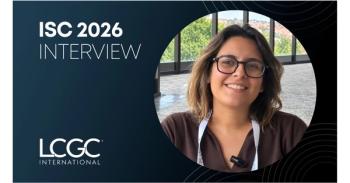
At ISC 2026 in Prague, Czech Republic, a session on the analysis of nucleic acids and oligonucleotides featured Martina Lioi of Novartis Pharma AG, Switzerland, who spoke on "Expanding the Analytical Toolbox: Denaturing Ion-Pair HILIC and RP Approaches for Impurity Characterization of Fatty Acid-Conjugated siRNAs." Lioi highlighted chromatographic approaches for characterizing impurities in fatty acid–conjugated small interfering RNAs (siRNAs), in which the added hydrophobic lipid component introduces structural and chromatographic complexity beyond that of conventional oligonucleotides.
Her group evaluated a denaturing ion-pair form of hydrophilic interaction liquid chromatography (HILIC), known as IP-HILIC, alongside reversed-phase (RP) approaches to obtain complementary separation mechanisms, using both to examine closely related impurities and product variants of the conjugated siRNA. According to Lioi, the work makes the case for using more than one chromatographic mode when analyzing modified nucleic acid therapeutics: ion-pair reversed-phase chromatography remains the standard for denaturing oligonucleotide analysis, while HILIC and related approaches can add different selectivity and reveal additional product-related species.
Lioi spoke to LCGC International about her work. Here, she discusses how fatty-acid conjugation affects the chromatographic separation as well as which impurity types were most challenging to resolve and identify.